


Doha’s Hamad International Airport has evolved into one of the world’s major super-hubs, regularly topping global airport rankings and acting as the central gateway for Qatar Airways’ vast network. Whether you are transiting for two hours on your way from London to Bangkok, or planning an overnight layover between New York and Sydney, understanding how Hamad works will make your journey smoother and far more comfortable. This guide focuses on what you need to know right now, from terminal layout and transfers to sleeping options, lounges, and the latest rules around leaving the airport during a layover.
Get the latest updates straight to your inbox!
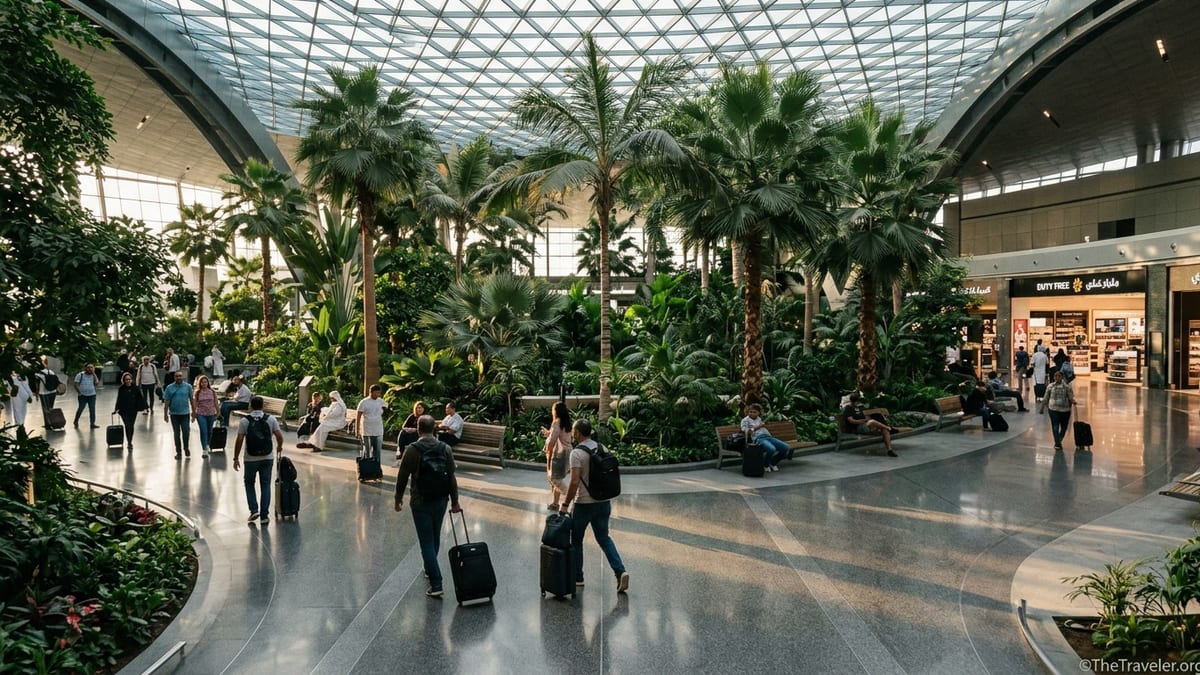
Airport Layout, Terminals and Getting Your Bearings
Hamad International Airport is built as a single integrated terminal with multiple concourses rather than separate terminals, which simplifies connections but can require long walks. The main concourses are lettered A through E, with the newest expansion focused on the Orchard area and the reopening of Concourses D and E, which together push the airport’s capacity above roughly 60 million passengers a year. In practice, most long haul Qatar Airways flights still use the B and C gates, while some partner airlines and regional services operate from A, D and E.
For most travelers, wayfinding is fairly intuitive. Once you clear security after arrival, you enter the central transfer hall with large yellow signage pointing to gates A–E, transfer desks, hotels, and lounges. If you are connecting from, say, Chicago to Bangkok, both operated by Qatar Airways, you will typically arrive at one concourse and follow the overhead signs to your next gate with no need to change buildings or take a train. Moving walkways run along most main corridors and are useful if you have a tight connection of under 60 minutes.
One of the newest landmarks is The Orchard, a large indoor tropical garden surrounded by high-end retail and dining. It sits close to the newer D and E gates and serves as a central orientation point. If you are arriving on a late-evening flight from Europe and have a few hours before your onward departure to Asia, this area is often less hectic than the older main halls and offers softer lighting and more seating, making it a good spot to regroup.
Doha’s immigration and transfer points can get busy during peak overnight banks when wave after wave of long haul flights arrive from Europe and Africa. If your itinerary involves entering Qatar, allow extra time for potential queues at passport control. For pure transit, however, the process usually involves a quick security rescreen followed by direct access to the departures level, especially if you already have boarding passes for all segments.
Transit, Minimum Connection Times and Leaving the Airport
Most Qatar Airways itineraries are engineered for relatively tight but workable connections, often around 60 to 90 minutes. If you are flying from Frankfurt to Bangkok with a 75-minute layover, for example, that is considered a normal transfer and the airline will take responsibility for rebooking you if a delay causes a misconnection. Bags are checked through, and you simply follow the transfer signs without collecting luggage.
If your layover is longer than about six hours, you can consider leaving the airport to see Doha, assuming you meet Qatar’s entry rules. Qatar currently allows many nationalities visa-free entry or a free transit visa for layovers generally between about 6 and 96 hours, though the exact requirement depends on your passport and the specific transit program you use. For instance, a traveler from much of Western Europe with a 10-hour morning layover can often clear immigration, take a taxi to the Corniche to see the skyline and the Museum of Islamic Art, then return to the airport in the afternoon with plenty of time to clear security again.
Some passengers on longer connections qualify for Qatar Airways’ Stopover or transit hotel programs, sometimes called STPC, which may offer a complimentary or discounted hotel in Doha if your layover is above a certain threshold, commonly 8 to 24 hours depending on fare type and availability. In practice, a traveler from Los Angeles to Delhi with a 19-hour layover might be booked into an airport-area hotel with shuttle transfers arranged by the airline, allowing proper rest and a shower before the onward night flight. Always check your booking confirmation and Qatar Airways communications carefully, because eligibility rules and hotel standards can vary.
If you decide to stay airside, keep in mind that the airport is fully operational 24 hours a day, which is helpful for late-night arrivals from Africa or early-morning departures to Asia. Shops, cafes, and most lounges operate around the clock, so an overnight layover without leaving the terminal is perfectly viable, especially if you plan ahead for sleeping and shower options.
Security, Baggage and Connection Practicalities
For transit passengers, the key step after arrival is the central transfer security screening. Liquids already in your hand luggage generally do not need to be surrendered if they were purchased after security at your origin airport, but items like large water bottles bought on board may be confiscated, depending on gate-of-arrival and security lane rules. If you are flying from the United States to Doha and connecting onward, it is safest to assume standard liquid rules still apply and to be prepared to empty bottles before re-screening.
Baggage on Qatar Airways through-tickets is checked to your final destination almost automatically. For example, if you are traveling Sydney to Doha to Rome on one booking, you will not see your checked bag in Doha at all. Issues arise mainly when separate tickets or different airlines are involved. If you book a low-cost regional carrier into Doha on a standalone ticket and then a separate Qatar Airways long haul, you will likely need to clear immigration, collect your bag, recheck it, and reclear security, which can take significantly longer and introduces risk if your first flight is delayed.
Hamad International offers free luggage trolleys throughout the terminal, which is a relief for families or travelers arriving from long flights with heavy bags. If you want to explore the terminal more freely on a long layover, you can use paid baggage storage services on the landside level near arrivals. This is useful if you have a bulky cabin bag and decide to enter Doha city for a few hours, since hauling luggage through taxis and city sidewalks in the summer heat is rarely pleasant.
Security staff in Doha are generally efficient but thorough, and laptops and large electronics may need to be removed from bags at screening. During heavy banks around midnight and dawn, queues can lengthen, so a traveler with a 1 hour 20 minute connection between Johannesburg and Tokyo, for instance, should proceed directly from the aircraft to transfer security rather than stopping to shop. The upside is that once you are past security, all gates, lounges, and services sit on the same secure level.
Lounges, Meet-and-Assist and Where to Relax
Hamad International is particularly well known for its premium lounges, especially the Qatar Airways Al Mourjan lounges used by business class passengers and the Al Safwa First Lounge reserved for first class and select high-tier elites. These lounges feel more like boutique hotels than standard airline lounges, with à la carte dining, quiet rooms and family areas. A passenger traveling business class from Paris to Bangkok via Doha will typically receive automatic access to Al Mourjan during transit and can shower, dine, and rest between flights at no extra cost.
Economy passengers have several options, though they are not automatic. Qatar Airways sells paid lounge access to facilities such as the Al Maha or Oryx lounges on certain fares, and travelers can sometimes pre-book this through the airline’s website or app. If you are flying economy from Milan to Manila with a 9-hour layover, for example, you may be able to purchase a 4 to 6 hour lounge pass that includes buffet meals, soft drinks, Wi-Fi, and showers. Prices fluctuate but are generally in the range that frequent travelers consider reasonable for an overnight stay compared with booking an airport hotel.
Al Maha Services also offers meet-and-assist packages which provide a dedicated host to guide you through arrival, transit or departure, fast-track immigration where available, and access to Al Maha lounges. These services are particularly useful for nervous flyers, elderly passengers, or families juggling young children and multiple passports. A multi-generational family connecting from Houston to Kathmandu might book a transit package so a representative meets them at the aircraft door, escorts them through transfer formalities, and helps them reach their gate without confusion.
Outside of lounges, the wider terminal includes plenty of standard seating, quieter corners near less-used gates, and soft seating zones around the Orchard and in the central atrium. Power outlets are fairly common, and airport Wi-Fi is free. For travelers who prefer not to pay for lounge access, a workable strategy on a 6-hour layover is to find a quiet seating area in the Orchard, have a proper meal at one of the 24-hour restaurants, then move to a different gate area closer to departure time to stretch your legs and charge your devices.
Sleeping, Showers and Long Layover Survival
Hamad International caters well to passengers on marathon journeys, with multiple options for rest ranging from free quiet areas to paid sleeping pods and full hotel rooms. In some parts of the terminal, especially near certain gates, you will find recliner-style loungers or dimmed quiet zones where you can lie back for a nap. These are free but fill up quickly around the peak overnight period, so a traveler connecting from Lagos to Manila arriving just before midnight may struggle to find an empty recliner.
For more guaranteed rest, dedicated sleep pod lounges have become increasingly popular. Brands such as Sleepover operate pod and cabin-style accommodation airside in both the central duty free plaza and the North Node near gates in the C area. A solo traveler from Berlin to Bali on a 12-hour night layover might book a FlexiSuite-style pod with a lay-flat bed, storage space, and charging points for a block of several hours, effectively turning the airport into a makeshift micro-hotel without clearing immigration.
Travelers who prioritize full privacy and their own bathroom can also book into the airside Oryx Airport Hotel, which offers standard hotel rooms directly inside the secure zone. This is a popular option for families traveling from the United States to Southeast Asia who want children to sleep properly in a bed, take a shower, and reset their body clocks before the second long segment. While rates are not cheap, many travelers see it as worthwhile on once-a-year big trips.
Shower facilities are available in several lounges and in some paid-access wellness or gym areas inside the terminal. For instance, an economy passenger from Madrid to Bangkok who has purchased lounge access may take a shower on arrival in Doha before having breakfast and heading to their onward gate. For those staying landside, some airport-area hotels offer day rooms with shuttle transfers, which can suit travelers whose layovers are long enough to exit and re-enter but who do not qualify for free transit accommodation.
Dining, Shopping and What to Do With Spare Hours
Hamad International’s duty free and dining options are extensive and heavily focused on international brands alongside regional touches. You will find major global coffee chains, fast food names, casual dining outlets serving burgers and pizzas, as well as Middle Eastern cafes offering mezze, grilled meats and Arabic sweets. A traveler arriving from London at 6 a.m. may head to a cafe near the central yellow teddy bear sculpture for a pastry and strong coffee, while another passenger on a midday layover between Singapore and Casablanca might choose a sit-down restaurant for a hot meal and a break from airplane food.
Prices reflect the airport’s premium positioning. A basic espresso or cappuccino often costs a bit more than in central Doha, and a simple fast-food combo meal can feel expensive compared with local city options. Many travelers with long layovers mitigate this by eating a substantial meal in their airline lounge if eligible, then using terminal cafes mainly for snacks and drinks. That said, if you are transiting for 8 hours with children, factoring in a few food breaks in the public dining areas can help structure the time and keep energy levels up.
Shopping is a major part of the Hamad experience, from luxury fashion houses and watchmakers to more practical outlets selling travel essentials, electronics and souvenirs. The Orchard area in particular has become a showcase for high-end brands set among greenery and natural light. Travelers on their way from Europe to Asia often use the layover to purchase fragrances, cosmetics or last-minute gifts, taking advantage of duty free prices and the fact that they are between time zones with hours to spare.
For non-shoppers, there are still ways to stay occupied. Families can seek out small play areas and kid-friendly zones, while solo travelers might walk laps of the concourses to stretch their legs after a long flight. The airport Wi-Fi is typically strong enough for streaming on laptops or tablets, so some passengers treat a 6-hour layover as office time, catching up on work in a quiet corner or lounge. Others simply sit under the trees in the Orchard with a book, enjoying the rare sensation of greenery in the middle of a megahub.
Visas, Stopovers and Exploring Doha Safely
Leaving the airport during a layover is entirely feasible for many travelers, but you must know your eligibility. Qatar grants visa-free entry or visas on arrival to numerous nationalities, including much of Europe, parts of Asia and the Americas, often for stays of up to 30 or 90 days. On top of this, specific transit visa or Discover Qatar stopover programs allow certain transit passengers with layovers between roughly 6 and 96 hours to enter the country for a short stay. The main variables are your passport, your ticket type, and the structure of your layover, so you should always verify with official sources or your airline ahead of travel.
Assuming you are eligible, a 10-hour layover from 5:20 a.m. to mid-afternoon is enough time to leave the airport, see a few highlights and return comfortably. A typical pattern might involve clearing immigration, taking a taxi or ride-hail service to the waterfront Corniche for skyline views, then visiting Souq Waqif to wander among traditional shops and grab breakfast. Later, you could tour the National Museum of Qatar or the Museum of Islamic Art before heading back to the airport by early afternoon, allowing time to reclear security and walk to your gate.
Safety in Doha is generally high compared with many global cities, and solo travelers, including women, commonly report feeling comfortable during daytime excursions. That said, the climate is a serious factor, especially in the long summer season when midday temperatures can be extreme. If your layover falls during the hot months, staying indoors in malls, museums, or your transit hotel may be more pleasant than extensive outdoor sightseeing. Early mornings and evenings are better for short walks along the Corniche or around the souq.
For travelers who prefer not to manage logistics themselves, pre-arranged city tours targeted at transit passengers sometimes operate, bundling transport and highlights into a fixed itinerary timed to common layover windows. These can be convenient if you have, for example, an 8-hour connection and do not want to juggle taxis, museum hours and airport arrival times. In all cases, build in generous buffers; Doha traffic can be unpredictable, and missing your onward long haul flight because you lingered too long in the souq is an expensive mistake.
The Takeaway
Flying through Doha’s Hamad International Airport is, for most travelers, an efficient and even enjoyable experience, provided you understand how the hub works. The single-terminal, multi-concourse layout makes transfers straightforward, while the combination of high-end lounges, sleep pods, quiet zones and the airside Oryx Hotel give you real choices for rest on long journeys. The Orchard and extensive shopping and dining options turn layovers into something closer to a mall visit than a traditional airport wait.
To get the most from a transit, start by checking your minimum connection time and whether your bags are checked through, then decide early between staying airside or entering Qatar on a transit visa or visa-free entry. If you are in economy on a long layover, compare the costs and benefits of paid lounge access, a sleep pod or a full hotel room. Business and first class travelers should plan to use the premium lounges fully, scheduling showers, meals and rest to reset before the next leg.
Finally, remember that Hamad functions around the clock, and services are geared to the waves of long haul flights that arrive and depart at all hours. Whether your schedule has you in Doha at 2 p.m. or 2 a.m., you will find food, seating, and usually a quiet corner or lounge to make the wait manageable. A little preparation goes a long way in turning a necessary transit into a comfortable, and sometimes even memorable, part of your journey.
FAQ
Q1. Do I need a visa to leave Doha airport during my layover?
Visa requirements depend on your nationality and the length of your layover. Many travelers qualify for visa-free entry or a short transit visa, but you must check current rules with official sources or your airline before travel.
Q2. What is a safe connection time when transiting through Hamad International Airport?
Qatar Airways often sells connections as short as about 60 minutes, which are usually workable if your inbound flight is on time. For peace of mind, especially with children or mobility issues, aim for 90 minutes or more.
Q3. Can economy passengers use lounges in Doha?
Yes, but access is not automatic. Economy passengers can buy access to certain lounges or book packages that include lounge entry. Availability and pricing vary by fare type and date.
Q4. Is it possible to sleep inside Hamad International Airport without booking a hotel?
Yes. There are free quiet zones and reclining chairs in some areas, plus paid sleep pod lounges offering private pods and cabins. For full privacy and a shower, the airside Oryx Airport Hotel is another option.
Q5. Are shops and restaurants open 24 hours a day?
Most core food outlets, cafes, and many shops operate around the clock to match the airport’s 24-hour flight schedule, so you can usually find meals and essentials at any hour.
Q6. How long does it take to get from the airport to central Doha?
By taxi or ride-hail, the journey to central areas such as the Corniche or Souq Waqif typically takes around 20 to 30 minutes in normal traffic, though you should allow extra time during busy periods.
Q7. Will my luggage be checked through to my final destination?
If all flights are on a single ticket, especially on Qatar Airways and its partners, bags are usually checked to your final destination. Separate tickets or different airlines may require you to collect and recheck luggage.
Q8. Is Doha safe for solo travelers during a transit stop?
Doha is widely regarded as a safe city for most travelers, including solo visitors, particularly during daylight hours. Normal urban precautions still apply, and you should respect local customs and laws.
Q9. What should I wear in Doha and inside the airport?
Inside the airport, standard international travel clothing is acceptable, but modest dress is appreciated. If you leave the airport, opt for clothing that covers shoulders and knees out of respect for local norms.
Q10. Can I rely on airport Wi-Fi for work or streaming during a long layover?
Hamad International provides free Wi-Fi throughout the terminal. Speeds are generally sufficient for email, browsing, and moderate streaming, though performance can fluctuate during peak times.