


More news on this day
The head of the U.S. Federal Aviation Administration has met with chief executives of major passenger airlines to advance a new delay-reduction strategy that blends upgraded traffic-management software, tighter schedules at congested hubs and ongoing consumer-focused rules aimed at reducing the risk of widespread flight delays and cancellations for travelers.
Get the latest news straight to your inbox!
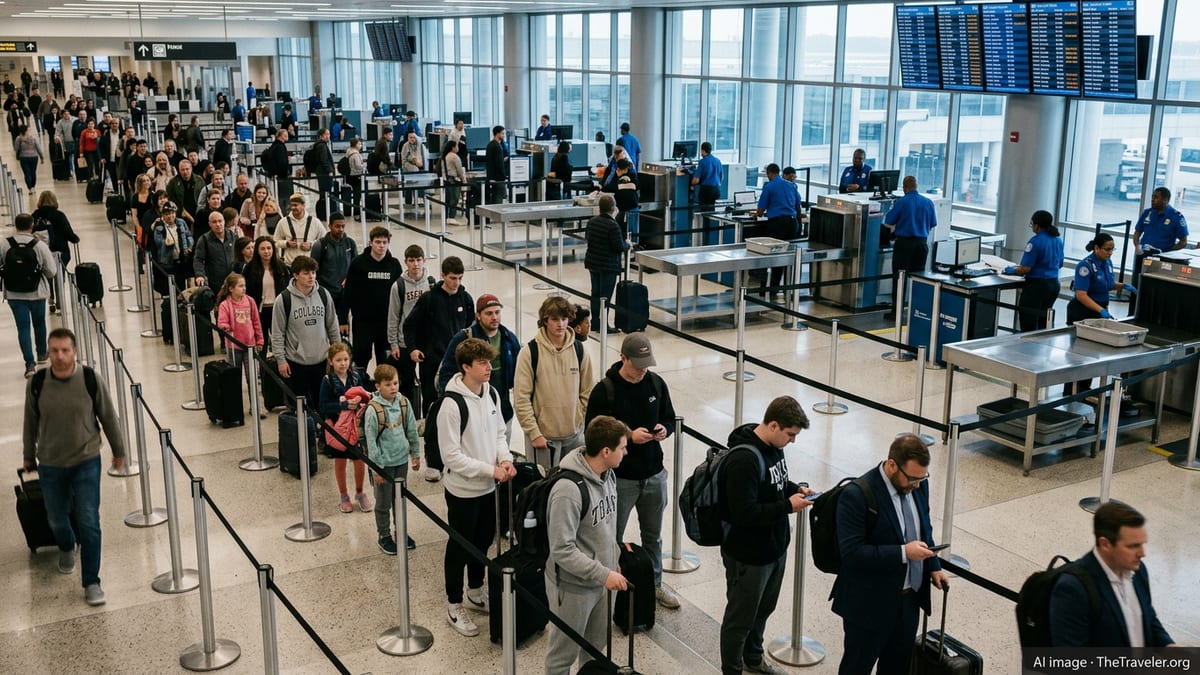
New SMART System Sits at the Center of Delay-Reduction Push
According to recent news coverage, FAA Administrator Bryan Bedford met this week in Washington with the CEOs of leading U.S. carriers, including American Airlines, United Airlines, Delta Air Lines and Southwest Airlines, to review the agency’s plan to deploy a system known as SMART, short for Strategic Management for Advanced Routing Technologies, beginning this month.
Reports indicate that SMART is designed to use predictive analytics to help the FAA and airlines make faster, data-driven decisions about how to manage airspace when weather or other disruptions threaten normal operations. The system is expected to support more efficient rerouting of flights, more realistic spacing of departures and arrivals, and quicker rescheduling of disrupted services, with the overarching goal of reducing the number and duration of delays and cancellations across the national network.
Coverage of the meeting notes that the agency’s leadership has described SMART as a potentially transformational upgrade to traffic management, allowing a move away from broad, blunt restrictions toward more targeted adjustments that keep as much traffic moving as safely possible. Airline trade association Airlines for America has publicly welcomed the initiative, saying the new system could have a direct positive effect on travelers by limiting disruption when storms or other constraints arise.
Publicly available information about the meeting also highlights support from individual carrier executives. United Airlines CEO Scott Kirby has described the new software-driven approach as having the potential to significantly reduce delays and cancellations during adverse weather by helping to open airspace and manage capacity more intelligently.
Coordinated Scheduling Changes at Congested Hubs
The FAA’s discussions with airline CEOs are unfolding against a backdrop of targeted schedule interventions at some of the country’s busiest airports, where overscheduling has contributed to long delays and cascading cancellations in recent seasons. Federal Register notices and related summaries describe how the agency has used its authority under federal aviation law to convene structured meetings with carriers to negotiate schedule reductions at congested hubs when delays during peak hours reach unacceptable levels.
For the current summer season at Chicago O’Hare International Airport, publicly available FAA documents show that the agency capped daily flight operations after determining that planned peak-day schedules were well above what the airport and surrounding airspace could reliably handle. The order followed a series of one-on-one meetings between FAA staff and each participating airline to identify voluntary cuts that would still allow carriers to meet demand while reducing the risk of mass disruption.
Regulatory filings and explanatory material emphasize that these scheduling reduction meetings are designed to avoid antitrust concerns by keeping conversations about specific cuts between each airline and the FAA, rather than among competitors. Once the meetings conclude, the agency finalizes a set of operating limits and may attach enforcement measures, including civil penalties, for flights scheduled above the agreed thresholds.
The latest CEO-level meeting on delays builds on these experiences at airports such as Chicago O’Hare and Newark Liberty International, where targeted caps and schedule adjustments have already been used to bring operations closer to levels that the system can process consistently. Bringing airline leaders together to discuss both technology and schedules signals that the FAA is seeking a more unified national strategy rather than relying solely on airport-by-airport measures.
Staffing, Consumer Rights and Transparency in Focus
Beyond airspace tools and schedules, the delay-reduction agenda that the FAA is discussing with airlines is closely linked to ongoing efforts on staffing and traveler protections. Public documents and prior agency readouts indicate that air traffic control staffing levels remain a factor in ground stops and flow restrictions, particularly when facilities operate with fewer certified controllers than planned. Addressing these constraints is seen as essential to making the most of any new traffic-management technology.
At the same time, the Department of Transportation’s Aviation Consumer Protection Advisory Committee is preparing to meet in late September to review several consumer-facing initiatives, including standardized one-page passenger rights summaries, airport “know your rights” posters and expanded online dashboards tracking delays, cancellations and customer service commitments. These tools are intended to give travelers clearer information about what they can expect when flights are disrupted.
The timing means that airline executives are engaging with federal policymakers on both operational and consumer fronts in close succession. While the meeting with CEOs centers on keeping flights moving more predictably, the advisory committee’s work reflects a parallel push to ensure that when disruptions do occur, passengers have transparent, consistent information about their options and potential compensation.
Taken together, these developments point to a wider strategy in which operational reliability, staffing resilience and consumer transparency are treated as interconnected elements of the same problem: limiting the real-world impact of delays and cancellations on the traveling public.
What Travelers Could See in the Months Ahead
For passengers, the immediate effects of the FAA’s latest engagement with airline CEOs may be subtle, showing up first in how carriers schedule and recover from disruptions rather than in headline-grabbing changes to individual routes. If the SMART system performs as intended, travelers could see fewer prolonged ground delays during summer thunderstorms, more dynamic rerouting that keeps flights operating around constrained areas, and a faster overall recovery after large-scale interruptions.
At airports subject to operating limits or targeted schedule reductions, published schedules may appear flatter during peak hours, with fewer flights clustered in tight departure or arrival banks. While that can mean marginally fewer options at the busiest times of day, the goal is to make the remaining flights more likely to operate close to schedule, reducing the missed connections and rolling disruptions that have affected many travelers in recent summers.
The expanded consumer dashboards and rights disclosures that federal officials and advisory committees are working on could also help passengers better interpret what they see when shopping for flights. Clearer statistics on each carrier’s performance and service commitments during delays and cancellations may influence how travelers choose between competing itineraries and airports.
The full impact of the FAA’s latest initiative will become clearer over the coming travel seasons as data on on-time performance, cancellation rates and airport congestion patterns are updated. For now, the meeting between the agency’s leadership and airline CEOs signals that both sides are under pressure to demonstrate measurable progress in reducing delays and cancellations ahead of future peak periods.
Key Background on Previous Delay and Cancellation Surges
The renewed focus on delays and cancellations reflects the experience of recent years, when surging demand, constrained staffing and severe weather combined to produce high-profile disruptions across the U.S. air travel system. Public records, airline statements and prior federal readouts have documented how traffic surges around major holidays and summer peaks strained both airline operations and the national airspace system.
In response, the FAA began convening seasonal operational summits with airlines, general aviation groups and labor organizations to review schedules, facility needs and traffic-management plans before peak periods. These sessions laid the groundwork for the more formal scheduling reduction processes now on display at certain congested hubs.
The current strategy, as reflected in publicly available filings and news reports, seeks to move from reactive crisis management toward preemptive planning based on detailed analysis of demand, capacity and staffing. By combining schedule coordination with new technology such as SMART and a stronger consumer information framework, the FAA and airlines are aiming to show that the system can adapt before problems cascade rather than only after disruption becomes unavoidable.
Travelers watching these developments may not feel the effects overnight, but the level of coordination now taking place at the top of both the regulatory and airline ranks underscores how central the issue of delays and cancellations has become to the broader U.S. travel experience.
KELO: US FAA head meets with airline CEOs on plan to cut flight delays
The Daily Guardian: US FAA head meets with airline CEOs on plan to cut flight delays
FAA: Action to prevent delays and cancellations at Chicago O’Hare
U.S. DOT: Aviation Consumer Protection Advisory Committee September 2026 meeting