


More news on this day
The Federal Aviation Administration has closed its investigation into whether U.S. airlines properly complied with mandatory flight cuts during the 2025 government shutdown, determining that carriers were largely in line with the restrictions and opting not to impose financial penalties, according to newly disclosed information to Congress.
Get the latest news straight to your inbox!
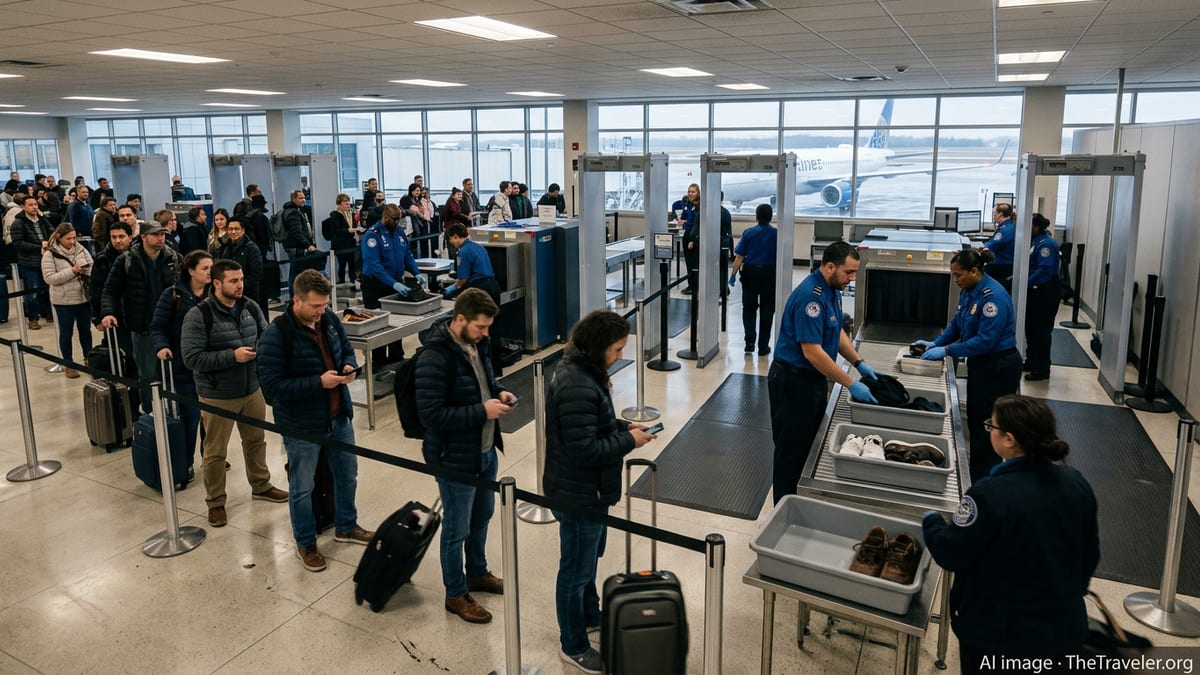
Probe Focused on Flight Reductions at 40 Major Airports
Publicly available documents indicate that the investigation centered on an emergency order that required airlines to reduce flight activity at 40 of the country’s busiest airports during the prolonged 2025 government funding lapse. The cuts, initially set at up to 10 percent and later adjusted downward as staffing conditions improved, were intended to relieve pressure on air traffic control facilities operating with limited resources.
The order covered a mix of coastal hubs and large inland airports that handle a significant share of U.S. passenger traffic. Airlines were directed to trim schedules, consolidate frequencies and, in some cases, re-time flights so that overall movements stayed within the temporary caps. Industry disclosures at the time showed carriers juggling aircraft rotations and delaying the launch of new routes in order to stay within the limits.
Reports from that period described a patchwork of impacts for travelers, with some markets seeing higher load factors on remaining flights and others experiencing longer connection times. However, data released as the shutdown wore on suggested that on-time performance eventually stabilized as both airlines and air traffic control facilities adjusted to the reduced schedule baseline.
The investigation launched after lawmakers and consumer advocates raised questions about whether airlines were fully honoring the mandated reductions, particularly at slot-constrained airports where competition for takeoff and landing times is intense.
FAA Finds “Substantial Compliance,” Issues Single Warning
According to published coverage of the agency’s written responses to U.S. senators, the FAA reviewed airline operations during the shutdown window and concluded that all but one carrier were in “substantial compliance” with the emergency flight restrictions. The review followed a series of letters of investigation that had been sent to several airlines over apparent discrepancies between their schedules and the required cuts.
Publicly available information indicates that the lone airline found not to be in substantial compliance was not identified by name. Instead of seeking civil penalties, the FAA issued an administrative warning to the carrier, signaling a formal notice but stopping short of a fine or further enforcement action.
Closing the probe without penalties suggests the agency ultimately viewed any deviations from the mandated reductions as limited or short-lived. Industry analysts note that airlines were operating in an exceptionally constrained environment during the shutdown, balancing federal directives with passenger demand, crew scheduling rules and aircraft availability.
The outcome effectively removes the threat of additional regulatory fallout for major U.S. carriers stemming from the shutdown period, even as policymakers continue to debate how flight reductions were designed and communicated.
Shutdown Flight Cuts Left Lasting Mark on Travel Patterns
While the immediate enforcement risk has eased, the shutdown-era cuts left a visible mark on the U.S. air travel landscape. In the months following the government funding lapse, several analyses highlighted how temporary capacity reductions had reshaped schedules on key domestic corridors, with some higher-yield routes recovering faster than others.
Airports that depend heavily on connecting traffic, including large hub facilities in the Midwest and South, saw particularly sharp swings in daily departures as airlines worked to comply with the caps. Public timetables from that period showed fewer off-peak flights and a tightening of early-morning and late-evening waves, affecting both business travelers and leisure passengers seeking lower fares.
Travel organizations reported that some passengers adjusted by shifting to alternative airports or by booking itineraries with longer connection times to guard against disruptions. Others delayed trips altogether until airlines restored more normal schedules after the emergency order was lifted.
Even after capacity limits expired, some carriers retained elements of their streamlined shutdown schedules, favoring higher-utilization aircraft rotations and concentrating service on routes with the greatest demand. Analysts suggest that this experience may influence how airlines respond to future system-wide constraints, whether caused by staffing, weather or infrastructure issues.
Regulatory Scrutiny and Lessons for Future Shutdowns
The recently closed probe adds a new chapter to the policy discussion over how the federal government manages aviation during funding lapses. Congressional hearings and watchdog reports in the past year have highlighted the consequences of reduced oversight capacity, training delays and staffing gaps at air traffic control centers when appropriations stall.
Advocacy groups and some lawmakers have argued that clearer enforcement criteria and more transparent reporting are needed if similar flight reduction orders are imposed again. They contend that travelers should have better insight into how capacity cuts are allocated across airports and carriers, and how compliance is assessed once the orders take effect.
According to publicly available records, the shutdown prompted a series of reviews into contingency planning at both the Department of Transportation and the FAA. These reviews examined how quickly traffic caps were set, how airlines were notified and how operational data was used to track adherence in real time.
For travelers, the end of the compliance probe does not erase the frustration of canceled or rescheduled flights during the shutdown period, but it does provide some clarity about how regulators ultimately judged airline behavior under extraordinary constraints. The findings also feed into ongoing efforts to codify playbooks for future disruptions, with an eye toward minimizing uncertainty for passengers.
Impact on Airlines and Passengers in the Near Term
Market commentary following disclosure of the FAA’s decision noted modest share price declines among several major U.S. carriers, a reminder that regulatory developments remain closely watched by investors. Analysts generally characterized the closure of the probe without fines as a relief for the industry, removing a potential overhang of enforcement risk.
For airlines, attention is expected to remain focused on rebuilding network resilience and managing costs in a competitive environment shaped by lingering staffing challenges and evolving travel demand. Carriers have continued to emphasize schedule reliability and operational flexibility as key selling points for both corporate clients and leisure travelers.
For passengers, the more immediate concern is how lessons from the 2025 shutdown will translate into future contingency planning. Travel advisors suggest that flyers may increasingly look for policies that allow no-fee changes in the event of systemic disruptions, whether caused by government funding disputes, technology outages or other large-scale events.
As the busy summer travel season approaches, the closure of the investigation underscores how closely intertwined federal oversight and airline operations have become. The episode highlights the extent to which government funding stability, regulatory clarity and airline scheduling decisions can rapidly affect the experience of millions of travelers across the national airspace system.