


More news on this day
Travelers moving through Nashville International Airport faced another bruising day of disruption as tracking data showed 14 flight cancellations and 286 delays, rippling across routes operated by Envoy, Southwest, Delta, Republic, United and other carriers and leaving passengers stuck as far away as Missouri, Alberta, Boston and Charlotte.
Get the latest news straight to your inbox!
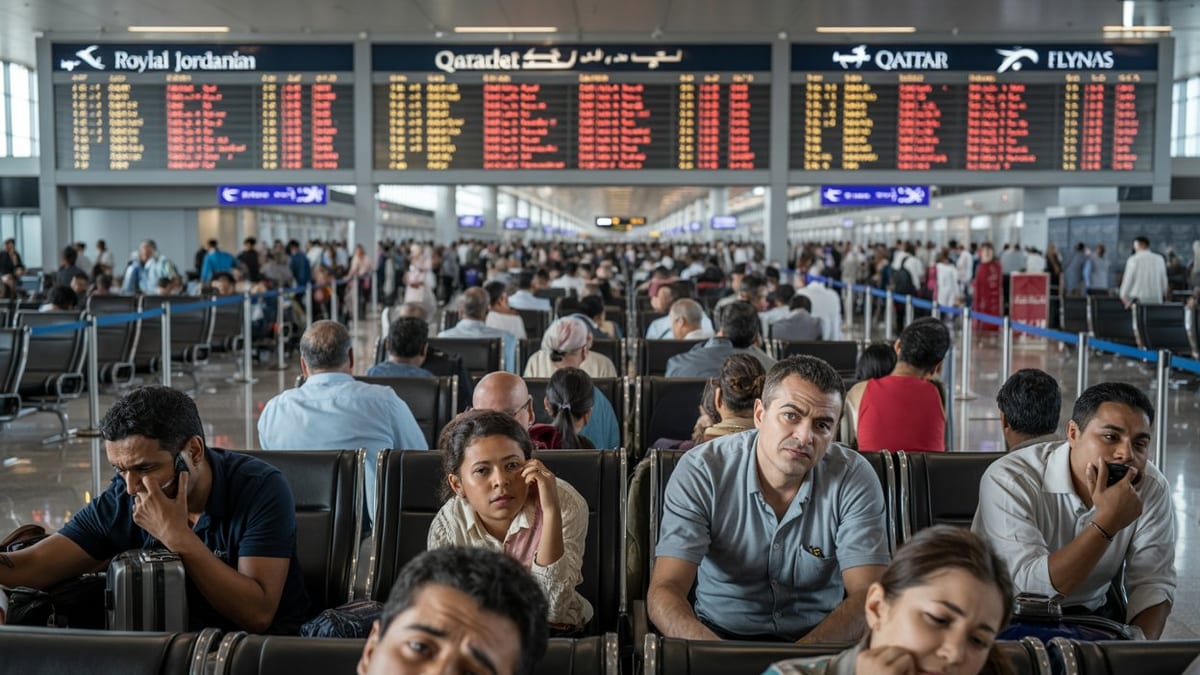
Ripple Effects Across the Nashville Route Network
Publicly available flight tracking information on Tuesday indicated that the irregular operations at Nashville International Airport affected a broad cross-section of domestic and transborder services. Short-haul links into and out of Missouri, including St. Louis and Kansas City, saw rolling departure pushes, while connecting services to Alberta through major Canadian and U.S. hubs also faced extended waits.
Key business and leisure markets such as Boston and Charlotte, both among the most heavily traveled routes from Nashville, recorded multiple late arrivals and departures as the day progressed. Passengers attempting to connect through these cities reported missed onward flights and unexpected overnight stays, compounding the disruption triggered at the Tennessee hub.
The delays were spread across a range of departure banks rather than concentrated in a single narrow time window. That pattern suggests a combination of factors, such as upstream late arrivals, airspace congestion and localized weather along certain corridors, instead of a single ground stop or wholesale shutdown of operations at Nashville.
Although the Federal Aviation Administration’s national status board showed Nashville operating without a formal ground delay or ground stop program for much of the day, localized restrictions at other airports and en route flow-control measures can still create a knock-on effect that filters through tightly timed airline schedules.
Envoy, Southwest, Delta, Republic and United Among Most Affected
Regional carrier Envoy, which feeds American Airlines’ network, was among the operators registering multiple delayed departures linked with Nashville. Its shorter-haul flights are particularly vulnerable to schedule disruptions because any late inbound aircraft can quickly cascade into subsequent rotations across nearby states such as Missouri.
Southwest Airlines, the dominant carrier at Nashville and a major player in point-to-point traffic across the central United States, also recorded a significant share of the delayed flights. Historical performance reports from the U.S. Department of Transportation note that Southwest typically posts relatively low cancellation rates but is sensitive to schedule strain when storms or air traffic constraints disrupt its dense network of short segments.
Delta Air Lines, United Airlines and regional specialist Republic Airways likewise appeared in the day’s disruption tallies. These airlines operate a mix of mainline and regional jets on routes linking Nashville to northern markets like Boston and mid-continent hubs that feed connections to Canada, including Alberta. When those flights depart late from Nashville or arrive late from upstream cities, passengers can miss limited-frequency transborder legs, increasing the perception of being stranded even if the original delay appears modest in minutes.
Industry data compiled in recent federal consumer reports show that carriers such as Delta and United often maintain comparatively strong on-time records under normal operating conditions. However, the same reports highlight that late-arriving aircraft and national aviation system constraints are recurring causes of delay, underscoring how quickly performance can deteriorate when a single busy day encounters multiple pressure points.
Passengers Stranded from the Midwest to Western Canada
The day’s disruption was felt far beyond Tennessee. In Missouri, fliers attempting to return to Nashville or connect onward through the city reported being held at departure gates for extended periods, as airlines waited for inbound crews, aircraft repositioning or improved conditions along their routes.
Travelers in Boston and Charlotte, two major connecting points for both domestic and international trips, faced their own bottlenecks. With inbound flights from Nashville arriving late, some passengers missed long-planned connections and were forced to rebook on later departures with limited seat availability. Others were re-routed through alternative hubs, lengthening journeys that would normally be completed in just a few hours.
The impact extended north toward Alberta through connections at large U.S. hubs. Delays on Nashville-originating services feeding into those hubs meant that some travelers aiming for Calgary or Edmonton encountered long layovers or overnight disruptions. For those traveling on time-sensitive itineraries related to events, conferences or family commitments, the missed connections translated into abandoned plans and unexpected expenses for lodging and meals.
Wider national tracking data recently highlighted by major U.S. media outlets show that thousands of passengers can be affected on days when system-wide delays climb into the high hundreds or low thousands. Nashville, which has grown rapidly as a connecting and origin-destination airport, is increasingly exposed to those national patterns whenever major hubs in the Midwest and Northeast experience weather or staffing challenges.
Why a Handful of Cancellations Can Cause Outsized Chaos
Although 14 cancellations may appear modest compared with larger national totals, aviation analysts note that even a relatively small number of scrubbed flights at a mid-sized hub can create disproportionate disruption. Each cancellation removes a full aircraft worth of potential seats, and re-accommodating those passengers on already busy flights can prove difficult, especially during peak travel periods.
Delays, meanwhile, can feed on one another throughout the day. When an early-morning flight from Nashville to a city like Boston or Charlotte departs late, that aircraft might then arrive late for its next rotation, affecting travelers in a different city who may have no obvious link to the original problem. As more flights run behind schedule, gate availability, crew duty-time rules and aircraft maintenance windows become additional constraints.
Federal data on causes of flight delays and cancellations show that only a portion of disruptions are attributable to extreme weather. A substantial share arises from air carrier-related issues such as maintenance or crew scheduling, along with national aviation system causes like non-extreme weather, runway congestion and air traffic control flow programs. On a busy day, these factors interact to amplify what might otherwise have been a manageable set of challenges.
For passengers, the distinction between a delay technically classified as carrier-related and one labeled as a national system issue often matters less than the practical outcome. Missed connections, hours spent in terminals and uncertainty around rebooking shape the overall experience, especially when communication is fragmented across multiple airlines and airports.
What Travelers Can Do When Disruptions Hit Nashville
Consumer advocates generally advise travelers using hubs such as Nashville to build additional buffer time into itineraries, particularly when connecting to long-haul or international flights that operate less frequently. Choosing slightly longer connection windows in cities like Boston or Charlotte may reduce the risk of misconnecting when a short-haul segment runs late.
Passengers caught up in days like this are also encouraged to monitor both airport and airline flight status tools rather than relying solely on third-party apps, which may update on different timetables. Keeping an eye on the status of inbound aircraft can offer early clues to potential problems, since a late arrival often precedes a delayed departure.
Published guidance from the U.S. Department of Transportation reminds travelers that when a flight is canceled and a passenger chooses not to travel, they are generally entitled to a refund if they no longer intend to fly, including on many nonrefundable tickets. For delays, compensation policies vary among airlines and by circumstance, making it important for passengers to review each carrier’s customer service commitments.
As Nashville International Airport continues to grow and carriers like Southwest, Delta, United, Envoy and Republic expand their schedules, days with elevated cancellations and delays are likely to remain a recurring feature of the travel landscape. For passengers, awareness of how quickly disruptions can spread across interconnected routes may be the first step toward making more resilient plans.