

More news on this day
San Francisco International Airport is bracing for months of longer waits after new Federal Aviation Administration landing restrictions, combined with a major runway repaving project, sharply reduced the number of flights that can arrive each hour.
Get the latest news straight to your inbox!
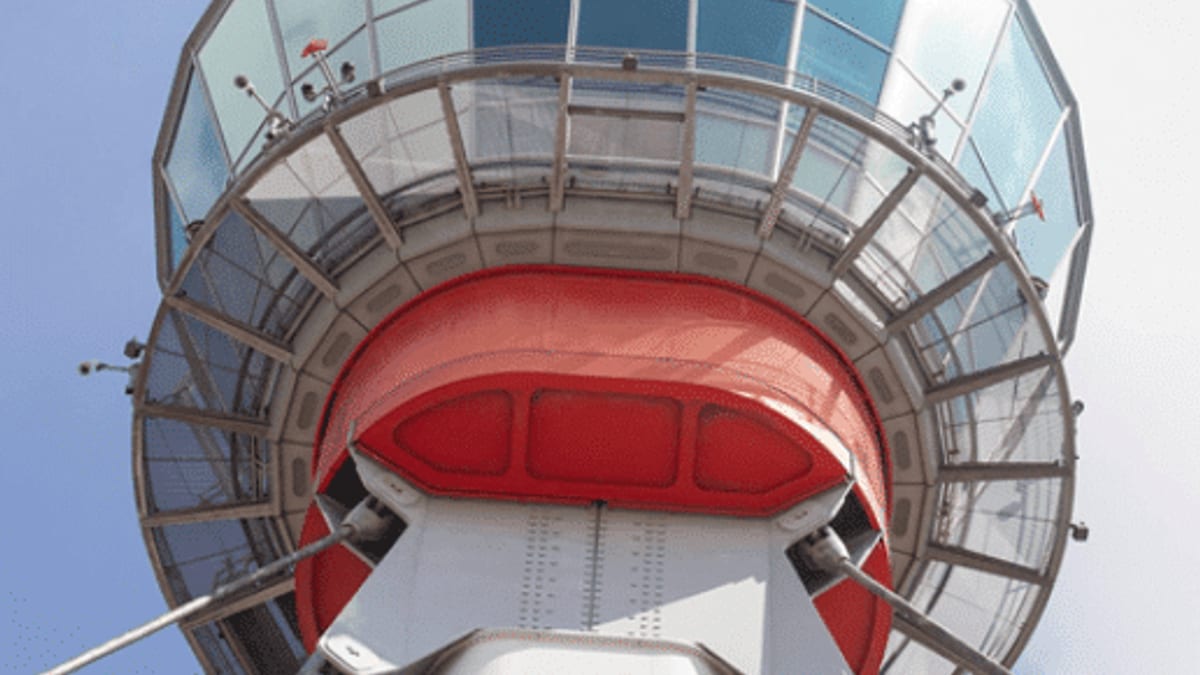
Image by TravelMole
Arrivals cut by a third as new rules take effect
Publicly available information shows that the FAA this week reduced San Francisco International Airport’s maximum arrival rate from 54 aircraft per hour to 36, a cut of one third that immediately tightens capacity at one of the country’s busiest hubs. The change took effect just as a six month runway repaving project began, creating a double squeeze on arrivals into the airport.
According to published coverage, the agency’s move centers on longstanding procedures that allowed two aircraft to land simultaneously on closely spaced parallel runways. Those side by side approaches will no longer be permitted in clear weather, which in turn reduces the number of planes that controllers can safely sequence into San Francisco’s airspace during peak periods.
Airport planning documents and local reporting indicate that San Francisco had relied heavily on those parallel approaches to keep traffic moving during busy morning and evening banks. With the new limits in place, flights that once would have landed on time are more likely to be placed into airborne holding patterns or delayed on the ground at their departure airports.
Industry analysts note that San Francisco’s layout, surrounded by water and intersecting runways, has long left little margin to absorb disruptions. Cutting the arrival rate while construction closes one runway further erodes that buffer and makes schedule reliability more fragile for both domestic and international services.
Runway construction magnifies impact on summer travel
The delay outlook is being shaped not only by the FAA’s landing restrictions but also by a runway repaving project that began March 30 and is scheduled to run until early October. Airport materials describe the work as a full reconstruction of one of the north south runways, a critical piece of infrastructure that will be unavailable for both takeoffs and landings for roughly six months.
Before the new FAA rules were announced, San Francisco airport officials had projected that the construction alone would delay roughly 10 to 15 percent of flights, primarily during peak arrival banks. Updated projections cited in regional media now suggest that about 25 percent of arriving flights could experience delays of at least 30 minutes while the reduced landing rate is in effect.
The revised estimates cover much of the busy summer travel season, when leisure demand typically peaks and schedules are more tightly packed. Travel data firms point out that even modest disruptions during these months can ripple across airline networks, potentially affecting flights far from the Bay Area when aircraft and crews are delayed arriving from San Francisco.
While the runway under construction is expected to reopen around October 2, according to local reporting, the FAA’s approach restrictions are described as a separate, potentially longer term change. That raises the prospect that some level of reduced capacity at San Francisco could extend beyond the completion of the physical runway work.
What travelers can expect at San Francisco and beyond
Operational forecasts quoted in national and local coverage indicate that roughly one quarter of arriving flights may now face delays of at least half an hour at San Francisco International Airport over the next several months. The impact will vary day by day, depending on weather, time of day, and how airlines adjust their schedules to the new capacity limits.
Weather remains an important factor. San Francisco already sees reduced arrival rates in periods of low clouds and fog, when only one runway can be used for landings. With the baseline hourly capacity now lower, any additional reductions tied to visibility or winds are likely to translate more quickly into ground delay programs that hold flights at their origin airports.
Travel planners note that the new constraints may be felt across the wider network served by San Francisco, particularly at hubs that feed large numbers of connecting passengers into the airport. Delays on inbound flights can cascade into missed connections, aircraft swaps, and later departures throughout the day, even on routes that do not touch the Bay Area directly.
Passengers are being urged by airlines and airport advisories to allow extra time for connections through San Francisco and to monitor their flight status closely. Early morning departures, which often benefit from less congested airspace and fewer inbound delays, may become especially attractive for travelers looking to minimize disruption.
Airlines weigh schedule adjustments and regional alternatives
San Francisco serves as a major hub for United Airlines and a key base for Alaska Airlines, along with significant operations by other domestic and international carriers. Public statements summarized in business coverage show that airlines are still reviewing the FAA’s decision and its implications for their summer and fall schedules.
Schedule analysts suggest that carriers have several options for adapting to the lower arrival rate, including trimming frequencies on marginal routes, shifting some departures to off peak times, or moving service to nearby airports in Oakland and San Jose. Any such changes would likely roll out gradually as airlines revise timetables and seek to preserve high demand routes and long haul connections.
Some aviation observers note that rerouting traffic to other Bay Area airports could ease pressure at San Francisco while maintaining overall regional capacity. However, such shifts depend on gate availability, ground facilities, and passenger demand patterns, and may not be feasible for all airlines or destinations.
In the near term, airlines are expected to rely heavily on tactical measures, such as swapping in larger aircraft on select routes or using buffer time in schedules to absorb delays. How effective those strategies prove will become clearer as the construction season progresses and the new landing regime is tested under summer travel volumes.
Longer term questions about safety and capacity
The FAA’s move reflects a sharpened focus on safety margins around parallel runway operations, an issue that has drawn increasing scrutiny after a series of close calls and runway incidents across the United States. According to national reporting, the San Francisco restrictions follow a broader review of procedures involving closely spaced runways and complex surrounding airspace.
San Francisco’s configuration, with runways positioned over the Bay and limited room for expansion, leaves few straightforward options to reclaim lost capacity. Airport planning studies have for years weighed proposals to reconfigure or extend runways, but such projects face environmental, financial, and community hurdles that make near term changes unlikely.
Policy discussions highlighted in recent coverage indicate that regulators and airport managers may look instead to technology and procedural refinements to gradually increase the arrival rate while maintaining higher safety margins. Potential tools include upgraded radar and navigation systems, revised approach paths, and more sophisticated spacing algorithms that can safely reduce the distance between arriving aircraft.
For now, San Francisco International Airport enters a period in which the balance between safety and efficiency will be tested daily. Travelers, airlines, and regulators alike will be watching how the new restrictions and construction program play out, and whether emerging solutions can restore some of the airport’s lost capacity without compromising the safety improvements that prompted the changes.