

More news on this day
The United States Federal Aviation Administration has issued an urgent directive for Boeing 787 Dreamliner operators to correct a newly identified radio signal vulnerability that could cause inaccurate altitude readings during critical phases of flight, intensifying scrutiny of the world’s premier long-haul twinjet as it crisscrosses global routes.
Get the latest news straight to your inbox!
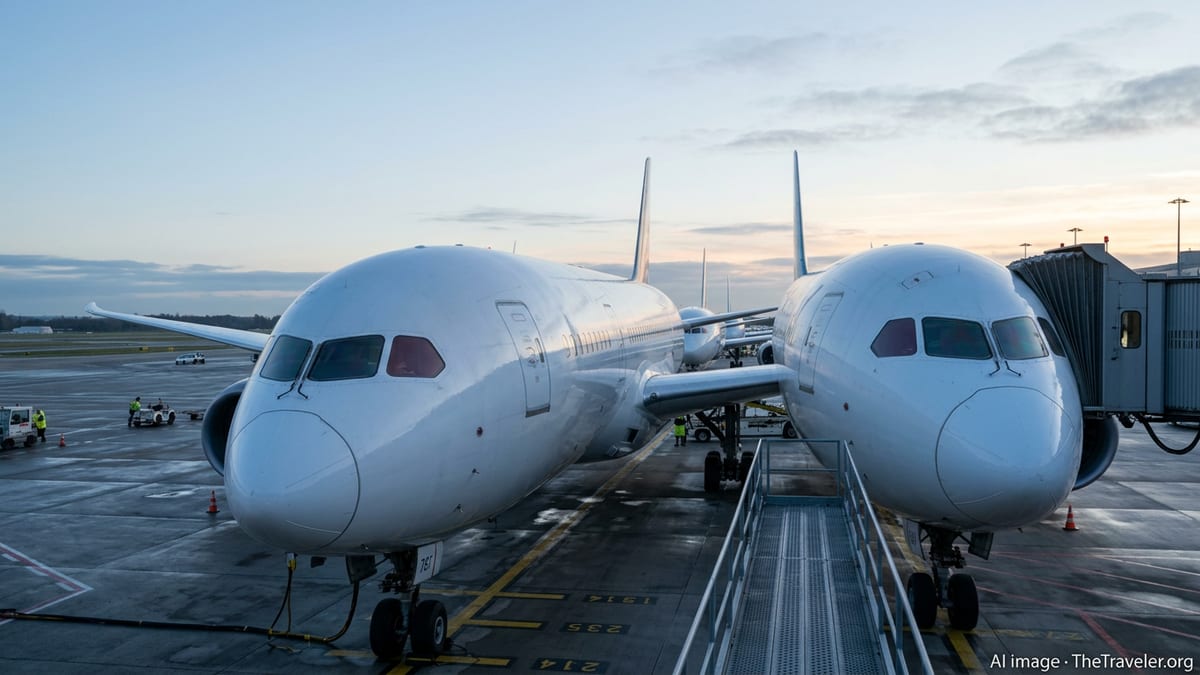
New Airworthiness Directive Targets Radio Altimeter Cables
According to publicly available regulatory filings, the latest airworthiness directive applies to Boeing 787-8, 787-9, and 787-10 aircraft and focuses on the low range radio altimeter system, a core sensor used during approach and landing. The directive cites an increased susceptibility to radio frequency interference on certain wiring configurations, particularly in the cabling that carries altitude data from the radio altimeter antennas to the avionics that interpret the signal.
Regulatory documents indicate that under specific conditions, stray radio energy from onboard very high frequency radios or other transmitters can induce noise into the radio altimeter cabling. This interference can lead to erroneous height-above-ground information being fed to systems that rely on precise data when an aircraft is close to the runway. While no accidents have been linked directly to the issue, engineering assessments concluded that the vulnerability represents an unsafe condition that must be mitigated across the fleet.
The directive requires operators to inspect affected cable runs, install new shielded cables or improved grounding where specified, and update associated routing and separation from other high-power avionics lines. In some cases, additional clamps, shielding, or structural brackets are mandated to ensure that critical sensor lines are physically isolated from potential sources of interference.
For carriers, the work package is expected to be incorporated into heavy maintenance checks where possible, but the FAA text stresses that compliance timelines are driven by safety considerations rather than normal maintenance cycles. Operators may seek alternative methods of compliance, but only if proposed measures provide an equivalent level of protection against radio signal intrusion.
Why the Radio Altimeter Matters on the Dreamliner
The 787’s low range radio altimeter is a cornerstone of its automated landing and flight guidance capabilities. The system measures the aircraft’s true height above the ground during the final stages of descent by sending radio pulses toward the surface and processing the return signal. Unlike traditional barometric altitude, which relies on atmospheric pressure, radio altitude directly reflects the clearance between the aircraft and terrain.
On the Dreamliner, this data feeds multiple tightly integrated systems, including autoland functions, terrain awareness and warning logic, wind shear protection, and automated thrust and braking features. Publicly available safety analyses for earlier directives on other aircraft types have highlighted that even brief, incorrect radio altimeter outputs close to touchdown can cause nuisance alerts, unexpected mode changes, or degraded guidance if not properly managed.
The newly highlighted vulnerability does not stem from a flaw in the radio altimeter boxes themselves, but rather in how susceptible certain cable installations can be to strong radio fields. In modern fly-by-wire aircraft such as the 787, dense wiring bundles and powerful communication systems share limited space within the fuselage and wings. That makes grounding, shielding, and routing practices crucial to keeping critical sensor lines free of interference.
In recent years, broader aviation discussions have focused on 5G wireless deployment and its potential to interfere with radio altimeters. The new 787 directive fits into a wider regulatory effort to systematically harden radio altimeter performance against a variety of radio frequency environments, whether the energy originates outside the aircraft or from its own transmitters.
Impact on Airlines and Global Dreamliner Operations
The Boeing 787 is a mainstay of long-haul travel networks, connecting major intercontinental hubs as well as secondary city pairs on routes that would have been difficult to sustain economically with older widebody types. The new directive therefore touches a large and geographically diverse operator base, stretching from North American and European carriers to airlines in the Middle East, Asia-Pacific, and Latin America.
Industry coverage indicates that operators will need to schedule aircraft downtime for the required inspections and modifications, potentially adding short-term complexity to long-haul schedules that are already finely tuned for aircraft utilization. Some airlines may cluster the work with upcoming heavy checks, while others could opt for dedicated maintenance visits if compliance deadlines are tighter than their planned overhaul slots.
Despite the logistical challenge, the work is not expected to ground fleets for extended periods. The tasks primarily involve access to avionics bays, nose sections, and certain lower fuselage areas to reach cable runs and connectors. For larger 787 operators with in-house engineering teams, the directive adds another project to an already busy slate of cabin retrofits, engine shop visits, and other ongoing compliance programs.
Travelers are unlikely to notice direct schedule disruptions linked specifically to the directive, but the additional maintenance burden comes at a time when many airlines are rebuilding international capacity. Any unexpected findings during inspections, such as damaged wiring or connector wear, could extend individual aircraft downtime beyond the baseline estimates in the directive.
Safety Context and Regulatory Scrutiny of Boeing Programs
The FAA’s action on the 787’s radio altimeter vulnerability follows a series of safety directives in recent years affecting multiple Boeing models. Public records show an escalating regulatory focus on both design assurance and in-service performance, covering issues from software behavior to structural inspections and engine-related checks. Each new directive reinforces the message that even relatively rare failure modes must be addressed before they combine with other factors in unpredictable ways.
For Boeing, the new requirement underscores the sensitivity of regulators and airlines to any avionics vulnerability, particularly on a technologically advanced platform marketed heavily on its efficiency and reliability. While the 787 has accumulated millions of flight hours across global routes, its complex electrical architecture and composite structure have periodically drawn attention in the form of targeted safety improvements.
Aviation safety specialists note that directives affecting radio altimeters have become more common as the radio spectrum around aviation bands fills with new services. The 787 directive reflects a shift from broad restrictions on operations in certain environments to more surgical interventions that modify hardware and installation practices on specific aircraft types.
Regulators in other regions typically review FAA actions for their own fleets, and international authorities can adopt similar requirements for operators under their jurisdiction. As a result, the 787 measures outlined by the FAA are likely to influence global maintenance planning and procurement of updated cabling kits and components across continents.
What This Means for Passengers and Future Avionics Design
For travelers boarding a Dreamliner, the new directive is largely invisible, but it is part of a deeper evolution in how modern airliners are designed to coexist with increasingly crowded radio environments. The focus on shielding, grounding, and cable routing illustrates how even small details in wiring architecture can carry outsized importance for systems that must perform flawlessly during every landing.
Published analyses of past incidents have shown that aviation safety improvements often emerge from discovering subtle vulnerabilities well before they contribute to accidents. The 787 radio altimeter directive fits within that preventive model, requiring changes that may never be noticed by passengers but that incrementally harden the aircraft against unlikely but safety-relevant scenarios.
Looking ahead, avionics manufacturers and airframe designers are expected to place even greater emphasis on electromagnetic compatibility, both in component-level testing and in whole-aircraft integration. As wireless technology continues to advance, future airliners will have to accommodate more onboard connectivity and external signals while still protecting the integrity of critical flight systems.
For the traveling public, the latest Dreamliner directive is a reminder that regulatory oversight remains active and iterative. Each newly identified vulnerability, once addressed, makes the overall network of global air travel more resilient, even as aircraft become more connected and reliant on digital sensing and automation.