

More news on this day
In 2026, the Federal Aviation Administration is confronting a deepening air traffic controller shortage that has been building for decades, straining airport operations, exposing weaknesses in aging infrastructure and reshaping the travel experience for millions of passengers across the United States.
Get the latest news straight to your inbox!
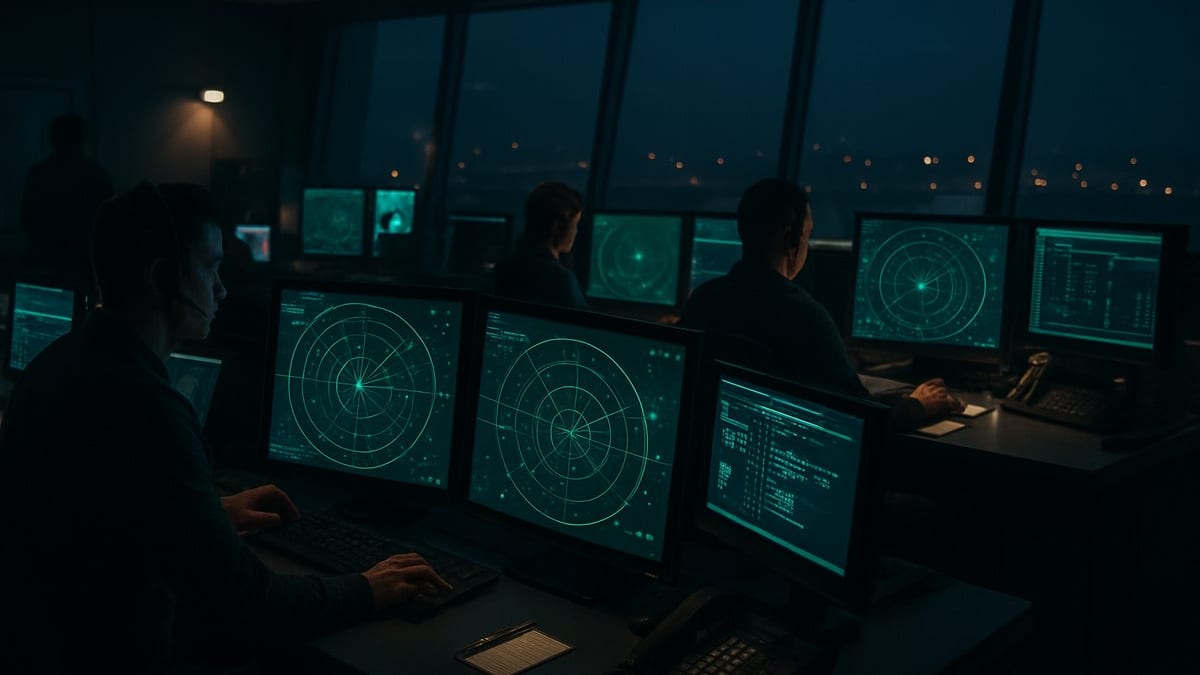
A Decades-Long Staffing Gap Reaches a Breaking Point
Publicly available workforce plans and recent oversight reports indicate that the FAA entered 2026 with fewer fully certified controllers than its own models recommend at many of the nation’s busiest facilities. Analyses of agency data show that total controller numbers fell in the 2010s and early 2020s, even as flight demand recovered after the pandemic and continued to grow. Despite aggressive recent hiring classes, the system is still operating from behind.
Studies of the controller workforce describe the shortage as structural rather than temporary. Retirements from the hiring boom of the 1980s, interruptions in training during budget fights and shutdowns, and the long lead time required to bring new trainees to full certification have collectively created a persistent gap. Recent assessments characterize the current situation as a staffing crisis rather than a short-term fluctuation.
Government Accountability Office reviews released over the past two years note that many large radar approach control facilities and en route centers are staffed well below 100 percent of their FAA targets, with some key locations under 85 percent. Advocates for pilots and controllers argue that the gap is especially acute at complex, high-traffic hubs that already manage some of the densest airspace in the world.
Although the FAA has increased hiring, including surpassing a major intake milestone in 2024 and adding more than 2,000 trainees in 2025, workforce projections show that attrition from retirements, promotions and departures is erasing much of that progress. The pipeline of new controllers is full, but the time required to move them through training means that relief for frontline facilities is arriving slowly.
Near Misses, Fatigue and High-Profile Incidents Raise Safety Concerns
Travelers have become more aware of the human limits of the air traffic system through a series of high-profile safety incidents. Published coverage of recent runway incursions, including narrowly avoided collisions at major airports, has drawn attention to fatigue among controllers who are working extended schedules, overtime and compressed shifts to keep towers and control centers staffed.
Investigations into serious events, including a deadly midair collision near Washington, D.C., in January 2025, identify staffing levels and combined controller positions as contributing factors. An official accident report finalized in February 2026 cites nonstandard staffing and workload decisions in the control room as part of a chain of risk, reinforcing long-standing warnings about thin margins at busy facilities.
Congressional briefing materials for proposed air traffic workforce legislation in 2025 describe a system in which controllers at many locations are handling chronic overwork, with thousands fewer certified professionals than recommended. The documents connect this situation to a rise in reported “near misses” at U.S. airports and highlight concerns that fatigue and distraction can erode the safety buffer that has long characterized U.S. commercial aviation.
For passengers, these issues are mostly invisible until they trigger ground stops, extended gate holds or diversions after an “ATC zero” declaration, when a tower or control center temporarily suspends normal operations. Recent examples of facilities going offline because of weather-related staffing shortages and shutdown-driven absences have underlined how little redundancy exists when key positions cannot be filled.
Shutdowns, Politics and Training Bottlenecks Slow Solutions
The current controller shortfall is not only a matter of retirement math. Federal government shutdowns in 2025, and the prospect of further funding interruptions in 2026, have repeatedly disrupted the FAA’s hiring and training pipeline. During the lengthy 2025 shutdown, news coverage documented widespread delays as controllers were required to work without pay, some took leave, and the agency cut schedules at dozens of airports to preserve safety.
Shutdown contingency plans publicly outlined for the aviation agency include furloughs for thousands of support staff and instructors, effectively freezing portions of the training pipeline. Industry coalitions and labor groups argue that every lost week at the academy in Oklahoma City or at on-the-job training sites translates into months of knock-on effects for staffing levels down the line.
Efforts to expand training capacity have also encountered political resistance. Reporting in early 2025 detailed how proposals for a second controller academy were blocked in Congress, despite warnings from safety experts and the FAA that a single campus could not rapidly produce the number of certified professionals needed. Opponents questioned cost, oversight and standards, and the initiative stalled.
At the same time, internal FAA data and outside analyses point to high washout rates among trainees once they reach complex facilities. Many candidates do not complete the demanding on-the-job phase in busy terminal radar approach control units or en route centers. This attrition intensifies the bottleneck: the agency can fill every classroom seat through 2026, as senior leaders have noted, yet still fall short of the seasoned workforce required to stabilize operations.
Aging Infrastructure and Modernization Strain the System
Controllers are grappling with staffing shortages while also managing a large-scale technological transition. Government audits released since 2024 describe a significant share of the systems that underpin U.S. air traffic control as “unsustainable” or potentially unsustainable, citing aging hardware, patchwork upgrades and legacy software that complicate daily operations.
The multiyear shift from ground-based radar to satellite navigation and digital communications, often referred to as NextGen modernization, is projected to continue into the next decade. This process promises long-term efficiency and capacity gains but is creating short-term complexity for the workforce, which must master new tools while still relying on older equipment in many facilities.
Recent radar and communications outages affecting the New York and New Jersey airspace, including repeated disruptions tied to the relocation of traffic management responsibilities to a different control facility, have highlighted that technology failures can quickly cascade when staffing is thin. Controllers trained on one configuration have had to adapt to new sector boundaries and procedures even as facilities struggle to meet their staffing targets.
Separate reviews of meteorological support for aviation note that weather specialists embedded in control centers have also faced staffing reductions, which can increase the burden on controllers during severe conditions. The combination of tight staffing, complex new procedures and changing weather patterns is creating a more demanding environment inside control rooms at the same time passengers expect ever-faster, more reliable journeys.
Implications for Travelers and the Road Ahead
For travelers, the controller crisis often surfaces in the form of schedule adjustments, ground delay programs and chronic congestion at specific airports. Airlines have trimmed frequencies at some hubs, particularly in the crowded Northeast corridor, citing airspace management limits and the need to build more slack into operations to avoid cascading disruptions.
Federal data show that weather remains the largest single cause of delays, but staffing-related constraints and capacity reductions have become a more visible factor in certain regions. When conditions deteriorate, airlines and passengers have less room to maneuver because controllers cannot safely push more traffic through already saturated sectors.
Policy responses are still evolving. The FAA Reauthorization Act of 2024 included new hiring authorities and recruitment initiatives, and subsequent proposals in Congress aim to further expand training pathways, provide retention incentives and reassess how controllers are deployed between overstaffed and understaffed facilities. Aviation groups are also calling for sustained funding for modernization projects that could reduce controller workload by automating routine tasks while preserving human oversight.
As the busy summer travel season of 2026 approaches, industry forecasts anticipate continued growth in passenger numbers, particularly at coastal hubs and popular leisure destinations. Unless the controller workforce can be expanded and better aligned with demand, and unless modernization efforts keep pace with traffic growth, travelers are likely to see the effects of this decades-long staffing crisis in the form of longer lines, tighter connections and a system that is less resilient when storms or technical glitches strike.