

More news on this day
The UK’s Foreign, Commonwealth & Development Office has issued a series of sharpened travel warnings for British nationals, highlighting fast-moving security risks in the Gulf, Iran and parts of the eastern Mediterranean just as the spring holiday season begins.
Get the latest news straight to your inbox!
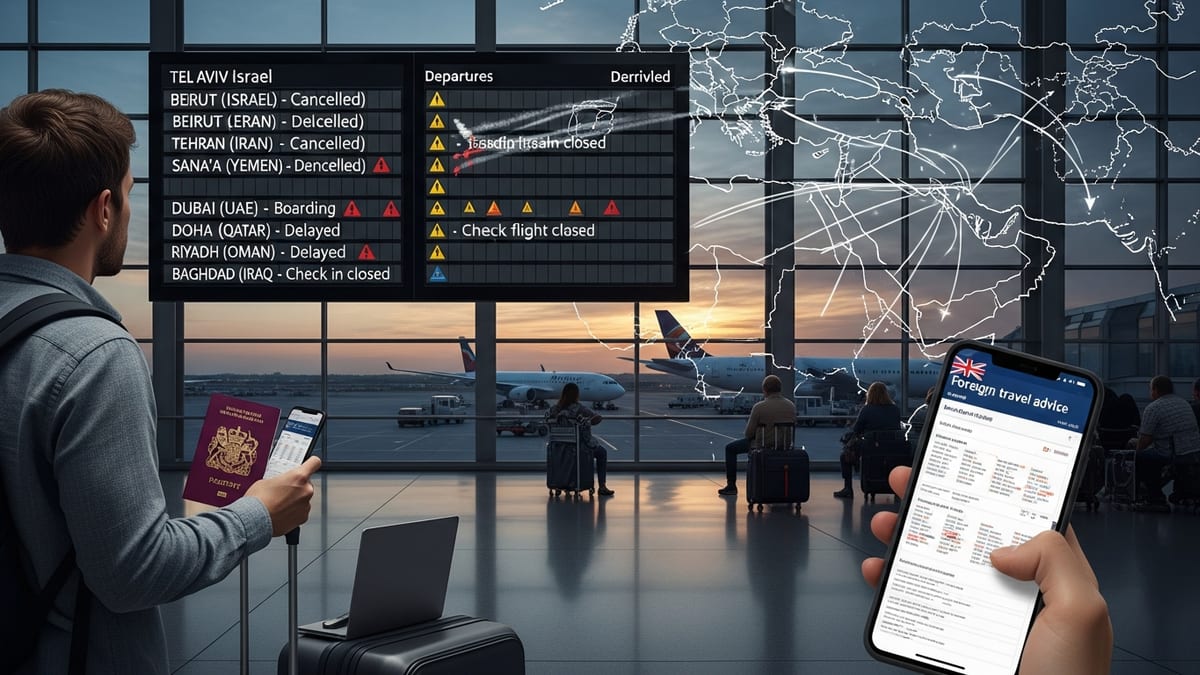
Heightened alerts across the Gulf as tensions escalate
Recent guidance from the Foreign, Commonwealth & Development Office (FCDO) has urged British nationals in key Gulf states to exercise extreme caution, reflecting the spillover risk from the conflict involving Iran. According to published coverage, British nationals in Bahrain, Kuwait, Qatar and the United Arab Emirates have been told to remain indoors in secure locations, avoid all travel and monitor local announcements as regional tensions intensify.
Reports indicate that travel advice for several Gulf destinations has been upgraded to warnings against all but essential travel, a step that typically affects both holidaymakers and residents. Publicly available information suggests that this follows a period of missile and drone activity in the wider region and concerns over critical infrastructure, including airspace and military facilities linked to the United Kingdom.
The tightening of advice has already had an impact on passenger movements. Industry-focused outlets describe falling visitor numbers to hubs such as Abu Dhabi and Doha, as travellers reassess itineraries or struggle to secure comprehensive travel insurance while higher-level FCDO advisories remain in force.
Officials have repeatedly stated in public forums that the safety of British nationals overseas is the primary driver of any change in travel advice. However, the rapid pace of updates has led to calls from the travel sector for clearer timelines and more detailed risk assessments so that airlines, tour operators and passengers can adjust plans with less uncertainty.
Detentions in UAE highlight legal and cyber risks
Separate developments in the United Arab Emirates have drawn attention to the legal risks facing British visitors and residents in tightly regulated digital environments. A UK-based campaign group, cited in recent television and newspaper coverage, has claimed that dozens of British nationals may have been detained in the UAE after sharing images and videos related to Iranian missile and drone attacks on social media platforms.
Reports explain that these cases appear to be linked to the UAE’s strict cybercrime and online content laws, which allow for prosecution over material deemed harmful to public order or national security. The publicity around the detentions has prompted renewed scrutiny of how familiar British travellers are with local legislation, particularly in destinations marketed heavily for tourism and business.
Publicly available statements from the FCDO underline that local laws can be significantly different from those in the UK and can carry severe penalties, including long prison sentences, for actions that might be considered routine online behaviour at home. Travel lawyers note that cybercrime legislation in some Gulf states can extend to private messaging apps and content stored on personal devices, not just public posts.
Campaign groups and travel commentators argue that the combination of regional security tensions and expansive cybercrime statutes creates a more complex risk environment for British nationals. They suggest that official guidance may need to place greater emphasis on digital conduct abroad, especially where images of military activity or critical infrastructure are concerned.
Iran and Cyprus warnings underscore regional flashpoints
The evolving situation in and around Iran remains central to the latest FCDO travel posture. According to international reporting on the 2025–2026 protests and subsequent conflict, the FCDO continues to advise against all travel to Iran, warning that the UK government’s ability to provide in-person consular support or organise evacuations would be severely limited in the event of further deterioration.
At the same time, nearby destinations that normally attract large numbers of British tourists have seen their advisories adjusted. Recent coverage of Cyprus notes that official guidance has been updated to reflect the possibility of terrorist attacks, and to encourage travellers to check their insurance coverage carefully. This follows concern about drone activity around British military bases on the island and the potential for those sites to be viewed as targets during any escalation.
Security analysts quoted in open-source commentary argue that these shifts illustrate how quickly a traditionally popular Mediterranean destination can be affected by events unfolding hundreds of miles away. They point out that while the FCDO has not issued an outright ban on travel to Cyprus, the reference to terrorism risks and the emphasis on flexible arrangements signal a more cautious stance than in previous seasons.
Parliamentary documents from March 2026 show that members of Parliament have pressed ministers on contingency planning for British nationals in Middle Eastern and eastern Mediterranean states, with questions focusing on evacuation routes, alternative transport options and the knock-on impact on regional tourism economies.
Knock-on effects for holidays in Europe and beyond
The sharpened security advice coincides with separate warnings about disruption in traditionally low-risk European destinations such as Spain and Greece. Travel industry reports highlight that while the FCDO has not advised against travel to these countries, it has stressed the potential for protests, strikes and new border-control rules to cause long delays and last-minute changes to itineraries.
In particular, attention is turning to the European Union’s new Entry/Exit System, a digital border scheme that will apply to non-EU nationals, including British tourists, entering the Schengen Area. Aviation and airport bodies quoted in recent analyses suggest that the combination of biometric checks, staff shortages and industrial action could produce long queues at peak times, even in the absence of a direct security threat.
Public travel advice for popular holiday spots now typically encourages UK nationals to allow extra time at airports, stay updated on local news and be prepared for schedule changes. The message contrasts with the more severe “do not travel” or “shelter in place” language attached to some Gulf and conflict-adjacent destinations, yet underlines that disruption can spread quickly when security concerns lead to tighter border procedures.
Travel insurers and consumer organisations are meanwhile warning that higher-risk FCDO designations can affect policy validity. Many standard products exclude cover for trips that proceed against formal government advice, adding a financial dimension to decisions about whether to maintain or cancel plans.
What British travellers are being urged to consider now
The flurry of updated guidance has left many British travellers re-examining plans for the coming months. Public commentary by consular specialists and travel risk consultants points to a few recurring themes, including the importance of monitoring official advice up to and including the day of departure, registering contact details with relevant embassies where possible, and understanding how insurance policies respond to changing FCDO risk levels.
Analysts say the Gulf detentions and Iran-related warnings underline the need to factor legal and geopolitical risk into destination choices alongside the usual considerations of cost and climate. They argue that destinations hosting foreign military assets or located close to active conflict zones may see their status shift rapidly, even if local tourism infrastructure remains intact.
For the travel sector, the current environment poses a delicate balancing act between promoting long-planned holidays and acknowledging the heightened risk landscape. Airlines and tour operators are adjusting flexible booking policies and monitoring government advisories closely, aware that sudden changes in FCDO guidance can trigger mass rebookings and refund claims.
With security dynamics evolving quickly, observers expect the FCDO’s travel warnings to remain under constant review. For British nationals abroad and those preparing to travel, the message from publicly available information is to stay informed, remain flexible and recognise that security concerns far from the UK’s shores can have immediate and practical effects on their journeys.