

More news on this day
Canada’s formal participation in the emerging FIFA PASS scheme is accelerating a global shift in how supporters plan trips for the 2026 FIFA World Cup, as more countries link visas, transport and match access in a single digital framework that is beginning to reshape tourism flows across host cities and beyond.
Get the latest news straight to your inbox!
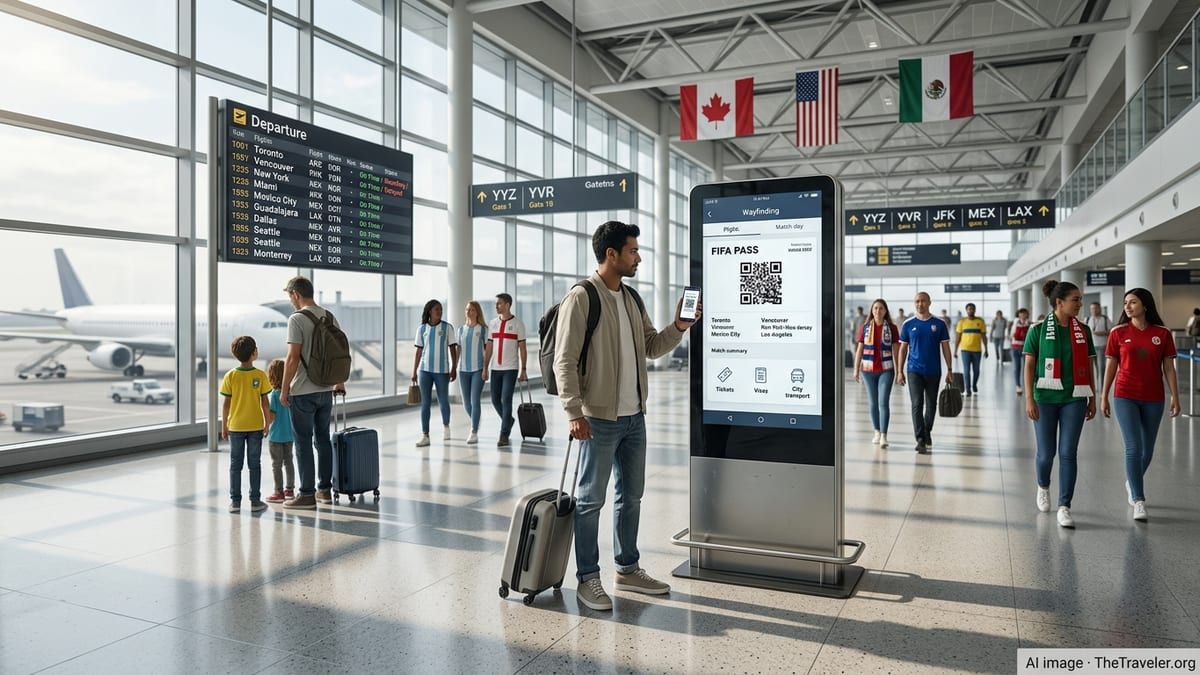
FIFA PASS Emerges as the New Backbone of Match Travel
The developing FIFA PASS program is designed as a digital bridge between confirmed World Cup tickets and the practical details of cross-border travel. Publicly available information and recent fan reports describe a system that connects a unique “purchase key” or ticket reference to an online profile, which travelers then use to unlock tailored guidance and, in some countries, facilitated visa pathways tied directly to match dates.
Unlike traditional ticket-only models, the FIFA PASS concept is built around the entire journey. Hospitality documentation for World Cup 2026 already highlights integrated offers that bundle premium seating, airport transfers, curated city experiences and on-the-ground support across the 16 host cities in the United States, Mexico and Canada. Commercial travel operators working with official hospitality inventory are extending this logic further by adding flights, accommodation, insurance and optional city-to-city transport on top of the match entitlement.
Industry analysis indicates that this unified structure is encouraging supporters to think beyond single-city trips. Multi-match itineraries across North America are becoming the norm, especially for fans following Brazil, Argentina, England, Germany or France, where large traveling contingents are expected to stitch together complex routes using FIFA PASS as their administrative anchor.
At the same time, early user feedback shared on fan forums points to implementation challenges. Ticket holders in several regions have described delays in receiving opt-in links, confusion over purchase keys and uncertainty about processing times. Even so, the rapid uptake in participating countries suggests that FIFA PASS is already shifting expectations about what a World Cup travel document should do.
Canada Joins a Growing Roster of Participating Countries
Canada’s move to operate within the FIFA PASS framework aligns it with an expanding list of countries reported to be connecting their consular or facilitation processes to the program, including Mexico, the United States, Brazil, Colombia, Argentina, Uruguay, Panama, the United Kingdom, Germany, France and Morocco. In each of these markets, the mechanism and benefits vary, but the shared principle is that a verified match ticket can serve as the starting point for streamlined travel planning.
In Canada’s case, the decision coincides with broader preparations for co-hosting duties in Toronto and Vancouver. Government communications in March 2026 highlighted fresh investment in youth soccer outreach and match-day experiences as part of the national World Cup build-up, underscoring how authorities are trying to knit together grassroots engagement with inbound tourism and international visibility. Travel specialists note that folding Canadian processes into FIFA PASS is a logical extension of this effort, especially for visitors planning multi-leg journeys that include both Canadian and U.S. venues.
For Latin American football powers such as Brazil, Argentina, Uruguay and Colombia, alignment with FIFA PASS is already shaping fan demand. Travel agencies marketing official or semi-official packages report that many clients now treat the pass as a baseline requirement, using it as proof of purpose when assembling visa documentation, booking group flights or coordinating chartered buses between host cities. The same pattern is beginning to emerge in European markets such as the UK, Germany and France, where outbound World Cup tourism has historically surged around major tournaments.
Morocco and Panama, which are not hosting matches but have strong football cultures and diaspora links to North America, are being closely watched as examples of how non-host nations might leverage FIFA PASS to capture pre- and post-tournament stopover traffic. Analysts suggest that as more countries integrate with the framework, the World Cup could function as the centerpiece of extended regional trips, with fans combining match days in North America with tourism elsewhere along routes that are easier to document and justify thanks to the pass.
North American Host Cities Gear Up for Surging Visitor Numbers
Across the three host nations, preparations for 2026 are intensifying in parallel with the rollout of FIFA PASS and hospitality products. The tournament’s unprecedented 48-team format and 104-match schedule are expected to generate record visitor numbers, with United States venues hosting the majority of fixtures and Canada and Mexico sharing a growing slice of high-profile games. City-level plans in places such as Toronto, Vancouver, New York–New Jersey, Los Angeles, Mexico City and Guadalajara are increasingly framed around accommodating a new type of digitally documented traveler.
Urban mobility blueprints in Canadian host cities, for example, now make explicit reference to game-day surges linked to long-haul tourists whose trips have been organized through integrated ticket-and-travel platforms. Traffic management measures, expanded public transit capacity and dedicated fan festival zones are being calibrated on the assumption that many international visitors will use smartphones and FIFA PASS credentials as their primary navigation tools, rather than traditional paper tickets or standalone visas.
In the United States, the creation of a federal World Cup 2026 task force to coordinate transport, security and visitor services reflects similar expectations about scale. Analysts tracking hospitality sales and early accommodation bookings report that fans from Brazil, Argentina, Colombia, the UK, Germany and France are especially active in locking in suites, lounge access and bundled stays that allow them to move efficiently between cities such as Miami, Dallas, Houston, Atlanta and Seattle.
Mexico’s host cities are also positioning themselves as natural hubs for regional itineraries. With Mexico City, Guadalajara and Monterrey on the official venue list, tour operators are marketing triangle routes that connect Mexican matches with fixtures in Texas or California, framed around FIFA PASS-enabled documents that can be referenced at multiple border crossings and airline counters. This interplay between host cities and the travel framework is increasingly seen as a defining feature of the 2026 World Cup.
FIFA PASS and the Economics of the 2026 Tourism Boom
The economic implications of FIFA PASS extend well beyond ticketing. Travel trade publications and hospitality consultancies tracking the 2026 cycle point to an emerging “match tourism” segment in which spending on flights, hotels, food, nightlife and cultural attractions rivals or exceeds the cost of seats in the stadium. With official hospitality packages now routinely priced into the thousands of dollars per person, the presence of a standardized travel credential is viewed as a way to protect and amplify that investment.
Industry estimates suggest that the average World Cup visitor in 2026 will stay longer and visit more cities than in previous tournaments, particularly given the geographic spread of venues across North America. By helping fans demonstrate clear itineraries tied to specific match dates, FIFA PASS is seen as a catalyst for more ambitious trip planning that incorporates side visits to destinations such as the Canadian Rockies, U.S. national parks or Mexican coastal resorts.
Hotels, airlines and tour operators in countries participating in the program are responding with targeted products. Dynamic pricing tools already factor in key match days in cities such as Toronto, Vancouver, New York–New Jersey, Miami, Mexico City and Los Angeles, while marketing campaigns in markets like Brazil, Argentina, Colombia, the UK, Germany, France and Morocco increasingly reference the simplicity of traveling with a FIFA-linked pass. Observers note that even small policy signals, such as visa appointment prioritization for verified ticket holders, can sharply influence booking patterns.
At the same time, consumer advocates warn that the concentration of benefits around a digital credential risks creating a two-speed fan experience. Travelers able to secure FIFA PASS recognition and premium packages may find it easier to navigate airports, consulates and stadium perimeters, while independent or late-booking supporters could face higher prices and more uncertainty. Balancing these dynamics is emerging as a key test for organizers and participating countries alike.
Fan Experience: Convenience, Confusion and Lessons in Real Time
As 2026 approaches, the lived experience of FIFA PASS users is becoming a crucial part of the story. Discussions on online forums show a mix of enthusiasm and frustration, with many fans praising the idea of a single, recognized gateway for match travel, while others describe difficulties accessing opt-in forms, locating purchase keys or syncing their ticket information with visa applications. These practical issues are surfacing in real time as Canada and other participating countries align their systems.
Supporters from Brazil, Argentina, Colombia, Uruguay and Panama report that they are building their entire North American itinerary around the pass, including layovers in European hubs such as London, Frankfurt and Paris, or in Moroccan and other African gateways where airline networks provide competitive connections. Travel planners argue that transparent communication about eligibility, processing times and documentation is now just as important as stadium seating charts or fixture lists.
In host cities, tourism agencies are monitoring these experiences closely. Many are adapting visitor-information campaigns to highlight how FIFA PASS interacts with local transport tickets, fan festival access and city sightseeing passes. This is particularly visible in Canada, where municipal and provincial initiatives are converging on the goal of presenting Toronto and Vancouver as seamless, pass-aware destinations for both die-hard supporters and casual visitors.
While the system is still evolving, the early contours are clear. By bringing Canada into a widening circle of countries that recognize FIFA PASS, the 2026 World Cup is on track to become a large-scale experiment in digitally coordinated match tourism, with implications that are likely to ripple through global sports travel long after the final whistle.