

More news on this day
Canberra’s quiet transformation into an international gateway has taken another step forward, with Fiji Airways consolidating its role at the capital’s airport and turning Nadi into a powerful one-stop springboard to major global hubs including San Francisco, Vancouver, Singapore, Hong Kong and Tokyo.
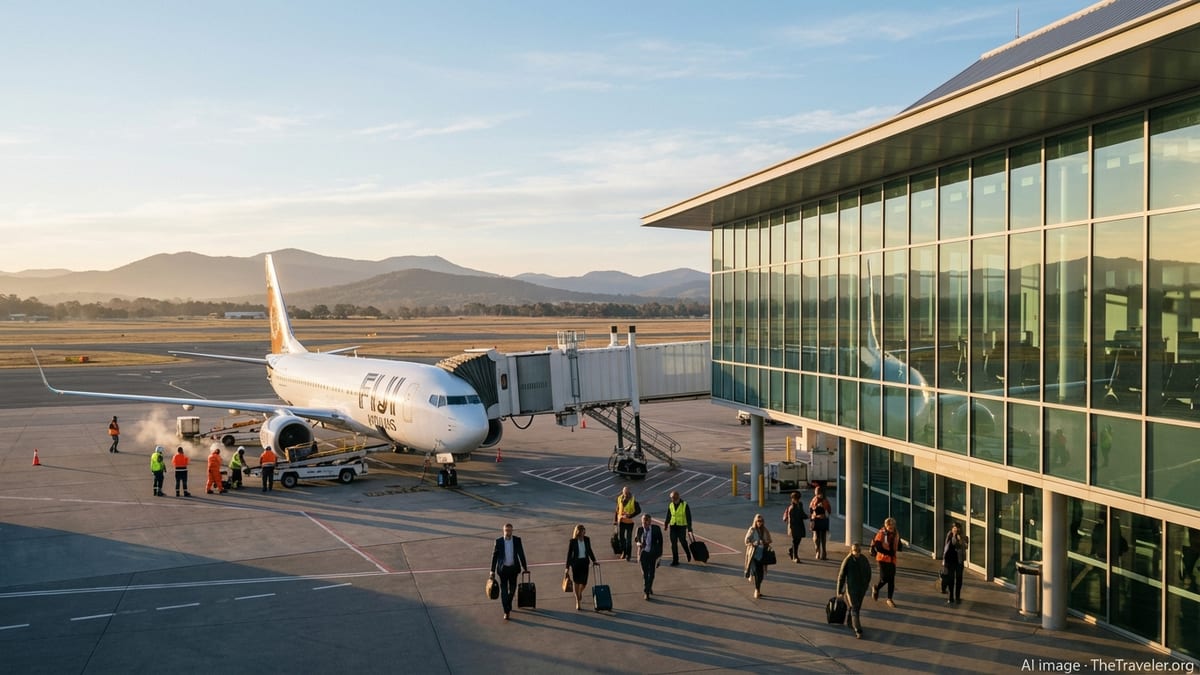
Fiji Airways Cements Canberra–Nadi as a Strategic Bridge
Fiji Airways has been steadily building its Canberra presence since launching nonstop services between the national capital and Nadi in 2023, restoring international flying to an airport that had gone without overseas links since the pandemic. The route, typically operated by Boeing 737 MAX aircraft, places the Fijian hub within about four hours of the ACT, giving leisure and business travellers a dedicated South Pacific connection that bypasses Sydney and Melbourne.
For Canberra Airport, the direct Nadi link is a cornerstone of its post-pandemic rebuilding strategy. Having previously relied on a small group of long-haul carriers, the airport is now leaning into mid-range regional hubs that can fan passengers out across the Pacific and Asia. The Fiji tie-up also provides a hedge against future shocks by diversifying the airport’s network beyond a single giant partner.
Travel data providers now list multiple weekly Fiji Airways departures from Canberra to Nadi, with schedules typically timed for afternoon departures from the capital that arrive in Fiji early evening. That timing allows many passengers to connect the same day onto overnight services to North America or onward links into Asia, expanding the airport’s catchment well beyond the ACT and surrounding regions.
Industry analysts note that the Canberra–Nadi route also plays an important role for outbound tourism from the capital, with Fiji firmly established as a family and honeymoon favourite. However, it is the onward connectivity that is quietly redefining Canberra’s place on the aviation map.
One-Stop to San Francisco, Vancouver and North America
The most eye-catching change is the way Nadi has become a bridge from Canberra to key North American gateways, particularly San Francisco and Vancouver. Fiji Airways’ network from its home hub now includes direct services to major US and Canadian cities, and booking engines show regularly scheduled one-stop itineraries linking Canberra with San Francisco via Nadi on selected days.
While exact frequencies and timings vary across seasons, the pattern is clear: a mid-afternoon departure from Canberra lands in Nadi in the early evening, often within a few hours of Fiji Airways’ late-night departures to North America. For travellers, that can mean a single airline ticket, protected connections and the convenience of checking bags through from Canberra to their final US or Canadian destination.
Vancouver has emerged as a particularly attractive option for both leisure and business passengers from the ACT. Fiji Airways’ expansion into Western Canada gives Canberrans an alternative to transiting through the busy hubs of Sydney or Los Angeles, while still keeping them plugged into one of North America’s fastest-growing aviation gateways and its onward links across Canada and into the United States.
Travel agents in Canberra report growing interest in these one-stop routings as awareness spreads. For many travellers, the ability to break the journey with a short stop in Fiji, or to build in a beach holiday on either leg, is another selling point that sets the Nadi hub apart from more traditional, purely functional transit points.
Connecting Canberra to Singapore, Hong Kong and Tokyo
Fiji Airways’ connectivity story does not end in North America. The Nadi hub is also wired into several of Asia’s most important aviation centres, including Singapore, Hong Kong and Tokyo, which are now within one-stop reach of Canberra on a single ticket. For a capital city that has long aspired to stronger direct ties with Asia, this growing web of connections represents a significant strategic shift.
Singapore’s position as a global financial and logistics hub makes it a prime target for the ACT’s business and government travellers. With Nadi–Singapore flights feeding into extensive onward networks across Southeast Asia, India and Europe, Canberra passengers using Fiji Airways gain access to a lattice of destinations that was previously only practical via Sydney or Melbourne.
Hong Kong and Tokyo serve a similar function at the northern edge of the region, acting as gateways into Greater China, North Asia and beyond. As Fiji Airways has rebuilt and broadened its Asian schedule in recent years, these routes have expanded Canberra’s reach without the airport having to court multiple separate long-haul operators.
The emerging pattern is that of a “virtual hub” model for Canberra. Rather than relying on a single giant carrier to fly directly to every continent, the airport is partnering with mid-range hubs like Nadi and Doha to offer one-stop access to a wide spectrum of global cities, with schedules and fares that aim to stay competitive against the big east-coast gateways.
What Travellers Need to Know About the New Options
For passengers, the most practical change is the growing number of viable one-stop itineraries from Canberra to destinations that once required two or even three separate sectors. Booking platforms now surface options via Nadi alongside more traditional routings through Sydney, Melbourne or Brisbane, often with total journey times and fares that are comparable or better.
Because Fiji Airways is investing in its long-haul fleet and in partnerships with other international airlines, travellers from Canberra can generally expect through-checked baggage, coordinated minimum connection times and reciprocal frequent-flyer benefits on many itineraries. That reduces the risks associated with separate tickets and self-managed transfers, particularly on complex long-haul journeys.
Schedule coordination remains an important consideration. Some itineraries allow for same-day onward connections in Nadi, while others may require an overnight stay, which can be either a welcome break or a complication depending on the traveller. Industry observers say that as Fiji Airways continues to refine its timetable and grow its fleet, more tight, same-day connections from Canberra through to major hubs are likely to emerge.
Travellers are also being advised to pay attention to seasonal variations, with some routes operating at higher frequencies during peak holiday periods. Flexibility on travel dates can unlock additional options, and the growing competition on trans-Pacific and Asia–Pacific sectors means promotional fares are appearing with increasing regularity.
Canberra’s Aviation Ambitions Gain New Momentum
The Fiji Airways development fits into a broader recalibration of Canberra Airport’s international ambitions. Alongside the enduring Nadi link, the capital has seen renewed long-haul services via Doha and fresh announcements such as Virgin Australia’s upcoming nonstop flights to Bali, underscoring confidence that the market can sustain a more diversified international network.
Local business groups argue that the shift from being a purely domestic spoke to a modest but genuine international node has real economic implications. Easier access to North America and key Asian hubs supports trade missions, education and research partnerships, and inbound tourism into the ACT and surrounding regions.
For residents, the growing menu of one-stop options means fewer early-morning road trips up the highway to Sydney and more opportunities to start and finish major international journeys at their home airport. For Canberra Airport, it is a tangible sign that the long-promised vision of the city as a globally connected capital is slowly, and quietly, becoming reality.