

More news on this day
Finland scrambled F/A-18 Hornet fighter jets on Sunday after several drones entered the country’s airspace in the southeast, with at least two unmanned aircraft later crashing near the city of Kouvola, according to publicly available information from Finnish authorities and local media.
Get the latest news straight to your inbox!
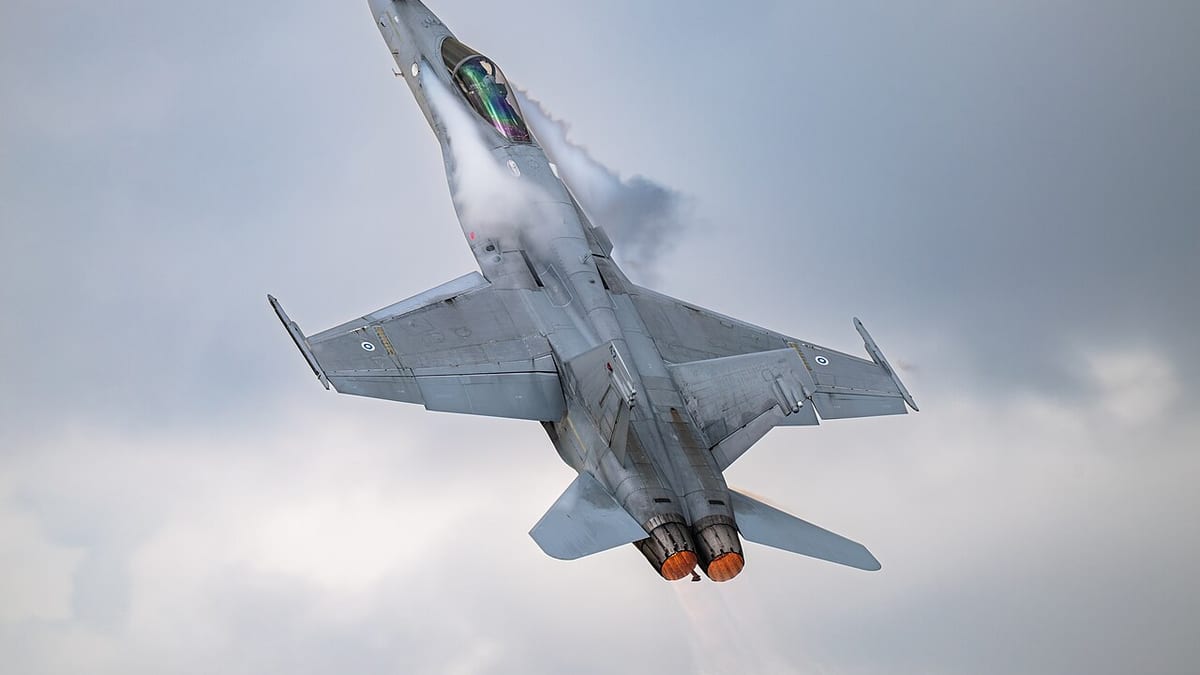
Image by AIRLIVE
Drones Detected Over Southeastern Finland
Reports indicate that slow, low-flying drones were first detected on Sunday morning near Finland’s southeastern border with Russia. Publicly available information from the Finnish Ministry of Defence describes the aircraft as unmanned systems moving at relatively low altitude and speed, raising immediate concern about a potential airspace violation.
Tracking data and local coverage suggest that at least two drones continued inland before losing power or control and crashing north and east of Kouvola, an important railway hub roughly 80 kilometers from the Russian border. Initial assessments point to no casualties on the ground, and early statements note that material damage appears limited to the crash sites themselves.
The incident took place against the backdrop of intensified drone and missile activity connected to the war in Ukraine, including long-range strikes in the Baltic region. Analysts note that the growing use of unmanned systems over the Gulf of Finland and the Baltic Sea has increased the possibility of drifting or misdirected drones entering the airspace of NATO states.
F/A-18 Hornets Launched To Identify Intruding Aircraft
In response to the detection of unidentified drones, the Finnish Air Force launched F/A-18 Hornet fighter jets as part of a quick reaction alert mission to identify the objects. Publicly available information from national media coverage notes that at least one Hornet operated over southeastern Finland during the episode, using onboard sensors and visual contact to confirm the nature of the aircraft.
Reports indicate that the Hornet pilots did not engage the drones with live weapons. According to media summaries of official briefings, the assessment was that attempting to shoot down the unmanned aircraft over inhabited areas could create a higher risk of collateral damage than allowing them to crash once they ran out of fuel. The decision illustrates the complex trade-offs involved in air defense responses to slow-moving drones over populated regions.
The use of F/A-18s in this role reflects Finland’s long-established practice of maintaining high readiness for air policing missions. Since joining NATO, Finland has integrated its quick reaction capabilities more closely with alliance surveillance and information-sharing networks, while still retaining national authority over responses inside its own airspace.
Early Findings Point To Ukrainian-Origin Drones
In an initial assessment shared in local and international coverage, Finland’s Prime Minister Petteri Orpo indicated that the drones are believed to be of Ukrainian origin. Publicly available reports name at least one of the unmanned aircraft as belonging to a class linked to Ukrainian long-range strike systems, which have reportedly been used against targets around the Baltic Sea.
Commentary in Finnish and international media has focused on the possibility that the drones may have deviated from planned routes due to technical malfunction or electronic warfare interference in the region. Military analysts cited in open reporting highlight that heavy GPS jamming has repeatedly been documented in the wider Baltic and Gulf of Finland area, increasing the risk that navigation systems on unmanned aircraft can be disrupted.
Despite Finland’s strong political and military support for Ukraine, coverage indicates that Helsinki is treating the episode as a clear violation of its sovereign airspace. Officials have announced an investigation into the technical and operational circumstances of the incursion, including flight paths, control links, and any potential role of jamming or guidance failures.
Heightened Security Climate On NATO’s Northeastern Flank
The drone incursion comes at a time of heightened tension and frequent airspace incidents around the Baltic region. Recent years have seen multiple suspected or confirmed violations of Finnish and Baltic airspace by Russian military aircraft, often prompting quick reaction launches by Finnish and other NATO fighter jets. Published analyses show that intercept and identification flights in the area have increased significantly since the start of the full-scale war in Ukraine.
Finland, which joined NATO in 2023, sits on the alliance’s northeastern flank with a 1,300-kilometer land border with Russia and critical proximity to the Gulf of Finland and key Baltic Sea routes. The country’s airspace now forms part of an extended defensive shield stretching from the Arctic to Central Europe, increasing both its strategic importance and its exposure to spillover from nearby conflicts.
Security experts note that the latest incident illustrates how unmanned systems can test alliance responses in subtle but consequential ways. Unlike identifiable state-operated fighter jets, drones may be harder to attribute conclusively, especially when navigation systems have been disrupted, yet their presence in national airspace still demands a calibrated military and diplomatic reaction.
Implications For Civil Aviation And Future Protocols
The appearance of slow-moving drones over southeastern Finland also raises questions for civil aviation and regional travel. The airspace around Kouvola lies along routes used by domestic and international flights to and from Helsinki and other Nordic hubs. While there were no immediate reports of commercial traffic being disrupted on Sunday, aviation specialists point out that unidentified drones at relatively low altitude can pose a serious hazard to smaller aircraft and complicate air traffic control operations.
Finland already maintains robust procedures for coordinating between the air force, border guard, and civil aviation authorities, but this latest event is likely to bring renewed attention to how those protocols address unmanned aircraft. Policy discussions in Nordic and European forums have increasingly centered on airspace management for drones, including detection, identification thresholds, and criteria for kinetic engagement near populated areas.
Travel industry observers suggest that, for now, the incident is unlikely to have a direct effect on flight schedules or tourism flows to Finland. However, the episode underscores how quickly security developments in the wider region can intersect with commercial aviation. As drone technology proliferates and electronic warfare intensifies near the Baltic, travelers and airlines alike may see more frequent short-notice airspace adjustments, temporary restrictions, or heightened surveillance measures over routes bordering the conflict zone.