

More news on this day
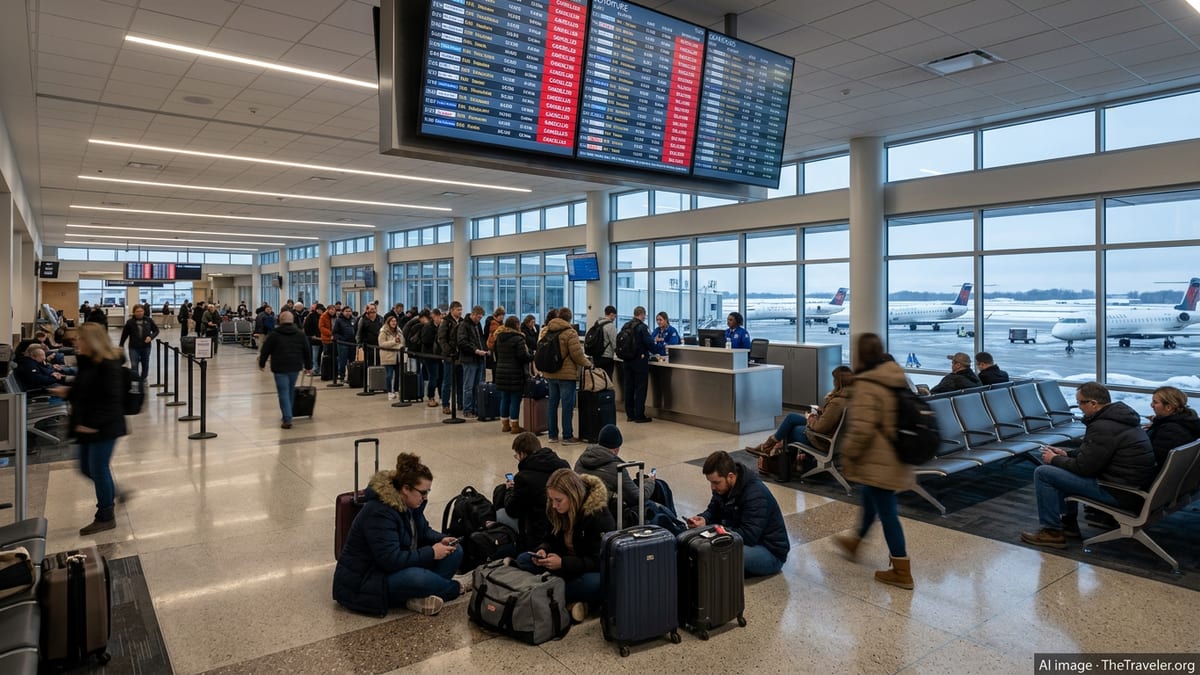
Major air travel disruption continued across the United States on March 15, as operations at The Eastern Iowa Airport in Cedar Rapids were hit by 52 flight cancellations and 8 delays, creating knock-on chaos for passengers traveling through Minneapolis, Chicago, Miami, Clearwater, and other destinations.
Get the latest news straight to your inbox!
Weather Turbulence and an Overstretched Network
The disruption at The Eastern Iowa Airport, known by its CID code, comes amid a volatile stretch of March weather that has already strained airline operations across the Midwest. Recent winter weather systems and severe storms affecting states from Iowa and Illinois to Minnesota have repeatedly reduced flight capacity and tightened available aircraft and crews across the network.
Publicly available information on airline travel waivers in recent days points to a cluster of weather advisories covering key Midwest hubs such as Chicago O’Hare and Minneapolis–Saint Paul. As flights into those hubs slow or stop, smaller airports like Cedar Rapids feel the impact when arriving aircraft and flight crews fail to reach their next scheduled departure on time.
Industry data and historical patterns show that regional airports with limited daily frequencies are particularly vulnerable during multi-day weather events. When one or two inbound flights are canceled or heavily delayed, the effect can cascade through the schedule, eliminating multiple onward legs and concentrating cancellations into a short window.
Reports from flight-tracking platforms and traveler forums over the weekend describe recurring combinations of weather, air traffic flow restrictions, and aircraft repositioning challenges. Together, these factors appear to have contributed to the unusually high total of 52 cancellations and 8 delays reported at Eastern Iowa on March 15.
Ripple Effects From Cedar Rapids to Major U.S. Gateways
The pattern of cancellations and delays at Eastern Iowa has radiated outward to some of the country’s largest and busiest hubs. The airport’s commercial schedule is heavily focused on connections through Minneapolis, Chicago, Denver, Washington, and seasonal service to Miami, linking Cedar Rapids passengers to destinations nationwide, including popular Florida cities such as Miami and the Clearwater–Tampa Bay area.
According to published coverage of recent schedule changes and airline route maps, Cedar Rapids functions primarily as a spoke airport, feeding traffic into larger hub cities where travelers connect onward. When departures from CID fail to operate, passengers bound for Minneapolis, Chicago, or Miami lose those connections, and seats on later flights from the hubs rapidly fill with rebooked travelers.
On March 15, travelers reported missed or threatened onward connections through Minneapolis–Saint Paul and Chicago O’Hare, as well as disrupted itineraries to South Florida. Some itineraries routed through Miami and Tampa for access to Clearwater’s Gulf Coast beaches became particularly vulnerable, since many of those journeys rely on only one or two daily options from the Midwest.
These secondary impacts have contributed to a sense of confusion among passengers far beyond eastern Iowa. People boarding flights in Chicago or Minneapolis have encountered unexpectedly full flights, long standby lists, and limited same-day rebooking options, a situation that traces back in part to canceled departures from smaller origin points such as Cedar Rapids.
Passenger Frustration and Limited Options
Travelers attempting to depart Eastern Iowa on March 15 faced a narrow set of choices once cancellations began to accumulate. With more than fifty flights removed from the schedule, many passengers had to weigh whether to wait for the next available seat, attempt to depart from a different airport such as Chicago or Minneapolis, or abandon their trips altogether.
Comments shared on regional travel forums and social platforms in recent days highlight the particular challenges of rebooking from a smaller market. When large portions of the day’s flights are canceled, remaining departures quickly sell out, leaving travelers to search for alternatives involving long drives to larger hubs or overnight stays while they wait for seats to open.
Travel information resources note that when widespread weather-related disruption affects an entire region, airlines often operate under special travel waivers that allow customers to change flights without standard fees. However, those waivers do not create additional capacity. As a result, passengers out of Cedar Rapids and connecting hubs like Minneapolis and Chicago have found that, while they may change their tickets, there are simply too few available seats to accommodate everyone on their preferred dates.
For travelers already en route, misaligned connections created additional stress. Delayed arrivals into hub airports left short connection windows, forcing some passengers to sprint between gates only to find their onward flight already full with previously rebooked customers from earlier cancellations at regional airports.
Operational Strain at Major Hubs
Major hubs including Minneapolis–Saint Paul, Chicago O’Hare, and Miami have experienced intense operational pressure in parallel with the situation at Eastern Iowa. Recent travel waivers and public discussions among passengers reference a combination of storms, de-icing operations, and air traffic control constraints that slowed or suspended flights into and out of these airports over the past several days.
At Minneapolis–Saint Paul, reports from travelers on March 14 and March 15 described clusters of evening cancellations and lengthy delays that left aircraft and crews out of position for the following morning’s flights. Similar patterns were observed in Chicago, where thunderstorms, low visibility, or strong winds can quickly trigger ground delay or ground stop programs that ripple across the national network.
In South Florida, passengers tracking flights into and out of Miami and nearby airports have reported holding patterns and arrival delays associated with congestion and unsettled weather. When inbound traffic is restricted, it complicates the ability of airlines to maintain their schedules, with knock-on effects that reach back along the route network to smaller origin airports like Cedar Rapids.
Operationally, airlines must juggle aircraft rotations, crew duty-time limits, and maintenance requirements while responding to changing weather and airspace conditions. When these factors converge across several hubs at once, a relatively small airport can experience an outsized number of cancellations, as appears to have been the case at Eastern Iowa on March 15.
What Travelers Can Do as Disruptions Continue
With ongoing weather volatility and a tightly stretched aviation system, travel experts and consumer advocates consistently emphasize preparation and flexibility. Publicly available guidance from industry publications recommends that passengers flying through vulnerable hubs, including Chicago, Minneapolis, and Miami, build generous connection times into their itineraries and monitor their flight status closely.
Digital tools that provide real-time flight tracking, automated itinerary updates, and push notifications can help travelers respond quickly to changes, particularly during multi-day disruption events. When cancellations at a spoke airport like Cedar Rapids begin to mount, early awareness can give passengers a better chance of securing scarce rebooking options or adjusting ground transportation and accommodation plans.
Travelers are also encouraged to familiarize themselves with airline policies on weather-related disruptions and schedule changes. While compensation may be limited when disruptions are attributed to weather or air traffic control, airlines often offer fee-free changes within specified date ranges or allow passengers to rebook from alternative airports within a defined radius.
As conditions evolve across the Midwest and key coastal hubs, travelers with upcoming flights touching Eastern Iowa, Minneapolis, Chicago, Miami, Clearwater, and other connected destinations are likely to face continued uncertainty. Careful planning, active monitoring of flight information, and readiness to adjust routes or dates remain essential strategies for navigating a period of sustained turbulence in the U.S. air travel system.