

More news on this day
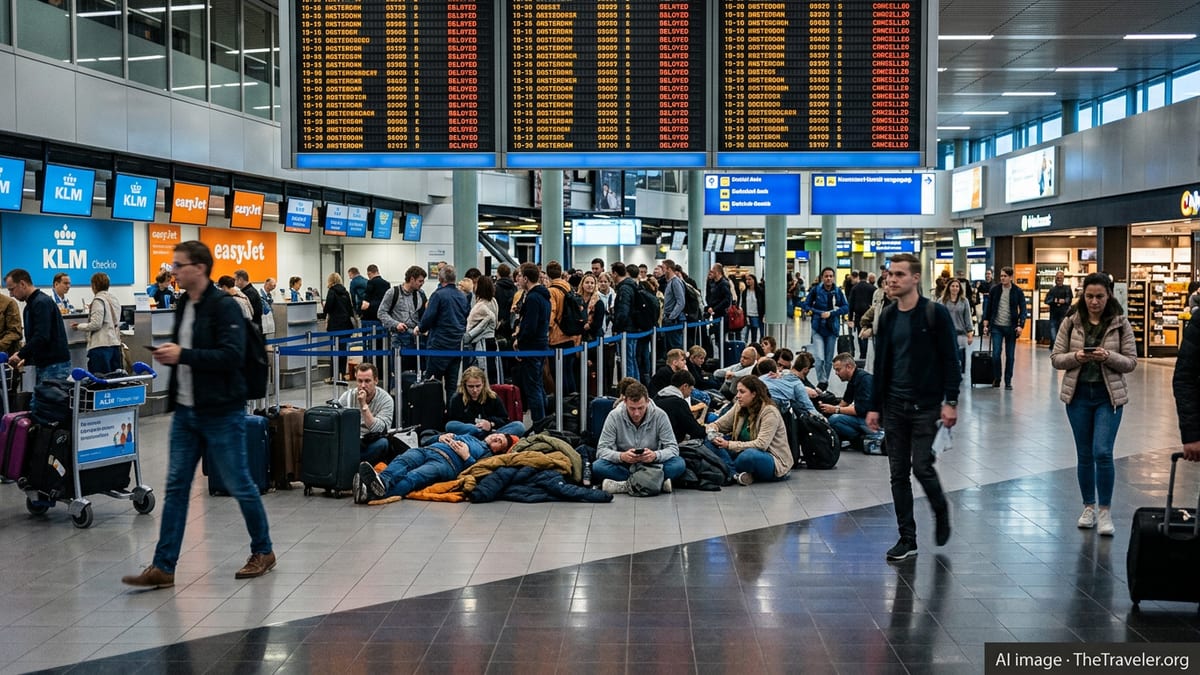
Hundreds of airline passengers were stranded at Amsterdam Schiphol on April 8 and 9 as a fresh wave of cancellations and delays affecting KLM, Lufthansa, easyJet and other carriers disrupted routes across Europe and into the Gulf, snarling travel plans at the height of the spring holiday period.
Get the latest news straight to your inbox!
Schiphol Disruptions Hit Key European Routes
Publicly available operational data for April 8 indicate that Amsterdam Schiphol recorded more than 230 delayed flights and several cancellations in a single day, placing it among the hardest hit hubs in Europe. Reports from travel industry outlets describe hundreds of passengers forced to wait in long lines for rebooking and accommodation after services were scrubbed or heavily delayed.
While no single airline accounted for all of the disruption, the impact was keenly felt by KLM at its home base, alongside Lufthansa, easyJet and other European carriers that use Schiphol as a key transfer point. Many of the affected flights were short haul or medium haul services feeding major destinations in Italy and Germany, magnifying the knock on effect for travelers attempting to make onward connections.
By April 9, delays at Schiphol were still elevated compared with a typical weekday, although the volume of outright cancellations appeared lower than the previous day. Aviation tracking summaries show that the airport remained under operational strain as airlines worked through aircraft rotations and crew duty time limits that had been thrown off schedule by earlier disruption.
The Schiphol problems unfolded in parallel with wider turbulence in the European network. Other major hubs, including London Heathrow, Istanbul and Frankfurt, also reported clusters of delays, compounding the difficulties for passengers whose itineraries crossed multiple congested airports in a single trip.
Venice, Bologna and Florence Caught in Italian Bottlenecks
The wave of issues at Schiphol coincided with mounting pressures on Italian airports, where separate operational challenges have emerged since the start of April. Travel publications and Italian media have highlighted fuel supply restrictions at airports serving Venice and Bologna, with airlines instructed to adjust uplift plans and in some cases to tanker additional fuel from other hubs.
Although Italian authorities have sought to keep local disruption contained, the combination of fuel rationing and crowded holiday schedules has reduced flexibility for carriers operating between Amsterdam and cities such as Venice, Bologna and Florence. Services that might otherwise have absorbed Schiphol driven schedule changes through minor retimings instead faced tighter turnarounds, raising the risk of delays or cancellations when knock on problems spread from northern Europe.
European passenger rights organizations note that Italy has recorded elevated levels of disruption in early April, particularly at Rome and Milan, and that ripple effects have been visible on secondary routes connecting to the country’s regional airports. Against that backdrop, the loss of several flights from Amsterdam left some travelers with limited options to reroute into northeastern and central Italy on the same day.
Travel advisories circulating in consumer media now encourage passengers bound for Venice or Bologna via Amsterdam to monitor both their Dutch and Italian legs closely, and to consider alternative routings through Paris, Zurich or Vienna where possible if schedules begin to unravel.
Frankfurt and Wider German Network Feel the Strain
Frankfurt, one of Europe’s primary intercontinental gateways, has also experienced significant disruption in recent days, with aggregated figures for April 8 showing more than a hundred delayed flights and a smaller number of cancellations. Lufthansa and partner airlines that rely on tight connection banks in Frankfurt have had to navigate the combined impact of local congestion and upstream problems at Schiphol.
Several of the canceled or delayed departures from Amsterdam on April 8 and 9 involved services into Frankfurt or onward codeshares feeding the German hub. When those flights failed to operate as planned, travelers heading for long haul departures out of Germany found themselves rebooked onto later connections, overnighted in airport hotels or shifted onto alternative routings through other Star Alliance and SkyTeam hubs.
German travel coverage emphasizes that while Frankfurt is accustomed to managing irregular operations, the current environment is particularly unforgiving. Strong spring demand, residual staffing gaps in ground handling and air traffic services, and weather variability across northern Europe have combined to reduce the network’s capacity to absorb additional shocks such as a bad day at Schiphol.
Passenger advocacy groups caution that itineraries linking Amsterdam and Frankfurt remain vulnerable to further disruption in the short term, urging travelers with tight connections to allow additional buffer time or to request earlier feeder flights where possible.
Riyadh and Gulf Connections Disrupted
The latest round of disruption at Schiphol has not been limited to intra European routes. Long haul links to the Gulf, including flights to Riyadh, have also faced complications as airlines adjusted schedules in response to the congestion in Amsterdam and broader airspace constraints across parts of Europe and the Middle East.
Publicly available documents summarizing recent operational challenges at KLM note previous decisions to cancel or consolidate selected services to Gulf destinations, including Riyadh, during periods of heightened strain at Schiphol. While the current disruption does not appear to match the scale of earlier episodes tied to winter weather, it has nonetheless reawakened concern among travelers using Amsterdam as a gateway between Europe and the Arabian Peninsula.
According to published coverage from aviation analysts, routes linking European hubs to Gulf cities have been under pressure this spring from a mix of airspace rerouting, elevated traffic volumes and localized bottlenecks at key transfer airports. In that context, cancellations or long delays on individual Amsterdam Riyadh rotations can quickly cascade into missed onward connections to destinations across Saudi Arabia and the wider region.
Passengers with multi segment Gulf itineraries routed through Schiphol have been advised by consumer travel outlets to check flight status frequently and to keep digital copies of their tickets and receipts, both to support rebooking at the airport and to document potential claims under European passenger protection regulations.
What Travelers Can Expect in the Coming Days
Industry observers suggest that, while the peak of the latest disruption at Amsterdam Schiphol may have passed, conditions are likely to remain unstable in the short term. Forecasts point to variable spring weather across northern Europe, and airlines are still working through aircraft and crew imbalances built up over several days of irregular operations.
Data compiled by passenger rights platforms and travel intelligence services for the first week of April show a broader pattern of strain across the European aviation network, with several thousand delays and hundreds of cancellations reported at major hubs. Schiphol’s experience on April 8 and 9 fits into that wider picture rather than standing as an isolated incident.
Travel media recommend that passengers scheduled to fly to or from Amsterdam, particularly those connecting onward to Venice, Bologna, Frankfurt, Florence or Riyadh, adopt a cautious approach in the coming days. Suggested steps include allowing extra time at the airport, favoring longer connection windows, and ensuring that airline apps and contact details are up to date in case of last minute schedule changes.
For now, the situation at Schiphol illustrates how even a modest number of cancellations at a major hub can leave hundreds of travelers stranded and send ripples along key routes, underscoring the fragility of Europe’s tightly wound aviation network during a busy spring travel season.