

More news on this day
Air travel across Colombia faced fresh disruption on March 25, 2026, as more than 30 flights were cancelled on key domestic and international routes, affecting services to Bogota, Medellin, Cali, Orlando and several other destinations at the start of a busy holiday travel period.
Get the latest news straight to your inbox!
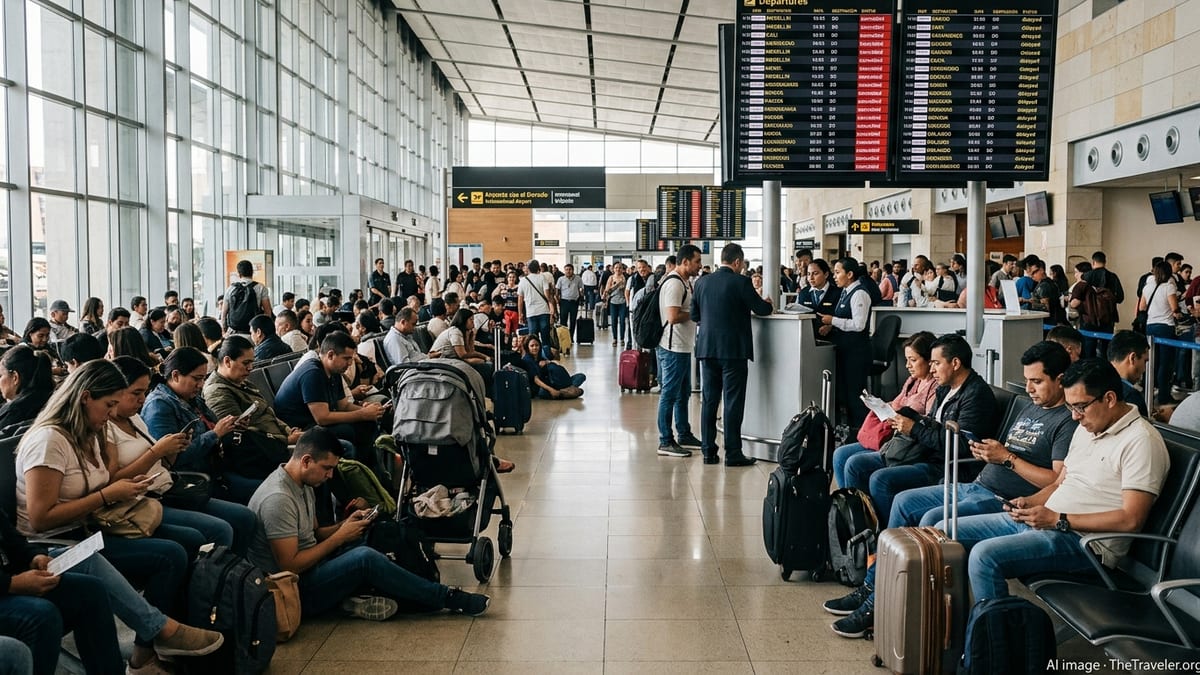
Widespread Disruptions at Major Colombian Hubs
Published flight-status data and local media coverage indicate that cancellations and significant delays built up through the day at the country’s largest airports, including Bogota El Dorado, Medellin’s Jose Maria Cordova, and Cali’s Alfonso Bonilla Aragon. The disruptions affected both early morning and afternoon banks of flights, tightening available capacity on already busy routes.
The cancellations covered a mix of domestic services linking Bogota with Medellin, Cali, Barranquilla and Cartagena, as well as international flights to North American and regional Latin American destinations. Routes between Colombia and the United States, particularly services touching Orlando, saw a cluster of scrubbed departures and returns, further complicating travel plans for families and leisure travelers heading into the Easter period.
Publicly available flight-tracking boards showed gaps in schedules for several major Colombian and foreign carriers, with some aircraft listed as cancelled hours before departure and others removed from displays after extended delays. The result was a patchwork of last-minute rebookings, long customer service queues and extended waits in terminal areas as travelers tried to secure alternative connections.
Operational Strain and Weather Among Contributing Factors
While individual flight records cite a range of causes, the pattern of cancellations reflects a combination of operational constraints within airlines and adverse weather conditions along parts of the network. Storm systems in the southeastern United States have recently produced ground delays and rolling disruptions at Orlando and other Florida airports, which can ripple into Colombian schedules when aircraft and crews fail to arrive on time.
At the same time, Colombia’s complex geography and localized weather patterns frequently lead to restrictions at high-altitude airports such as Bogota and Medellin. Low visibility, heavy rain and changing wind conditions can require adjustments to approach and departure procedures, reducing the number of movements that can be handled per hour and leaving airlines with limited flexibility when operations are already tight.
Airlines have also been managing wider regional pressures, including high seasonal demand, limited spare aircraft and ongoing maintenance checks scheduled around the Easter and mid-year travel peaks. According to published airline advisories, carriers in the region continue to adjust timetables and consolidate lightly booked services, a strategy that can quickly translate into clusters of cancellations when weather or airspace constraints arise on the same day.
Impact on Travellers: Missed Connections and Overnight Stays
The immediate impact for many passengers has been missed connections at Bogota and Medellin, which serve as primary hubs for both domestic and international itineraries. Travelers arriving from secondary cities such as Pereira, Bucaramanga or Santa Marta have reported, through public posts and forum discussions, losing long-haul onward flights after short intra-Colombian sectors were cancelled or heavily delayed.
Some travelers connecting through the United States, especially via Orlando and other Florida gateways, have also faced last-minute itinerary changes. Disruptions on one segment often force complete rerouting, with passengers rebooked through alternative hubs such as Miami, Panama City or Mexico City, and in some cases facing overnight layovers while waiting for available seats.
Publicly shared experiences suggest that accommodation and meal support vary by airline and by the reason listed for each cancellation. Weather-related disruptions typically fall under less generous assistance policies than events directly controlled by carriers, leaving some passengers responsible for arranging and paying for their own hotel rooms while they wait for a new departure.
Guidance for Affected Passengers in Colombia and Abroad
Consumer advocacy groups and travel advisers in the region recommend that passengers with upcoming flights to or from Colombian cities closely monitor their reservations on airline websites or mobile apps rather than relying only on airport departure boards. Same-day changes, aircraft swaps and gate adjustments are common when operations come under pressure, and digital tools generally update more quickly than terminal screens.
Travel specialists also encourage passengers to check the specific conditions attached to their tickets. Many airlines serving Colombia offer some degree of flexibility, such as fee-free date changes or the ability to retain the value of a ticket for future travel when flights are cancelled or significantly rescheduled. These options are usually time-limited, so timely action is important once a disruption appears.
For travelers already at the airport, publicly available guidance suggests approaching airline service desks only after checking self-service options such as mobile rebooking or automated kiosks, which can sometimes secure new seats faster during large-scale disruptions. Keeping boarding passes, receipts and any written confirmation of changes is also recommended, particularly for those who may later seek refunds or compensation under Colombian or foreign consumer regulations.
Outlook for the Coming Days
With Easter approaching at the end of March, Colombian airports are entering one of their busiest travel periods of the year. Historical patterns show that traffic volumes typically rise sharply on routes connecting Bogota, Medellin and Cali with coastal cities and international leisure destinations such as Orlando, Miami and Madrid, leaving airlines with limited slack when irregular operations occur.
Published schedules for the next several days continue to show dense banks of flights in and out of Colombia’s main hubs, meaning that seats for disrupted passengers may be scarce on peak days and times. Travelers planning imminent departures are being advised by local travel agencies and online forums to allow additional time at the airport, prepare for potential schedule changes and, where possible, avoid extremely tight connections between domestic and long-haul segments.
While the volume of cancellations reported on March 25 marks a notable spike, industry observers note that similar waves of disruption have occurred periodically in recent years when adverse weather in North America coincides with high demand in Latin America. The situation over the coming days will depend heavily on evolving weather patterns and on how quickly airlines can reposition aircraft and crews to restore normal operations on Colombia’s busiest routes.