

More news on this day
Travelers departing South Korea faced fresh disruption as Japan Airlines and American Airlines cancelled two high-profile long-haul services from Seoul Incheon, affecting key links to Sydney and Dallas-Fort Worth and prompting a scramble for alternative routes.
Get the latest news straight to your inbox!
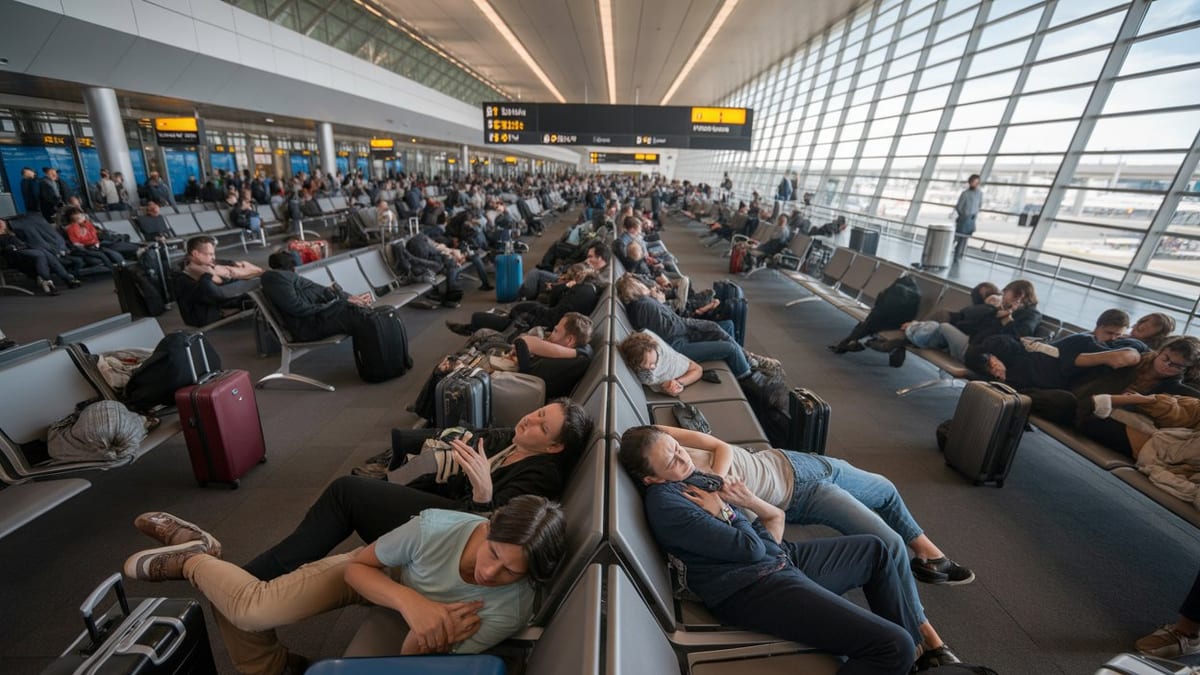
Image by Global Travel Alerts, Advisories, International Travel Alerts
Key Long-Haul Links From Incheon Abruptly Halted
The two cancellations center on strategically important intercontinental services: a Japan Airlines-operated route connecting Seoul Incheon with Sydney and an American Airlines flight between Incheon and its Dallas-Fort Worth hub. Publicly available flight-status information and timetable data indicate that both departures were pulled at short notice, leaving passengers to rebook or reroute via other Asian and Pacific gateways.
The affected Japan Airlines flight typically offers a one-stop connection for South Korea-based travelers heading to Australia, feeding into wider Asia-Pacific and domestic Australian networks at Sydney. The American Airlines service, meanwhile, is a primary non-stop trans-Pacific link to Dallas-Fort Worth, a megahub that funnels traffic onward to cities across North America and Latin America.
Initial indications suggest the cancellations were limited to specific rotations rather than a full suspension of the routes. However, the disruption underlines how sensitive long-haul operations remain to network imbalances, aircraft and crew availability, and regional weather and operational constraints, even as global air travel volumes continue to recover and expand.
Both airlines had been positioning their Incheon operations as key pieces of broader international strategies, with Dallas-Fort Worth in particular promoted in recent network updates as a major platform for long-haul growth. The sudden loss of these flights, even on a short-term basis, therefore has a disproportionate impact on connecting passengers who rely on tightly timed itineraries.
Knock-On Effects for Passengers Across South Korea
The immediate consequence for travelers has been a surge in rebooking activity and a rapid tightening of seat availability on alternative routes out of South Korea. Online booking platforms and travel forums show passengers scrambling for last-minute space on services via Tokyo, Hong Kong, Singapore, and Middle Eastern hubs, as well as on other trans-Pacific departures from Incheon.
Passengers heading to Australia are being pushed toward connecting itineraries through major Asian hubs, often involving additional stops and longer travel times. For those bound for the United States, particularly southern and central states that commonly route through Dallas-Fort Worth, rerouting now frequently involves connections via Los Angeles, San Francisco, or other U.S. gateways where capacity may already be heavily booked at peak periods.
The disruption has been particularly acute for travelers on tight schedules, including business passengers with onward domestic connections and leisure travelers facing fixed tour or cruise departures. Reports on social channels highlight instances of missed meetings and reshuffled holiday plans, as well as concerns over increased out-of-pocket costs for accommodation and meals during extended layovers.
Travel agents in Seoul and other major South Korean cities are also contending with additional workload, as they work through reissuance rules, fare differences, and alliance alternatives. For many customers, the complexity of international ticketing and varying flexibility policies has made it harder to quickly identify the most reliable and cost-effective replacement options.
Operational and Network Factors Behind the Cancellations
While neither airline has issued detailed public explanations for the specific cancellations, the timing aligns with a period of wider operational strain across parts of the global network. In recent months, American Airlines has dealt with repeated weather-related disruptions and knock-on schedule issues centered on Dallas-Fort Worth, including winter storms that forced large numbers of cancellations and crew displacements.
Long-haul flights, particularly ultra-long sectors such as Incheon to Dallas-Fort Worth and trans-equatorial services touching Sydney, are especially vulnerable to upstream delays. A late arriving aircraft, a crew timing-out, or an extended ground hold at a hub can ripple through the schedule, making it operationally or legally impractical to launch another long-haul rotation on time.
Japan Airlines, for its part, is managing a finely balanced long-haul fleet while also adjusting its broader international schedule around seasonal demand, aircraft maintenance, and joint ventures with alliance partners. Any unplanned maintenance event or airframe allocation change on an Australia or Pacific route can translate quickly into cancellations or downgauges when spare capacity is limited.
Industry analysts note that carriers continue to operate with relatively tight buffers on aircraft and crew for long-haul flying. That approach improves efficiency in normal conditions but leaves less margin to absorb shocks such as severe weather, air traffic control constraints, or ground handling shortages, all of which have featured prominently in recent aviation disruptions worldwide.
Guidance for Affected Travelers Departing Incheon
For passengers whose itineraries touch Seoul Incheon, the latest episode serves as a reminder to closely monitor flight status and build additional contingency time into connections, particularly when traveling through busy hubs like Dallas-Fort Worth or Sydney. Airline mobile apps, airport departure boards, and real-time flight trackers remain the fastest way to confirm whether an individual service is operating on schedule.
Travel specialists recommend that travelers holding tickets on long-haul routes from Incheon consider flexible booking options where possible, including fares that allow changes without substantial penalties and travel insurance products that cover missed connections and extended delays. When disruptions do occur, passengers generally have more leverage and choice if they can shift dates or routings without incurring large additional costs.
Those whose flights have already been cancelled are typically eligible for rebooking on the next available service on the same carrier or, in some cases, on partner airlines within the same alliance. However, capacity constraints can mean significant waits for open seats, especially in premium cabins or on peak travel days. Many travelers find that being proactive and suggesting specific alternative routings can speed up the rebooking process.
Incheon itself remains one of Asia’s most connected hubs, with a wide range of airlines operating to Australia, North America, and beyond. Even when one or two high-profile flights are removed from the schedule, passengers still have access to multiple one-stop options. The challenge, particularly in the immediate aftermath of cancellations, lies in securing space at reasonable fares and preserving trip schedules as closely as possible.
Broader Implications for South Korea’s International Connectivity
The cancellations also touch on a larger discussion about South Korea’s role in regional and global air networks. Incheon has invested heavily in positioning itself as a premier Northeast Asian hub, competing with Tokyo, Hong Kong, and major Chinese and Southeast Asian gateways for transfer traffic and airline partnerships.
High-profile, non-stop long-haul routes such as Incheon to Dallas-Fort Worth and strong connectivity to Australia through Sydney are central to that strategy. When those links are disrupted, even temporarily, it raises questions among frequent travelers and corporate travel planners about reliability, which can influence future booking patterns and corporate travel policies.
At the same time, regional airline restructuring and evolving alliance dynamics mean that South Korean travelers have more choice than ever in how they reach long-haul destinations. Competition from Middle Eastern, Southeast Asian, and other trans-Pacific carriers continues to intensify, offering alternative one-stop itineraries between South Korea, Australia, and North America that can act as a safety valve when specific routes are disrupted.
For now, the cancellations at the center of the latest disruption appear to be isolated events rather than a systematic withdrawal from the market. Even so, observers will be closely watching how quickly Japan Airlines and American Airlines stabilize their Incheon operations, and whether further schedule adjustments emerge as carriers finalize their northern summer 2026 timetables and capacity plans.