

More news on this day
Hundreds of travelers faced unexpected overnight stays and missed connections this week after a cluster of flight cancellations by LATAM Airlines and United Airlines in Peru disrupted key links to New York’s JFK, Newark, Quito and several regional hubs, according to airport status boards and real-time tracking data on February 24.
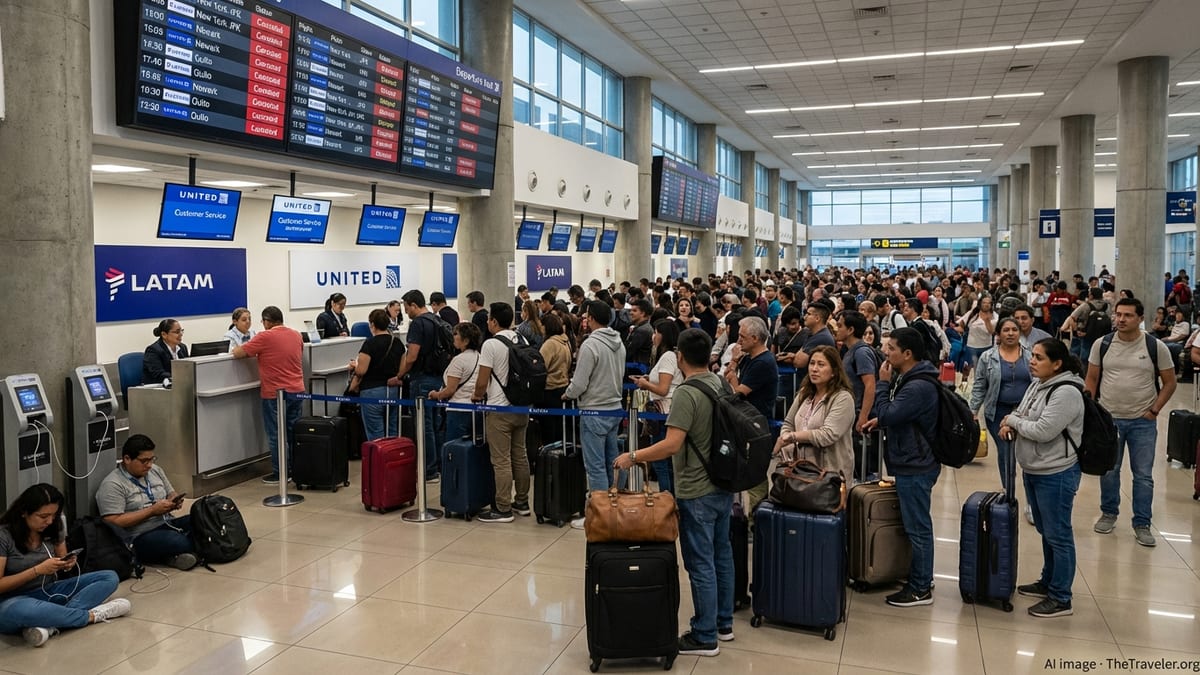
Five Key Flights Scrapped in Rapid Succession
Flight status tools and airport information screens on Monday showed at least five significant services operated by LATAM and United to and from Peru listed as canceled, including LATAM’s New York JFK to Lima route and United’s Newark to Lima service that typically connect North America with onward South American and regional destinations. The disrupted flights hit at the start of a busy late-February travel period, amplifying the impact on both tourists and business travelers moving through Lima’s Jorge Chavez International Airport.
Among the affected services was LATAM flight LA2469 from New York JFK to Lima, which was marked canceled for its overnight rotation scheduled to depart late February 23 and arrive in the Peruvian capital early February 24, leaving passengers bound for Peru scrambling for alternatives at John F. Kennedy International Airport. Additional LATAM operations between Lima and North America, as well as regional sectors feeding into Quito and other Andean destinations, also faced schedule interruptions as the airline adjusted its network.
United Airlines services linking Newark Liberty International Airport with Lima, an important gateway pairing for travelers from the northeastern United States, were likewise caught up in the disruption. The cancellations removed a key nonstop option from the New York metropolitan area to Peru and forced many United customers onto multi-stop routings through Miami, Panama City or other hubs, when seats were available.
While precise passenger counts have not been released, the wide-body aircraft normally used on these routes suggest that several hundred people, and potentially more once missed connections are factored in, have been affected by what has quickly become one of the most significant episodes of Peru-related air disruption so far this year.
Knock-on Effects for Quito, JFK, Newark and Regional Links
The immediate impact of the cancellations was felt most sharply in New York and Newark, where passengers on LATAM and United flights to Lima were told to return to check-in counters for rebooking or compensation options. For many, the cancellations meant missed connections beyond Peru, including onward journeys to Quito, Cusco and other South American cities that often rely on Lima as a primary transfer point.
In Quito, airport staff and ground handlers reported a noticeable number of passengers arriving late or not at all from Peru as upstream cancellations in Lima and New York cascaded across regional networks. Travelers who had planned to transit through Lima on their way to the Ecuadorian capital reported being offered rerouting via Bogotá, Panama City or Miami in order to keep their itineraries intact, often at the cost of far longer travel days.
The New York metropolitan area also saw ripple effects beyond the specific LATAM and United flights listed as canceled. With a popular JFK to Lima service offline and reduced capacity from Newark, some travelers shifted to alternative carriers serving South America from other East Coast cities, putting additional pressure on remaining seats. Airlines with remaining availability on routes to Peru and neighboring countries reported elevated demand and higher day-of-departure fares for the coming days.
Regional connections within Peru were also affected as the disrupted long-haul flights removed feed for domestic services. Passengers bound for interior destinations such as Arequipa or Iquitos faced longer layovers or overnight stays in Lima as schedules were redrawn and seats reprioritized for those who had already begun their journeys.
Airlines Offer Rebooking, But Capacity Is Tight
Both LATAM and United instructed affected passengers to check their flight status online or through mobile apps and to contact customer service channels for rebooking options. At Lima’s Jorge Chavez International Airport, airline staff assisted stranded passengers with hotel accommodation in some cases, in line with company policies and local consumer regulations, while others were offered vouchers or re-routed itineraries on upcoming services.
However, with February traditionally a strong period for travel to and from Peru, available seats on near-term flights proved limited. Travelers attempting to rebook onto later departures to New York, Newark and Quito reported long waits at airport service desks and call centers, with some being told that the earliest confirmed seats could come several days later than originally planned.
In New York, passengers whose overnight flights to Lima had been canceled found themselves competing for a narrow pool of remaining seats not only on LATAM and United, but also on other carriers serving Peru and neighboring countries. Travel agents in the region noted that many customers opted for indirect routings through Central American hubs or other South American cities, accepting longer itineraries in exchange for maintaining critical trip dates.
The situation has underlined how dependent many itineraries are on a relatively small number of nonstop services between Peru and key North American gateways. When those flights are removed from the schedule for even a short period, recovery options can be limited, particularly for passengers traveling during peak leisure or business seasons.
Advice for Travelers Heading to or Through Peru
With flight information still subject to late changes, industry experts are urging travelers with upcoming trips involving Peru, New York, Newark or Quito to monitor their reservations closely over the coming days. Even passengers on flights that currently show as operating normally are being encouraged to enable airline alerts, confirm airport check-in times and consider flexible planning for ground arrangements.
Travel advisors recommend that anyone holding tickets on LATAM or United routes touching Lima review their airline’s disruption and compensation policies, including options for penalty-free date changes, refunds or rerouting via alternative gateways if schedules continue to shift. Those who booked via online travel agencies or third-party platforms are being asked to coordinate both with their booking site and the operating carrier to avoid miscommunication.
Passengers already in Peru or elsewhere in South America who need to reach New York or Newark quickly may find more options by widening their search to include flights through regional hubs such as Panama City, Bogotá or Miami. While such routings add time and additional connections, they can sometimes offer the most reliable path home during periods of concentrated cancellations on specific nonstop routes.
For now, airlines and airports are working to stabilize schedules and move stranded passengers as efficiently as possible. But with aircraft and crew still out of position from the initial wave of cancellations, travelers connecting through Peru should remain prepared for last-minute gate changes, delayed departures and rebookings as operations gradually normalize.