

More news on this day
Travelers using Cairo International Airport on February 24 are facing a new wave of disruption as EgyptAir, FlyEgypt and other regional carriers cancel or adjust key services linking the Egyptian capital with Beirut, Riyadh and several other Middle Eastern destinations.
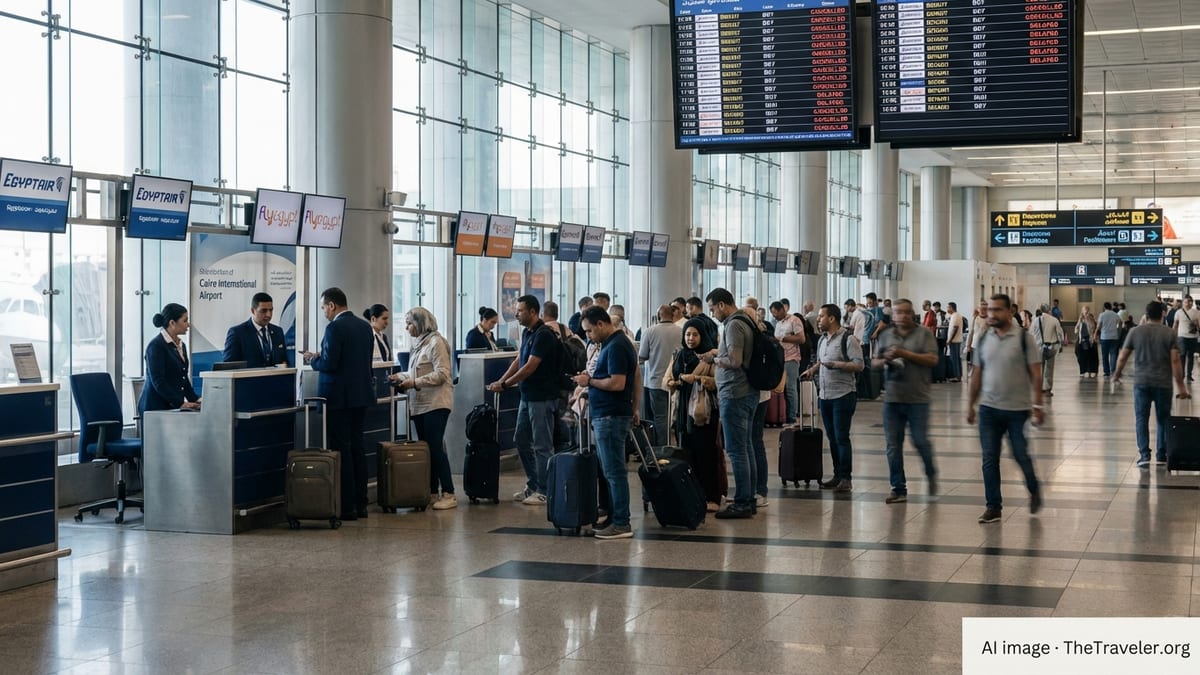
Key EgyptAir Services Cut Amid Regional Volatility
EgyptAir has once again been forced to pare back parts of its regional network from Cairo, with several high-demand routes affected by cancellations and rolling schedule changes. Live departure boards from Cairo International Airport on February 24 show multiple EgyptAir flights within the Middle East market either canceled or heavily delayed as the flag carrier responds to operational and safety pressures.
Among the most notable changes are cancellations on services that act as vital connectors between Cairo and nearby hubs. A scheduled early-morning Cairo to Amman flight, MS740, is listed as canceled, while EgyptAir’s MS746 to Istanbul and MS866 from Port Sudan are also marked as canceled, signaling a tightening of capacity on some of the airline’s busiest regional corridors. These cuts come on top of previously announced suspensions last year on flights from Cairo to Beirut, Amman, Baghdad and Erbil during periods of heightened regional tension.
Although some EgyptAir flights to Beirut remain on the schedule, the pattern of intermittent cancellations and reroutes has left passengers uncertain about travel plans. Industry analysts note that the carrier is balancing commercial demand with risk assessments that can change quickly, particularly on short-haul routes over or into politically sensitive airspace.
Passengers booked on affected flights are being urged to monitor their reservations closely and to arrive early at Cairo International Airport in case of last-minute gate or timing changes. EgyptAir has reiterated that passenger and crew safety remains its top priority, even when that means canceling services at short notice.
FlyEgypt Adjusts Operations as Competition and Logistics Bite
Egyptian leisure and charter operator FlyEgypt has also been swept up in the turbulent operating environment around Cairo. While the carrier primarily serves seasonal and point-to-point leisure routes, industry data and airport timetables indicate that a mix of demand uncertainty, airspace considerations and intense competition on core corridors such as Cairo to Riyadh are prompting selective cancellations and consolidations.
Travel agents in Cairo report that some FlyEgypt departures to regional cities have been withdrawn from sale or merged with other services, leaving passengers rebooked on different departure times or on partner airlines. The impact is particularly felt among budget-conscious travelers and expatriate workers who rely on low-cost or hybrid carriers for routine trips between Egypt and the Gulf.
FlyEgypt’s adjustments come as new entrants and expanding rivals target the same markets. With Saudi Arabian carriers and other regional airlines adding capacity on Egypt–Gulf sectors, smaller operators are being forced to fine-tune their schedules more aggressively, making late-stage cancellations or frequency cuts more common when load factors or route economics shift.
For travelers, this means that itineraries involving FlyEgypt and similar carriers require extra flexibility. Travel consultants recommend booking slightly longer connection windows and checking flight status repeatedly in the 24 hours before departure, particularly for trips involving onward links from Cairo to Beirut, Riyadh or secondary Gulf cities.
Terminal Changes in Riyadh Add to Passenger Confusion
Compounding the disruption for Egypt-bound and Saudi-bound passengers, terminal changes at Riyadh’s King Khalid International Airport are reshaping the experience on the busy Cairo–Riyadh corridor. EgyptAir has confirmed that, effective February 25, 2026, its flights MS651 and MS652 between Cairo and Riyadh will move to Terminal 5 in Riyadh, aligning with a broader reshuffle of operations at the Saudi capital’s main airport.
The shift follows a similar notice from Air Cairo, which is relocating all of its Riyadh operations to Terminal 5 from the same date. While the move is intended to streamline ground handling and improve connections in the long term, the immediate effect for passengers is an additional layer of complexity during an already unsettled travel period.
Travelers flying between Cairo and Riyadh over the coming days are being urged to double-check terminal information printed on their tickets and to allow extra time on arrival in Riyadh for wayfinding and immigration procedures. Misreading a terminal change can result in missed flights or long transfers, especially for those connecting from regional feeder services into the Cairo–Riyadh trunk route.
At Cairo International Airport, agents report an uptick in questions from passengers unsure whether a canceled or retimed flight has also changed terminals at the destination. Airlines are encouraging customers to rely on official apps and customer service channels rather than third-party listings, which may lag behind rapid operational updates.
Beirut Links Under Pressure as Airlines Reassess Risk
Routes between Cairo and Beirut are once again under scrutiny as carriers weigh safety considerations against strong passenger demand. EgyptAir and other regional airlines have previously suspended services to Beirut during periods of heightened regional tension, and data from airport schedules suggest that Beirut frequencies remain more fragile than before.
While some EgyptAir Cairo–Beirut flights are still displayed on public timetables, the pattern of past suspensions, coupled with the latest round of broader Middle East cancellations, is keeping travelers on edge. Additional carriers operating between the two capitals have also shown a willingness to adjust schedules at short notice, particularly when overflight restrictions or conflict-related advisories are issued.
The result is a corridor where travel remains possible but less predictable than on more stable regional routes. Passengers heading from Cairo to Beirut, or using Cairo as a connection point to reach Lebanon from Africa or the Gulf, face a higher-than-usual risk of last-minute changes, aircraft swaps or reroutes via alternative hubs such as Amman or Istanbul.
Travel experts recommend that those with urgent or time-sensitive trips build contingency plans, such as flexible hotel bookings and backup routing options. Booking through a single airline or alliance, rather than piecing together separate tickets, can also improve the chances of being automatically reprotected if one segment is canceled.
What Travelers Through Cairo Need to Do Now
With cancellations touching key flights to Beirut, Riyadh and other nearby gateways, the immediate priority for anyone traveling through Cairo International Airport is to verify their flight status directly with their airline before setting out for the airport. Same-day status checks are essential, as schedules are being updated throughout the day in response to operational and regional developments.
Passengers already at the airport should keep a close watch on departure boards and be prepared for gate changes or rolling delays. For those connecting through Cairo, especially on itineraries involving EgyptAir, FlyEgypt or Air Cairo, choosing longer layovers and avoiding tight self-made connections can significantly reduce the risk of missed onward flights.
Airlines and airports across the region are also urging travelers to ensure their contact information is up to date in their bookings so that they can receive text messages or calls about cancellations and rebookings. When flights are canceled, affected passengers are typically offered re-accommodation on the next available service or refunds, though options may be limited at peak travel times or on days with multiple concurrent disruptions.
For now, industry observers expect that operational volatility around Cairo’s regional network will continue in the short term, driven by a mix of geopolitical uncertainty, competitive shifts and evolving airport infrastructure. Travelers planning journeys to or from Cairo would be wise to build flexibility into their plans and to stay informed right up to the moment of departure.