

More news on this day
Thousands of travelers on Gulf–India routes are facing another turbulent weekend as airlines trim schedules, cancel departures, and reroute traffic in response to continuing airspace restrictions and operational constraints across West Asia.
Get the latest news straight to your inbox!
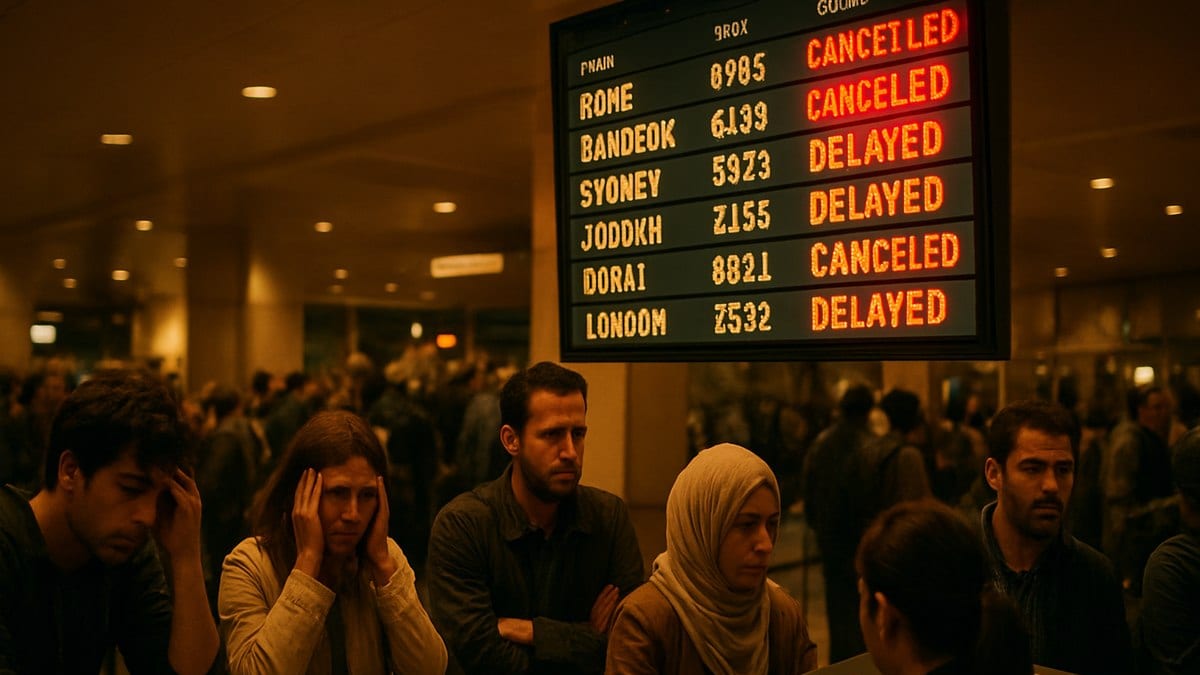
Airspace Closures Keep Pressure On Gulf Corridors
Publicly available information shows that the latest wave of disruption is rooted in the regional crisis that began on February 28, 2026, when airspace closures spread from Qatar and the United Arab Emirates across parts of West Asia. In the weeks since, carriers linking Gulf hubs with major Indian cities have been operating on reduced or makeshift schedules, with periodic resumptions followed by fresh cancellations.
Data compiled by aviation trackers and industry analysts indicates that Indian and Gulf carriers together have cancelled more than ten thousand India–West Asia flights between February 28 and early April, with a significant share involving routes through Dubai, Abu Dhabi, Doha, Muscat, Kuwait, and Dammam. Many of those links are essential corridors for Indian migrant workers, family visitors, and connecting long haul passengers heading to Europe, North America, and Africa.
While some Gulf hubs, particularly Doha, have gradually increased daily departures compared with the near-standstill seen at the height of the crisis, schedules remain fragile. Airlines continue to warn that services may be pulled at short notice if routing permissions change or if new security restrictions are introduced, keeping weekend traffic especially vulnerable as demand spikes.
Air India Cuts Gulf Schedule, IndiGo And Others Adjust
According to recent coverage in Indian media, Air India has taken one of the most visible steps ahead of this weekend by cancelling scheduled operations on several Gulf routes and relying instead on limited ad hoc flights. Reports indicate that, for dates around April 8 and into this weekend, the carrier has scrapped its regular services to destinations including Doha, Kuwait City, Bahrain, and Tel Aviv, leaving only a handful of frequencies on select sectors.
Earlier advisories highlighted that Air India and its low-cost affiliate Air India Express had already suspended or sharply reduced flights from multiple Indian cities to Gulf points such as Abu Dhabi, Dubai, Sharjah, Muscat, Kuwait, and Dammam in March. Updated rebooking policies have allowed affected passengers to shift travel dates within defined windows or seek refunds, although travelers note that getting through to customer support can be challenging during peak disruption periods.
IndiGo and other Indian carriers have also been trimming or rerouting services, particularly those that previously relied on now-constrained air corridors. Published reports describe dozens of IndiGo cancellations and delays concentrated at Delhi, Mumbai, and key Gulf stations, as airlines attempt to balance crew availability, aircraft rotations, and altered flight paths that often require extra flying time and fuel.
Qatar Airways And Gulf Carriers Operate Patchwork Schedules
Gulf network airlines remain central to India’s global connectivity, but their operations into and out of the region are still far from normal. Qatar Airways, which had suspended most flying when Qatari airspace first closed at the end of February, has been gradually restoring links through limited corridors. A March advisory from the airline outlined a reduced schedule, and more recent analyses point to roughly eighty daily departures now operating from Doha, compared with a fraction of that total during the early phases of the crisis.
Even with that ramp-up, travelers connecting between India and other regions via Doha report frequent last-minute changes. Public forums and travel communities are filled with accounts of India–Doha legs being cancelled or swapped for alternative routings in the days before departure, particularly on itineraries combining Gulf and European or North American sectors. In several instances, passengers have described being moved to different dates or being asked to accept refunds and reconstruct their journeys on other carriers.
Elsewhere in the Gulf, airlines based in the United Arab Emirates, Saudi Arabia, Oman, and Kuwait have each adjusted schedules in line with evolving overflight permissions and demand patterns. Some have maintained core links to major Indian metros while temporarily dropping or consolidating flights to secondary cities. Advisory notices consistently urge passengers to verify flight status before leaving for the airport, especially for departures over busy weekend periods.
Stranded Passengers, Rising Fares And Visa Flexibility
The knock-on effects for travelers are significant. Aviation data reviewed by travel industry outlets suggests that more than 700,000 passengers on India–West Asia itineraries have been forced to change plans since the end of February, with many now funneled through Southeast Asian hubs such as Bangkok and Singapore instead of the traditional Gulf gateways. Economy round trips that previously priced in the 600 to 800 dollar range via Dubai or Doha are now often several hundred dollars more expensive on alternate routings.
Indian nationals working or transiting in the Gulf have been among the hardest hit, particularly those with fixed leave windows or time-sensitive family visits. In the United Arab Emirates, official advisories noted that visa fine waivers and automatic extensions would apply to individuals unable to depart due to the airspace closure and subsequent flight cancellations, providing some relief for travelers whose plans were overturned repeatedly.
For many passengers, the immediate disruption this weekend comes in the form of extended airport waits, last-minute hotel stays, and uncertainty over when a confirmed seat will materialize. Travel agents and consumer advocates are advising affected flyers to keep all documentation related to cancellations and delays, in case further policy changes create additional rebooking or refund options.
What Travelers On Gulf–India Routes Should Expect
For those booked on Gulf–India flights over the coming days, publicly available guidance from airlines and consular offices underscores the importance of close monitoring. Carriers are updating schedules frequently, sometimes overnight, and the flight that appears confirmed in the morning can be pulled or retimed by afternoon if operational conditions shift.
Travel specialists recommend building extra time into itineraries that rely on Gulf hubs, avoiding tight connections, and considering flexible tickets where possible. Passengers who have not yet started their journeys may find it easier to reroute via alternative hubs in Southeast or Central Asia, even if it adds travel time, rather than risk a cascade of cancellations across multiple segments.
With no firm end date to the regional disruption, industry analysts expect weekend peaks on Gulf–India routes to remain volatile through at least the rest of April. For now, the combination of constrained capacity, rolling cancellations, and strong demand means that anyone traveling between India and the Gulf should be prepared for a challenging few days ahead.