

More news on this day
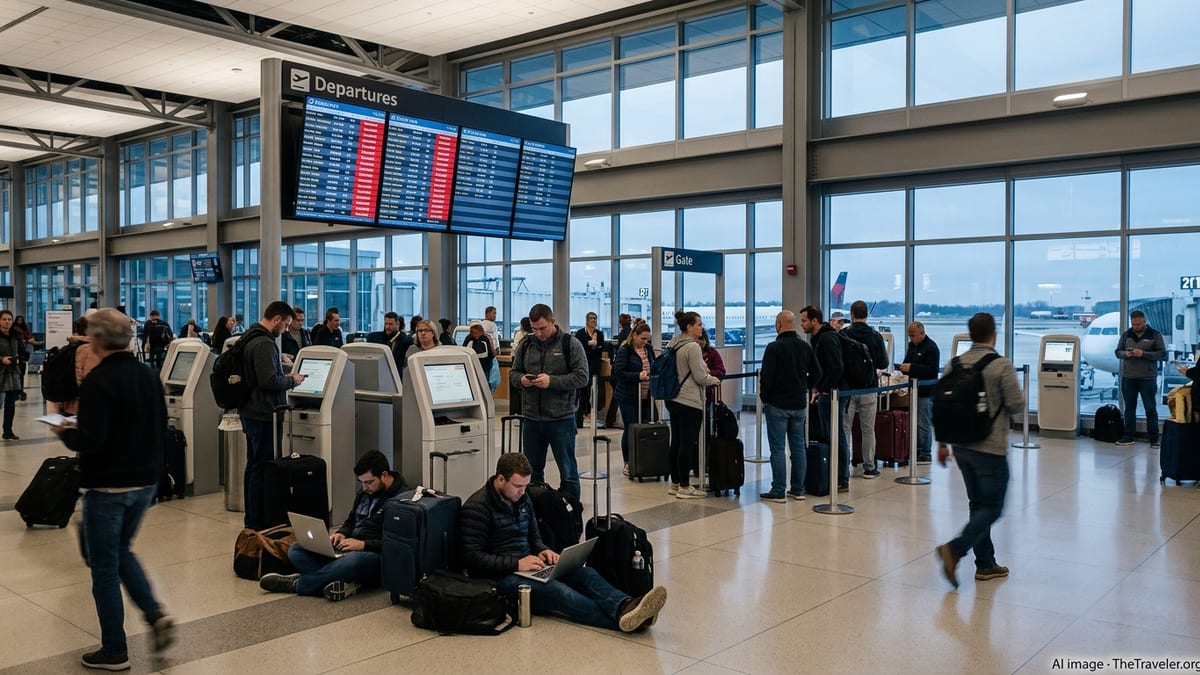
Several flights at John Glenn Columbus International Airport in Columbus, Ohio, were cancelled on March 19, causing delays, missed connections, and uncertainty for spring travelers moving through one of the Midwest’s key regional hubs.
Get the latest news straight to your inbox!
What Is Behind the Latest Cancellations
Publicly available flight status boards on March 19 indicate that multiple departures and arrivals at John Glenn Columbus International Airport were cancelled or heavily delayed, affecting routes across the domestic network. The disruptions follow several days of turbulent weather across large sections of the United States and come at a time when spring break traffic is pushing passenger volumes higher than usual for March.
Recent nationwide coverage of a powerful March storm system details heavy snow, strong winds, and thunderstorms across parts of the Midwest and Great Lakes, conditions that can ripple through airline schedules even at airports not directly in the center of the worst weather. Columbus, heavily dependent on connections to major hubs such as Chicago, Atlanta, and Detroit, can feel those nationwide schedule changes quickly when aircraft and crews are out of position.
Reports from travelers over the past week describe a mix of diversions, rolling delays, and late-night arrivals at Columbus as airlines worked around severe weather in other states. On March 19, that pattern appears to have shifted into outright cancellations on some routes, particularly where airlines have less flexibility to swap in spare aircraft or crews.
Available operational data shows that Columbus is not alone. Thousands of flights have been cancelled or delayed nationally in recent days, a typical pattern when a far-reaching storm system affects several major airline hubs at once. For passengers at John Glenn Columbus International Airport, that has translated into a patchwork of last-minute changes that can be difficult to anticipate without close monitoring.
How Travelers Are Being Affected Today
For passengers scheduled to depart from Columbus on March 19, the most immediate impact has been longer lines at check-in desks, rebooking counters, and customer service kiosks as travelers seek alternatives. With many flights already operating at high load factors due to spring break demand, the number of open seats available for same-day rebooking has been limited on some routes.
Some travelers are reporting that relatively short point-to-point trips, which normally take a couple of hours, have turned into full-day journeys involving multiple connections or overnight stops. Others have opted to cancel nonessential trips entirely when faced with limited rebooking options or multi-stop itineraries that risk further disruption if weather continues to affect connecting hubs.
Incoming passengers bound for Columbus have also felt the effects. Flight-tracking services show that several inbound services were cancelled outright, while others were significantly delayed or routed around stormy regions earlier in the week. In some cases, aircraft that were scheduled to overnight in Columbus did not arrive, leaving carriers with fewer planes available to operate early-morning departures.
Families traveling with children and those heading to or from college campuses during spring break season have been among the most affected segments. Many of these trips are time-sensitive, tied to school schedules or vacation rental dates, which makes last-minute schedule changes more disruptive and reduces the flexibility travelers have when choosing alternate flights.
What to Do If Your Flight Is Cancelled or Delayed
Publicly available guidance from major U.S. airlines indicates that when a flight is cancelled for weather or operational reasons, passengers are generally rebooked on the next available flight at no additional airfare, subject to seat availability. In larger disruptions like this one, same-day alternatives may be limited, especially on popular routes at peak times. Checking rebooking options through airline apps or websites can often be faster than waiting in line at the airport.
Travelers with tight connections may want to look for itineraries with longer layovers than usual, especially if they are connecting through hubs that have also seen high numbers of cancellations in recent days. A slightly longer connection time can provide a buffer if the first leg is delayed. Passengers who booked tickets via online travel agencies may need to work through those platforms to change or cancel itineraries.
For those already at John Glenn Columbus International Airport, airport monitors and airline-operated counters remain the primary real-time sources for gate changes and updated departure times. Many airlines also offer free text or app notifications when a flight status changes, which can help travelers adjust plans quickly without constantly refreshing flight status pages.
Travel insurance policies and premium credit cards sometimes include trip interruption benefits that may help cover unexpected hotel stays or additional transportation costs stemming from cancellations. Travelers are being encouraged, via published consumer travel guidance, to review the fine print on those benefits and keep receipts for any out-of-pocket expenses incurred during the disruption.
Tips for Passengers Flying Through Columbus in the Coming Days
With residual delays and aircraft repositioning likely to continue beyond March 19, passengers planning to fly through Columbus in the next several days may want to build extra time and flexibility into their itineraries. Travel industry advisories commonly recommend arriving at the airport earlier than usual during peak periods, and that advice is particularly relevant when schedules are unstable.
Travelers can reduce stress by checking flight status repeatedly in the 24 hours before departure, not just once. Some airlines open rebooking options as soon as a significant delay is projected, long before formal cancellation appears on departure boards. Watching for those early signs can create opportunities to switch to more reliable flights before other passengers do the same.
Packing essentials such as prescription medications, chargers, a change of clothes, and basic toiletries in carry-on bags is another common recommendation from consumer travel advocates. When cancellations occur and checked bags continue to their original destinations, having key items within easy reach can make unexpected overnight stays more manageable.
Drivers heading to the airport should also allow extra time for parking and terminal access, particularly while construction projects continue around the future terminal site. Although those long-term improvements are designed to expand capacity and improve passenger flow in the years ahead, they can contribute to congestion during periods of unusually high demand like the current spring travel window.
What This Disruption Signals for Spring Travel
The latest disruptions at John Glenn Columbus International Airport arrive at a moment when airlines are adjusting schedules for the busy spring and summer seasons. Recent airport statistics show that Columbus has been rebuilding and diversifying its route network, with more leisure destinations and new carrier entries. That growth can provide travelers with more options, but it also means that irregular operations at distant hubs can echo more widely through the local schedule.
A series of powerful winter and early spring storm systems during 2026 has underscored how quickly severe weather in one region can reverberate through the national aviation system. Each wave of storms has produced thousands of cancellations nationwide, leaving airports like Columbus contending with irregular aircraft rotations, crew rest requirements, and shifting passenger demand.
For central Ohio travelers, the events of March 19 serve as a reminder that flexibility, careful planning, and close attention to flight status are increasingly important parts of air travel during active weather seasons. While schedules are expected to stabilize as airlines work through the latest backlog of disruptions, passengers flying to or from Columbus in the near term may benefit from assuming that extra time and backup plans will be worthwhile investments.
Travel observers note that as construction continues on the airport’s new terminal and as carriers further expand their service in and out of Columbus, the airport’s resilience to nationwide disruptions will remain a key topic for passengers and local businesses alike. For now, travelers are navigating another challenging travel day, hoping that clearer skies and smoother operations return soon.