

More news on this day
Passengers across Asia are facing long queues, missed connections and unexpected overnight stays as a fresh wave of air travel disruption results in 104 flight cancellations and 1,367 delays at Guangzhou, Shenzhen, Chongqing, Shanghai, Jakarta and other major international gateways.
Get the latest news straight to your inbox!
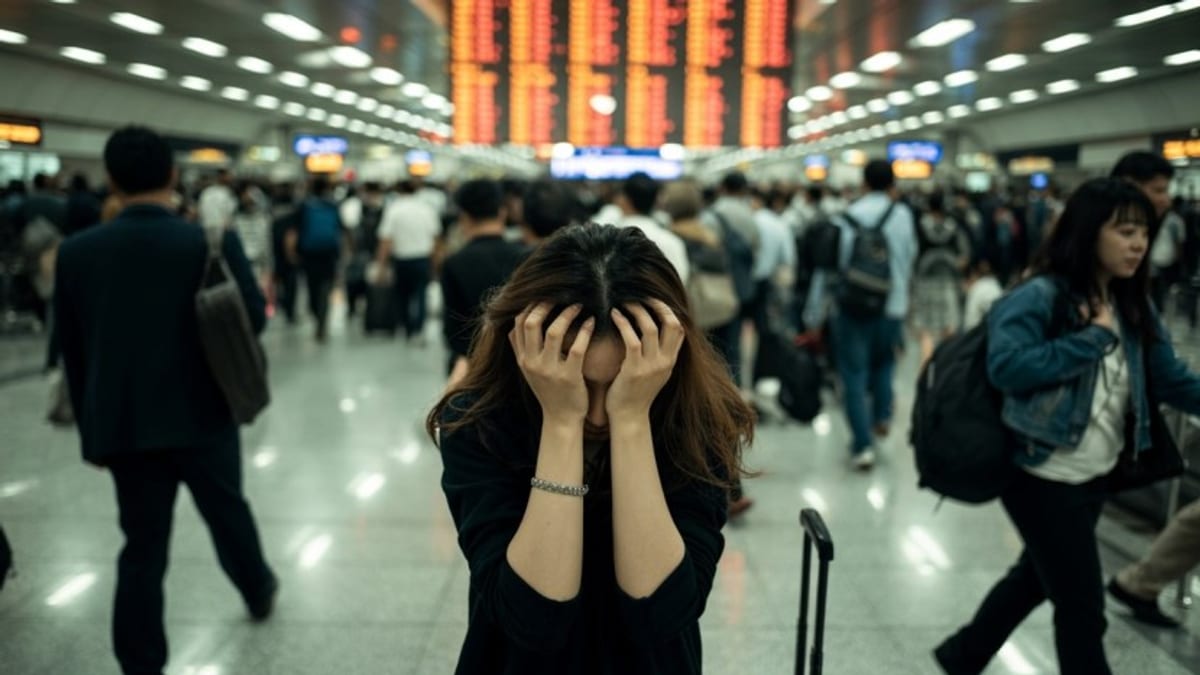
Fresh Disruptions Hit China’s Busiest Gateways
Operational data compiled from multiple aviation tracking platforms for early April 2026 indicate that airports in southern and eastern China are again at the center of severe schedule disruption, with Guangzhou Baiyun, Shenzhen Bao’an, Shanghai Pudong and Chongqing Jiangbei among the hardest hit. The latest snapshot shows 104 flights cancelled and 1,367 delayed across an extended group of Asian hubs, with a significant share concentrated at these Chinese airports.
Publicly available information suggests that the latest disruption builds on a month of elevated irregular operations. Previous days in April have already recorded several hundred cancellations and several thousand delays across Chinese hubs, with Guangzhou, Shenzhen and Shanghai repeatedly featuring in daily tallies. Travel industry coverage notes that delays in China’s dense domestic network frequently spill into international services, affecting routes to Southeast Asia, the Middle East and beyond.
Reports also point to ongoing terminal and runway changes at Guangzhou and Shanghai that are intended to increase long term capacity but can complicate day to day operations during periods of transition. When those infrastructure shifts coincide with tight crew scheduling and constrained airspace, relatively small disturbances can trigger widespread knock on effects.
As cancellations and delays accumulate, passengers at these airports are reporting long lines at check in counters and transfer desks and heavy demand for remaining seats on evening departures, particularly on trunk routes linking Shanghai and Guangzhou with other Chinese megacities and nearby international hubs.
Jakarta and Regional Hubs Struggle With Knock On Effects
The disruption is not confined to China. Flight tracking summaries show that Jakarta’s main international airport is among the largest contributors to the 1,367 delays logged in the current disruption window. Earlier snapshots this month already highlighted Jakarta as a key pressure point in a broader Asia Pacific pattern of 200 to 300 daily cancellations and several thousand delays across the region.
Published coverage attributes some of the strain on Southeast Asian hubs to a mix of seasonal thunderstorms, airspace constraints and late arriving aircraft from other parts of Asia. Jakarta, Kuala Lumpur, Bangkok and Singapore have all appeared in recent delay league tables, often in the same reporting periods that list Guangzhou and Shanghai among the worst affected cities.
These interconnected patterns mean that a delayed departure from Chongqing or Shenzhen can cascade into missed connections for travelers in Jakarta hours later. Airlines have been forced to turn some services around quickly to protect their core schedules, which can leave little room for reaccommodating stranded passengers when additional disruptions arise.
Weather, Airspace Restrictions and Fragile Schedules
Analysts tracking the situation point to a combination of meteorological and operational factors behind the current spike in cancellations and delays. Early April is associated with active storm systems over parts of the South China coast and Southeast Asia, and several of the worst disruption days this month have coincided with intense thunderstorm activity that restricts arrivals and departures.
At the same time, airspace restrictions linked to geopolitical tensions in parts of West Asia and the Middle East are causing longer routings and reduced flexibility for airlines operating between East Asia, South Asia and Gulf hubs. Publicly available data on international schedules from China show elevated cancellation rates on some routes toward the Middle East in recent weeks, adding to the overall strain on fleets and crews.
These constraints are interacting with tighter staffing and aircraft utilization patterns adopted by many carriers as they seek to meet resurgent demand. When aircraft and crew are scheduled close to their operational limits, a single weather diversion or extended ground hold can lead to multiple rotations being cancelled or significantly delayed later in the day.
Industry observers note that this fragility is visible in the current figures, where 104 outright cancellations sit alongside more than ten times as many delayed flights. While airlines can often eventually operate a delayed service, the ripple effects on onward connections and crew positioning can linger for days.
Impact on Travelers and Growing Pressure on Airlines
For passengers, the numbers translate into crowded terminals and complex rebooking challenges. Travelers passing through Guangzhou, Shenzhen, Shanghai, Chongqing and Jakarta report spending hours in queues to secure alternative flights or hotel vouchers, with many facing overnight stays when the last departures of the day are cancelled or leave too late to connect onward.
On key international routes, limited remaining capacity means that some travelers are being rebooked days later, especially where alternative routings must avoid congested or restricted airspace. Published accounts describe rising one way fares on short notice tickets between affected hubs, as both disrupted passengers and new bookers compete for scarce seats.
Airlines across the region are facing mounting operational and reputational pressure. Coverage of recent disruption waves has highlighted repeated appearances by major Chinese carriers and regional operators in daily cancellation and delay rankings. While many of the triggers, such as thunderstorms or airspace closures, lie outside individual airlines’ control, passengers tend to experience them as a single, frustrating pattern of unreliability.
Aviation analysts suggest that carriers may need to build more slack into schedules during peak storm seasons and periods of known airspace constraint, even if that reduces short term capacity. Without additional buffers, episodes like the current 104 cancellations and 1,367 delays risk becoming a recurring feature of regional travel rather than an exceptional event.
What Passengers Can Do Amid Ongoing Uncertainty
Consumer travel guidance drawn from recent disruption episodes across Asia emphasizes preparation and flexibility. Travelers are encouraged to monitor their flight status frequently on the day of departure and again before leaving for the airport, as same day schedule changes have become common at hubs such as Guangzhou, Shanghai and Jakarta.
Experts also recommend building longer connection times into itineraries that route through weather prone or airspace constrained regions, particularly during early spring when storms over the South China Sea and Southeast Asia are more likely. Where possible, selecting earlier departures in the day may offer a better chance of completing a journey before delays accumulate across the network.
In the event of cancellation, passengers are generally advised to contact airlines through multiple channels, including mobile apps and call centers, rather than relying solely on airport counters that can quickly become overwhelmed. Some travel commentators note that travelers who proactively search for alternative routings and present realistic options to agents are often rebooked more quickly.
With regional data showing repeated waves of disruption in recent weeks, many observers expect that air travel across Asia will remain vulnerable to bouts of irregular operations through the remainder of April. For now, the latest tally of 104 cancellations and 1,367 delays at Guangzhou, Shenzhen, Chongqing, Shanghai, Jakarta and other international airports stands as another reminder of how quickly today’s interconnected aviation system can seize up when weather, geopolitics and tight scheduling collide.