

More news on this day
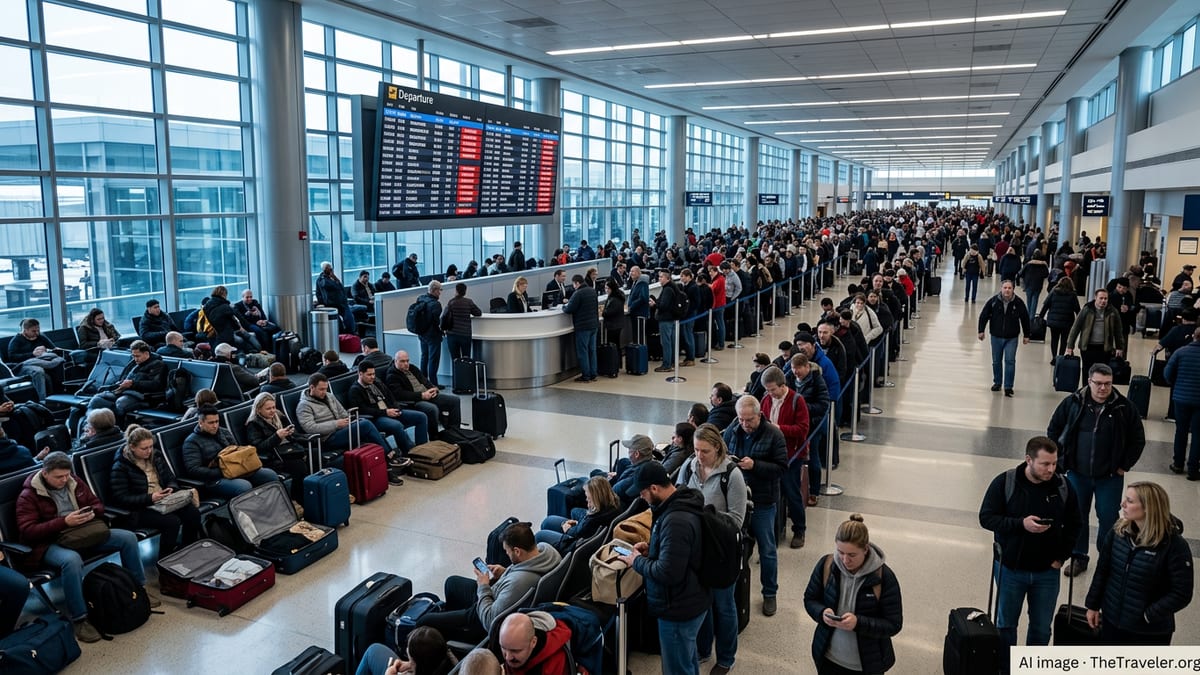
Hundreds of travelers were left scrambling for alternatives in the United States today after at least 105 flights were cancelled and 89 delayed at Minneapolis–St. Paul International Airport, triggering a cascade of disruptions at major hubs including Chicago, Denver, Phoenix, Seattle, New York, and other destinations across the country.
Get the latest news straight to your inbox!
Widespread Disruptions Linked to Minneapolis Hub
Publicly available flight-tracking data for Saturday, March 14, indicate that operations at Minneapolis–St. Paul International Airport experienced a sharp spike in irregular operations, with more than one hundred flights cancelled and close to ninety delayed. The disruption involved a mix of mainline and regional carriers, including Delta Air Lines, American Airlines, Southwest Airlines, SkyWest Airlines, Endeavor Air, and other operators serving the Upper Midwest gateway.
The cancellations and delays affected both departures from Minneapolis and inbound services, stranding passengers at the airport and at outstations across the network. Travelers reported missed connections, overnight stays, and complicated rebooking journeys as airlines worked to reshuffle aircraft and crews. The impact extended well beyond Minnesota, quickly becoming a national issue as disrupted aircraft and crews failed to reach their next scheduled legs.
Travel forums and social media posts on Saturday reflected mounting frustration from passengers who described long lines at customer service desks, congested phone support, and limited same-day alternatives to already full flights. In several cases, travelers reported being offered itineraries that would not arrive at their destinations until late Sunday or Monday, underscoring how quickly a localized disruption can consume available capacity nationwide.
Major U.S. Hubs Feel the Ripple Effect
The knock-on effects were felt most acutely at key hubs and focus cities tied to Minneapolis operations. Flights between Minneapolis and Chicago, Denver, Phoenix, Seattle, and the New York City area saw elevated levels of delays and cancellations as aircraft and crews failed to cycle through on time. In aviation networks built around tight turn times and carefully balanced schedules, the loss or delay of a single aircraft can affect multiple routes throughout the day.
Routes to Chicago and Denver, both important connecting points for domestic and international travel, appeared particularly constrained as operators attempted to absorb displaced passengers from cancelled services. Delays on these trunk routes then spilled over into downline flights serving smaller cities in the Great Plains, Mountain West, and upper Midwest, compounding the disruption for travelers starting their journeys far from Minneapolis itself.
Flights linking Minneapolis with Phoenix and Seattle similarly experienced schedule irregularities, complicating travel plans for passengers using those cities as gateways to the West Coast and Southwest. New York area airports, including John F. Kennedy, LaGuardia, and Newark, also saw scattered delays tied to disrupted Minneapolis services, underscoring the interconnected nature of major U.S. air corridors on a busy weekend travel day.
Delta and Regional Partners at the Center of the Turmoil
Minneapolis–St. Paul serves as a key hub for Delta Air Lines, making the carrier and its regional partners particularly exposed when operations there falter. Regional affiliates such as SkyWest Airlines and Endeavor Air operate a significant share of flights under the Delta banner from Minneapolis, feeding passengers into the mainline network. When irregular operations strike, these regional flights often bear a disproportionate share of cancellations as airlines prioritize keeping long-haul and high-demand routes operating.
Travelers posting online described a pattern of early cancellations on regional routes into Minneapolis, followed by mounting delays on mainline services as aircraft and crews struggled to reposition. Some passengers reported rebookings that required multiple connections or long ground holds while airlines waited for inbound aircraft from other disrupted cities. For those already in the air, delays on earlier legs translated into missed connections and unexpected overnight stays at Minneapolis and other hubs.
Industry data and past patterns suggest that regional carriers are frequently used as a buffer during operational challenges, as their shorter-haul flights can be cancelled or consolidated with relatively less impact on international schedules. For passengers on those routes, however, the effect can be severe, especially in smaller communities with limited alternative service and few same-day options on competing airlines.
American, Southwest, and Competing Airlines Also Affected
While Delta and its partners hold a dominant position at Minneapolis, American Airlines, Southwest Airlines, and other domestic carriers also saw disruptions to their schedules in and out of the airport. Publicly available information shows scattered cancellations and delays among these operators, reflecting how shared airspace, ground resources, and weather conditions can affect multiple carriers simultaneously at a major U.S. airport.
Passengers on American and Southwest flights reported itinerary changes and rolling departure time revisions that rippled across their onward travel plans. As flights filled with rebooked travelers from cancelled services, spare seats became scarce, pushing some passengers onto next-day departures or alternate routings through different hubs. The resulting pressure on systemwide capacity highlighted how quickly even a modest number of cancellations and delays at a single airport can reverberate through a tightly scheduled national network.
Competing airlines that initially appeared less affected also became caught in the fallout as stranded passengers searched for any available seat to their destination. Same-day one-way fares on remaining flights climbed sharply on some routes, according to publicly visible booking data, leaving budget-conscious travelers with few affordable alternatives. The dynamic illustrated how operational challenges for one or two major carriers can create broader pricing and capacity constraints across the marketplace.
Travelers Face Limited Options and Ongoing Uncertainty
For passengers, the immediate concern on Saturday centered on finding a way to complete their journeys. With 105 flights cancelled and 89 delayed in and out of Minneapolis, options quickly narrowed. Some travelers turned to rental cars or intercity buses for medium-distance trips to cities such as Chicago, Milwaukee, or Des Moines, while others opted to postpone their travel entirely rather than accept lengthy multi-stop itineraries.
Consumer advocates often recommend that in situations like this, affected travelers use airline apps and websites, as well as airport flight information displays, to monitor real-time flight status and rebooking options. Many airlines now allow same-day changes or rebooking through digital channels, which can be faster than waiting in long lines at airport counters. However, travelers on Saturday reported that high demand sometimes overwhelmed online systems, adding to the stress of an already difficult travel day.
With aircraft and crews displaced across the network, the residual impact from Saturday’s disruptions may continue into Sunday as airlines work to restore normal schedules. Passengers scheduled to travel through Minneapolis, Chicago, Denver, Phoenix, Seattle, New York, or other affected cities in the next 24 hours are likely to face ongoing uncertainty, and many will be watching flight-status tools closely as airlines adjust their operations to recover from the day’s cascading disruptions.