

More news on this day
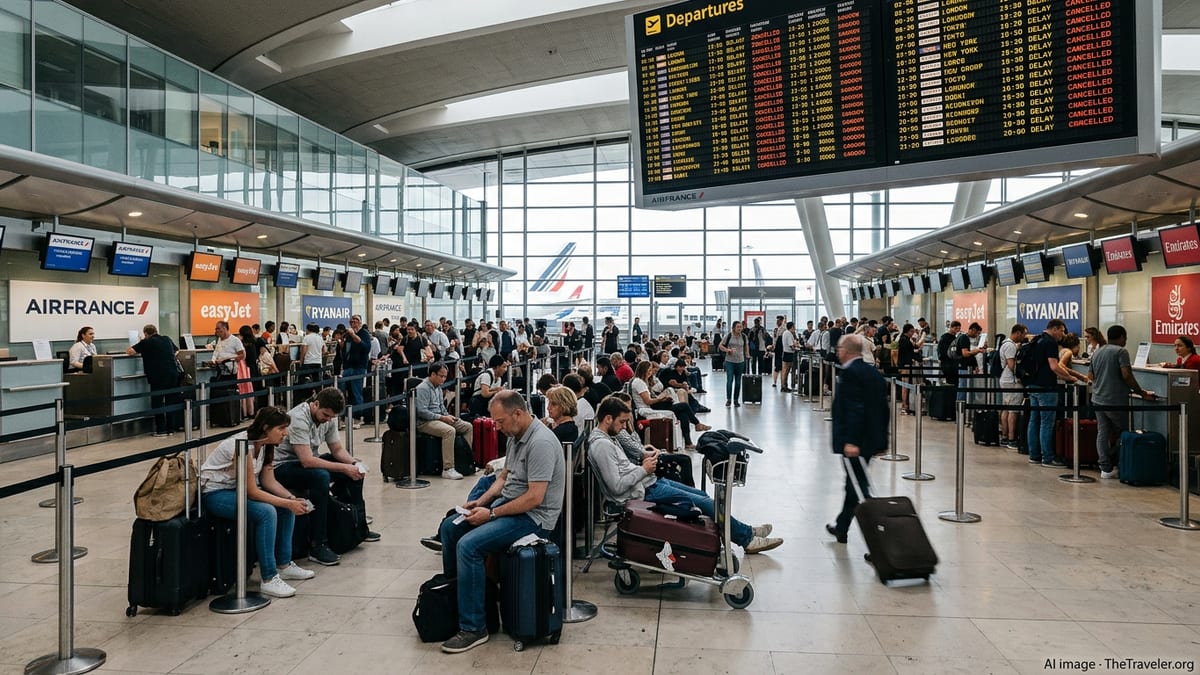
Hundreds of travelers were left stranded at Paris Charles de Gaulle Airport as more than 130 flights were delayed and a series of cancellations disrupted journeys on key routes to London, New York, Tokyo and Dubai, affecting services operated by Air France, easyJet, Ryanair and Emirates.
Get the latest news straight to your inbox!
Wide-Ranging Disruptions Across Major International Routes
According to early operational data and published coverage, 132 flights departing or arriving at Charles de Gaulle experienced significant delays, while 11 services were canceled, creating a ripple effect through one of Europe’s busiest hubs. The disruption hit a mix of short- and long-haul routes, leaving passengers facing missed connections, overnight stays in Paris and last-minute rebooking challenges as available seats quickly filled.
Travelers heading to London, one of the most heavily trafficked corridors from Paris, faced crowded departure halls and rolling schedule changes. Publicly available flight boards and monitoring platforms showed multiple departures pushed back by more than an hour, complicating onward rail and regional flight connections for passengers using London as a gateway to other UK and Irish cities.
Long-haul travelers were also caught in the disruption. Services linking Paris to New York and other United States destinations experienced extended ground holds and connection issues, while some passengers bound for Tokyo and Dubai reported being reassigned to later departures or rerouted through other European hubs such as Amsterdam, Frankfurt or Madrid as airlines attempted to absorb the backlog.
Operational records for Charles de Gaulle highlight how quickly a relatively limited number of cancellations can trigger wider disarray at such a large hub airport. With tens of millions of passengers transiting each year, even a few dozen heavily delayed services can overload terminal infrastructure, from check-in and security to immigration and baggage handling, compounding the overall disruption.
Impact on Air France, easyJet, Ryanair and Emirates Passengers
Publicly accessible schedules show that Air France, which uses Charles de Gaulle as its primary hub, bore a significant share of the disruption across both European and intercontinental routes. Its passengers connecting through Paris onto North American and Asian services were especially vulnerable, with missed minimum connection times leading to unplanned overnight stays and rebookings onto later flights.
Low-cost carriers easyJet and Ryanair, which operate extensive short-haul networks from the Paris region, also experienced knock-on effects as aircraft and crews fell out of position. Reports from travelers indicate that some departures to UK and Mediterranean destinations left hours behind schedule, while selected services were canceled outright when turnaround times could not be recovered within operating curfews.
For Emirates and other long-haul operators serving Paris, the disruption created complications for tightly timed global networks. A delayed departure from Charles de Gaulle can cascade into missed onward connections at major hubs such as Dubai, forcing airlines to accommodate affected travelers on later bank departures or alternative routings. Passengers on these services often face longer total journey times and, in some cases, extended layovers far from their original plans.
Across all four airlines, standard rebooking channels and customer-support lines came under pressure as travelers attempted to secure new itineraries. Public information from airline apps and social media feeds showed frequent schedule updates and advisories encouraging passengers to check their flight status before heading to the airport and to allow additional time once there.
Conditions Inside Terminals as Delays Mount
Accounts from travelers and visual material posted publicly from Charles de Gaulle described crowded gate areas, long queues at airline service desks and passengers resting on benches or the floor as they waited for new departure times. With delays extending into the evening banks of flights, some travelers appeared to remain in the terminal overnight, watching departure boards for updated information.
Terminal operations at a hub of this scale are finely balanced, and extended ground times for multiple aircraft can strain everything from jet bridge availability to apron parking. As aircraft occupy gates longer than scheduled, arriving flights may be forced to wait for a stand or park remotely, adding time for passengers who must then be bussed to the terminal, further slowing the flow of people through the building.
Retail and food outlets inside the terminals reportedly saw heavy demand as passengers sought to fill unexpected hours at the airport. Seating around charging points and quieter corners of the concourses became scarce, especially near long-haul departure gates where families and business travelers attempted to rest between rolling announcements and changing estimated departure times.
For airport staff, publicly visible information suggests that managing crowd flows, directing passengers to updated gates and handling basic questions about connections became a central focus. With multiple airlines adjusting their schedules simultaneously, clear signage and timely digital updates on departure screens played a crucial role in reducing confusion.
Passenger Rights and Options Under European Rules
The disruption at Charles de Gaulle also brought renewed attention to passenger protections under European air travel rules. Publicly available guidance on European passenger rights indicates that travelers whose flights are significantly delayed or canceled may be entitled to care, assistance and, in some circumstances, financial compensation, depending on the cause of the disruption and the length of the delay.
Under these regulations, airlines must generally offer rerouting at the earliest opportunity or a refund of the unused portion of the ticket when a flight is canceled. For long delays, passengers may be entitled to meals, refreshments and, where necessary, hotel accommodation and transport between the airport and their lodging. Eligibility for monetary compensation can depend on factors such as how far in advance a cancellation was notified and whether the cause is considered within the airline’s control.
Public information from consumer advocacy organizations encourages travelers caught in such events to retain boarding passes, booking confirmations and receipts for essential expenses. These documents can be important when submitting claims later through airline websites or national enforcement bodies that oversee air passenger rights.
Given the concentration of delays and cancellations across several carriers at Charles de Gaulle, travel specialists advise that affected passengers check not only the airline’s policy but also the specific conditions attached to their ticket type, as codeshare flights, basic-economy fares and tickets issued through third-party agencies can sometimes involve additional steps in the claims process.
Managing Future Travel Through Busy European Hubs
For travelers planning upcoming trips through Paris and other major European hubs, the situation at Charles de Gaulle serves as a reminder of how quickly schedules can unravel when delays accumulate. Published analyses of European aviation performance show that large airports with dense traffic and extensive connecting flows are particularly vulnerable to rapid knock-on effects once punctuality declines.
Travel planning resources increasingly recommend building extra buffer time into connections at busy hubs, particularly when connecting between different airlines or airline alliances. Allowing an additional hour or more beyond the official minimum connection time can reduce the risk of missed onward flights when earlier segments are delayed, especially during peak travel seasons or in periods of unsettled weather.
Passengers are also encouraged to make active use of airline mobile applications and independent flight-tracking tools, which often provide real-time gate information and early indications of operational issues. In many cases, publicly available information shows that rebooking can be completed digitally before reaching an airport service desk, reducing time spent in queues during major disruption events.
While the latest wave of delays at Charles de Gaulle disrupted journeys for hundreds of passengers, it also highlighted practical steps that travelers can take to improve resilience, from choosing longer connection windows to keeping essential items in carry-on luggage. As Europe’s air network continues to operate near capacity on many routes, such strategies may offer the best defense against the next sudden breakdown in schedules.