

More news on this day
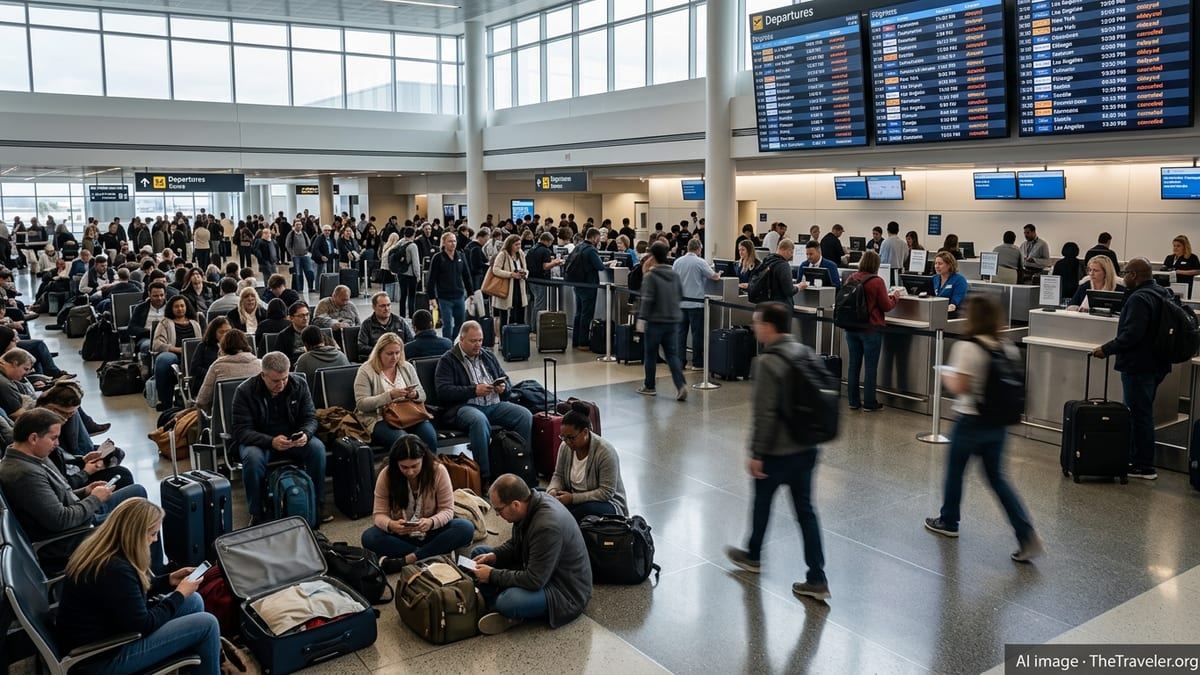
Passengers at San Francisco International Airport faced mounting frustration on Tuesday as a fresh wave of disruptions left travelers stranded, with at least five cancellations and around 80 delays affecting services operated by American Airlines, Delta Air Lines, United Airlines, British Airways and other major carriers.
Growing Disruptions at a Key West Coast Hub
The latest operational snarl at San Francisco International Airport comes on the heels of a difficult start to the travel week across California, after a surge of cancellations and long delays on Monday left hundreds of passengers rebooking flights and queuing at service desks. Industry data show that San Francisco has been among the hardest hit airports in the state, with ripple effects touching routes to Los Angeles, New York, Chicago, Seattle and other major U.S. cities.
On Tuesday, departure boards at San Francisco International Airport showed a patchwork of red and yellow status updates, as flights operated by American Airlines, Delta, United, British Airways and several codeshare partners were pushed back or pulled from the schedule altogether. While the number of outright cancellations remained relatively low compared with the volume of delays, the combination was enough to disrupt connections and force many travelers to abandon same-day plans.
Airport officials said they were working closely with airlines and federal authorities to manage gate space and mitigate crowding in the terminals, but acknowledged that the pattern of rolling delays made it difficult for passengers to predict departure times with confidence. Travelers were urged to confirm their flight status repeatedly before leaving for the airport and to be prepared for extended waits at security and boarding gates.
The situation at San Francisco reflects a broader day of challenging operations across the U.S. air network, with nationwide data showing hundreds of delays and scores of cancellations involving the country’s largest carriers. San Francisco’s role as a transcontinental and transpacific gateway has amplified the impact, as even short delays out of the Bay Area can cascade into missed long-haul connections.
Major Airlines Struggle to Keep Schedules Intact
American Airlines, Delta Air Lines and United Airlines, the three largest U.S. network carriers, all reported significant delays on services touching San Francisco, particularly on heavily traveled domestic routes to the East Coast and major hubs in the Midwest and Pacific Northwest. Crews and aircraft arriving late from other disrupted airports further complicated efforts to restore normal operations.
United, which maintains a large hub presence at San Francisco International Airport, faced one of the most visible backlogs, with multiple departures to major U.S. business centers showing departure times slipping in 30 to 60 minute increments. Similar patterns appeared on Delta and American flights linking San Francisco with Boston, Atlanta, Dallas and other connecting points, straining already tight connection windows for onward travelers.
British Airways and other international carriers serving San Francisco were not spared. Long-haul departures to and from European hubs were affected by the knock-on impact of earlier disruptions in Europe, where carriers have been dealing with a mix of operational constraints and congested airspace. Even where flights operated close to schedule, passengers arriving late into San Francisco from domestic feeders sometimes missed transatlantic connections, prompting last-minute rebookings and overnight stays.
While precise tallies of delays and cancellations continued to evolve throughout the day, the pattern was consistent: far more flights operating late than being canceled outright. For passengers, however, the practical effect was often similar, as missed connections and crew time limits forced rebookings and turned minor schedule changes into full-day disruptions.
Passengers Face Long Queues, Missed Connections and Added Costs
Inside the terminals at San Francisco International Airport, long lines formed at airline service counters as travelers sought rebooking assistance, travel waivers and hotel vouchers. Families returning from school vacations, business travelers with tightly timed meetings and international visitors on multi-leg itineraries all described a sense of uncertainty as departure times shifted repeatedly.
Some passengers reported waiting more than an hour to speak with an agent in person, only to learn that same-day alternatives were limited or fully booked. Others turned to airline mobile apps and customer service hotlines, often finding that digital channels offered faster rebooking options than on-airport desks, particularly for simple one-way or point-to-point journeys.
The financial impact on travelers was also mounting. While airlines are required to refund passengers when flights are canceled and they choose not to travel, there is generally no federal requirement for compensation in cases of delays alone. That leaves many passengers covering the cost of last-minute hotels, meals, rideshares and, in some cases, replacement tickets on other carriers in order to keep critical plans on track.
Travel advisors recommend that passengers caught up in disruption keep detailed records of their original itineraries, delay notifications and any out-of-pocket expenses. Those documents can be essential when seeking refunds, negotiating goodwill credits or filing claims with travel insurance providers, particularly for international itineraries and prepaid accommodations.
Operational and Airspace Pressures Behind the Disruption
A complex mix of factors lies behind the disruption facing travelers at San Francisco. Airline operations across the United States have been under sustained pressure from tight staffing levels, congestion at key hubs and the lingering effects of earlier technology outages that left some carriers with aircraft and crews out of position. Even small disturbances in one part of the network can trigger a chain reaction of delays elsewhere.
Internationally, carriers serving San Francisco have also been adapting to evolving airspace restrictions and route adjustments tied to geopolitical tensions and regional conflicts. Some long-haul flights have been forced to take longer paths to avoid sensitive regions, putting further strain on aircraft utilization and scheduling buffers. That, in turn, reduces the flexibility airlines have to recover quickly when weather or technical problems arise closer to home.
Regulators and airline executives have stressed that safety remains the top priority, even when it means holding aircraft at the gate or on the ground longer than passengers would like. Any technical anomalies, crew duty-time concerns or weather-related constraints must be addressed before flights can depart, which sometimes leads to conservative decisions that add to the tally of delays.
Analysts note that the pattern at San Francisco this week mirrors a broader industry challenge as carriers attempt to operate near pre-pandemic capacity with complex global route maps and limited slack in their systems. Until more resilience is built back into schedules, they say, travelers at major hubs like San Francisco should expect periodic days of severe disruption.
What Travelers Can Do Right Now
For passengers due to travel through San Francisco International Airport in the coming hours, the most important step is to verify flight status frequently across multiple sources, including airline apps, text alerts and airport departure boards. Schedules can change rapidly on days with high disruption, and a flight listed as on time in the early morning may be pushed back significantly by midday.
Experts advise arriving at the airport earlier than usual, particularly for transcontinental and international departures, to account for longer lines at check in, bag drop and security screening. Travelers with critical connections may wish to ask airline agents whether rebooking to a later, more secure itinerary is an option, even if their original flight is still technically operating.
Passengers already stranded in San Francisco are encouraged to request written confirmation of any cancellation or significant delay from their airline, along with documentation of rebooking and any travel credits offered. Those who purchased travel insurance should contact their provider as soon as possible to clarify coverage for trip interruption, additional accommodation or missed tours and events.
With disruption likely to continue fluctuating through the day, travel specialists say flexibility remains essential. Repacking itineraries around available flights, being willing to connect through alternate hubs and considering nearby airports in the broader Bay Area can sometimes turn a lost travel day into a salvaged journey, even in the midst of widespread delays at one of the country’s busiest gateways.