

More news on this day
Early April travel plans for hundreds of passengers were thrown off course as a wave of delays at four major U.S. hub airports left 477 travelers stuck in terminals, missed connections and overnight waits, highlighting the continuing fragility of the nation’s air travel network this spring.
Get the latest news straight to your inbox!
Cluster of disruptions hits four major hub airports
Publicly available flight-tracking data and recent aviation coverage indicate that the latest disruption unfolded over several days in early April 2026, as storm systems, tight aircraft rotations and staffing challenges converged on four of the country’s busiest connecting hubs. While individual incidents varied by airport and airline, combined figures point to 477 passengers experiencing delays long enough to derail same-day travel plans.
The four affected hubs, identified in industry reporting as large connecting points in the national network, saw a mix of primary delays and secondary knock-on effects. Some flights departed hours behind schedule, while others left on time from origin cities but arrived late into already congested operations, further constraining available gates and crew resources.
These disruptions followed a broader pattern of instability in U.S. aviation this spring. Earlier in April, national data compiled by flight-tracking platforms showed thousands of delays and hundreds of cancellations on peak days, particularly around the post-Easter travel rush. The latest episode involving 477 travelers is smaller in scale, but it underscores how even modest pockets of disruption at major nodes can ripple through the system.
Reports from passenger advocacy organizations emphasize that many affected travelers encountered two distinct waves of delay. First, rolling departure pushes of 60 to 180 minutes at hub airports, and second, missed onward connections to regional cities when tightly timed transfer windows evaporated. For some, that meant unexpected overnight stays and rebookings into already crowded schedules.
Weather, staffing and a strained spring schedule
Available meteorological and aviation analyses for early April 2026 show that weather continued to play a central role in operational strain at U.S. hubs. Fast-moving fronts and lines of thunderstorms over key corridors in the Midwest and Southeast forced air traffic managers to slow arrival and departure rates, introducing ground delay programs that quickly ate into schedule buffers.
At the same time, travel outlets and performance reports have noted ongoing staffing and scheduling pressures across airlines and airport operations. Crew rosters built around high-demand spring schedules offer limited flexibility when storms or mechanical checks push aircraft out of position. Once an early-morning rotation runs late, later departures from the same aircraft and crew can miss their assigned slots, compounding disruption through the day.
Industry commentary this month has also linked flight reliability to broader federal and local operational constraints, including security checkpoint staffing and air traffic facility workloads. Longer processing times at some large airports have required airlines to pad schedules or risk congestion at gates and taxiways. When combined with high passenger volumes, those pressures can make relatively modest weather events more disruptive than they might have been in previous years.
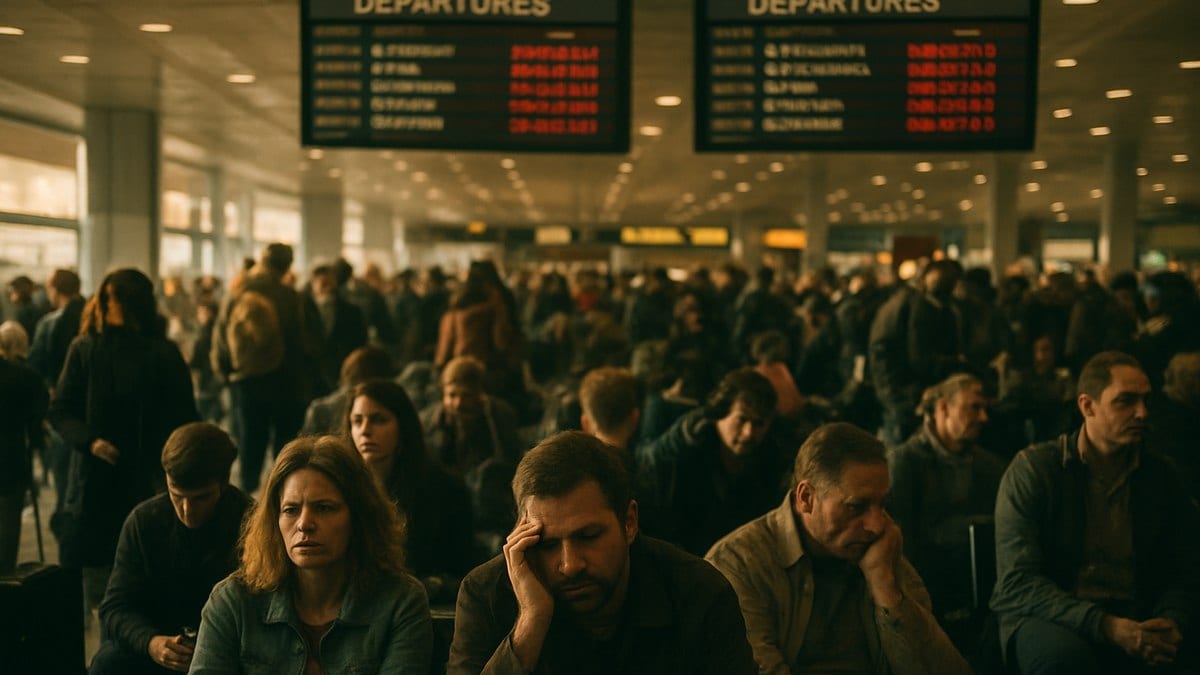
For the 477 travelers at the center of the latest episode, this combination of weather impacts and limited operational slack translated into hours in crowded departure halls and gate areas. While most ultimately reached their destinations, many did so significantly later than planned, illustrating how slim margins in the system leave little room for error.
Impact on passengers and emerging travel patterns
Passenger accounts collected by travel forums and consumer-rights platforms depict a familiar pattern: early optimism that a slight delay would resolve, followed by growing concern as departure times were repeatedly pushed back. Some travelers reported missing weddings, business meetings and international connections, while others faced additional costs for last-minute hotels and meals.
Travel analysts observing the April disruptions point to a growing divergence between passengers with flexible itineraries and those traveling on tightly timed, multi-leg journeys. Leisure travelers with buffer days built into vacation plans can often absorb a delay, while those connecting to cruises, tours or long-haul international flights face more significant knock-on consequences when a hub experience turns into an overnight stay.
Recent spring disruption data has also highlighted how a relatively small fraction of flights can affect a disproportionately large number of people. Large hub departures often operate at or near full capacity, meaning even a single delayed aircraft can strand well over one hundred passengers and disturb seating availability on later departures. When several such flights at different hubs encounter issues on the same day, the number of affected travelers quickly climbs into the hundreds.
The cluster of 477 delayed passengers fits within that pattern, illustrating that major headlines about thousands of nationwide disruptions sit alongside a quieter, day-to-day reality in which smaller, localized events repeatedly test passenger patience and airline recovery plans.
What the latest chaos reveals about system vulnerabilities
Aviation and travel policy coverage in recent months has emphasized that the U.S. air travel system is operating close to capacity at many hubs, particularly during peak holiday and seasonal windows. The April delays affecting 477 travelers across four hubs highlight several specific vulnerabilities that experts have been tracking throughout 2025 and 2026.
First, schedule density at major hubs leaves airlines with limited opportunities to insert recovery flights or swap aircraft when things go wrong. Gate space is often fully allocated, runway use is finely choreographed and crew duty limits are tightly regulated. When a storm or mechanical inspection disrupts that choreography, there are few easy fixes that do not create further downstream delays.
Second, patterns in federal transportation statistics and independent analyses show that a handful of airports account for a large share of national delay minutes each year. These airports often sit at the center of carrier networks, meaning any localized slowdown can have outsized national implications as missed connections, crew misalignments and repositioning flights reverberate through the system.
Finally, reports from passenger-rights organizations suggest that many travelers still lack clear, actionable information about what airlines will and will not provide during a disruption. Some carriers may offer hotel and meal vouchers for overnight delays within their control, while others focus primarily on rebooking. For passengers caught in the most recent wave of delays, that uncertainty was often as frustrating as the wait itself.
How travelers can navigate a volatile spring travel season
In the wake of April’s disruptions, travel and consumer publications are renewing calls for passengers to build more resilience into their own plans. Recommendations include booking earlier flights when possible, allowing longer connection windows through congested hubs, and monitoring weather forecasts, airline apps and airport status boards closely in the 24 hours before departure.
Analysts also point to the value of understanding the difference between delays caused by controllable operational factors and those primarily driven by weather or airspace restrictions. While refund and compensation rules in the United States remain complex and often limited compared with some international regimes, knowing an airline’s published policies can help travelers advocate for hotel, meal or rebooking assistance when disruptions fall within the carrier’s responsibility.
For those whose itineraries must pass through the largest hub airports, some experts suggest considering slightly longer layovers rather than the minimum connection times offered in booking engines. In a season when even a modest delay can grow quickly due to crowded skies and tight schedules, the extra time can make the difference between a stressful sprint through the terminal and a manageable transfer.
As the April 2026 travel period continues, the episode that delayed 477 travelers at four major hubs stands as one more reminder that U.S. air travel remains vulnerable to a mix of weather volatility and operational strain. For airlines, airports and regulators, it adds to the evidence base informing long-term investments in infrastructure and staffing. For passengers, it underscores the need to plan with disruption in mind, even on seemingly routine domestic routes.