

More news on this day
Mounting flight disruptions, technology failures and staffing shortages are converging into a systemic aviation crisis, with recent analysis suggesting flight chaos is now draining up to 34 billion dollars a year from the wider economy.
Get the latest news straight to your inbox!
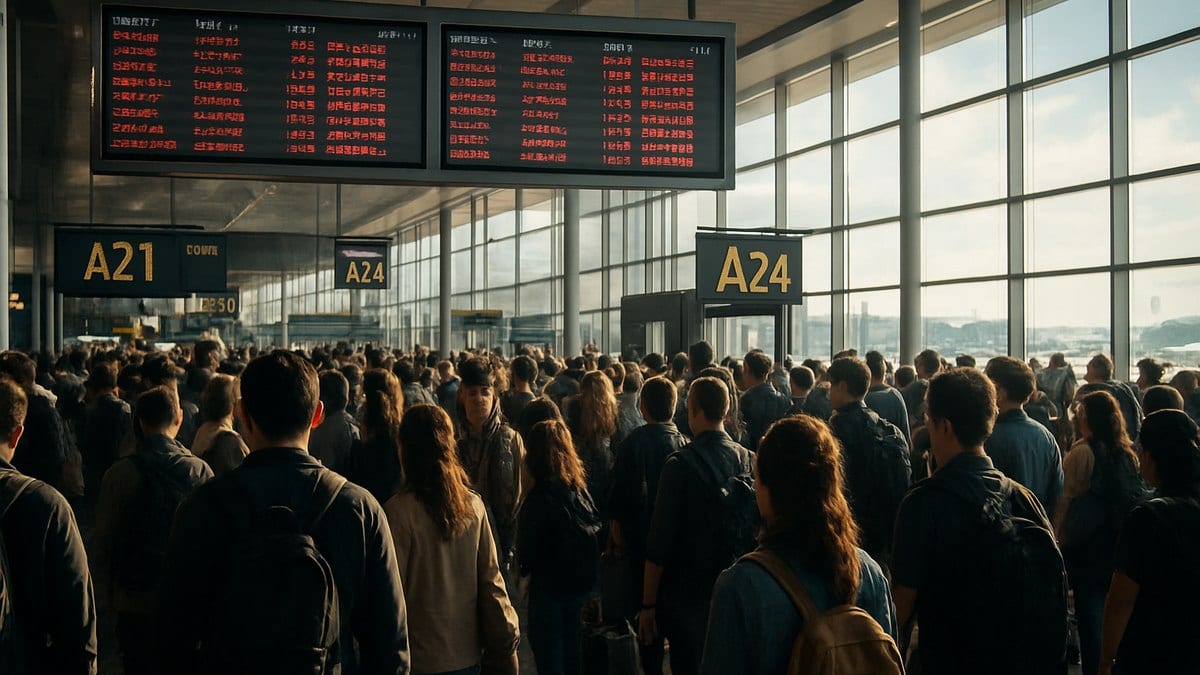
A Year of Meltdowns Highlights Deep Structural Weakness
Recent travel seasons have been marked by waves of cancellations, missed connections and stranded passengers across multiple continents, revealing how fragile modern air travel has become. Large carriers in North America, Europe and Asia have each suffered high-profile breakdowns of their schedules within the last two years, frequently triggered by a single point of failure that quickly cascaded across their networks.
In 2024, a global information-technology outage linked to a third-party software update triggered a days-long disruption at one of the largest U.S. airlines, leading to more than 7,000 canceled flights and financial losses estimated in the hundreds of millions of dollars. Industry coverage indicates that a similar pattern has played out elsewhere, with disruptions at major hubs such as Newark, London and key Asian gateways when systems or staffing have faltered.
Regulatory documents and economic studies now point to a much wider impact beyond airline balance sheets. One recent submission to United States transportation regulators estimated that flight disruptions in a single year cost the national economy between 30 billion and 34 billion dollars once lost productivity, missed business, rebooking and accommodation costs are included. Analysts say the global figure is likely far higher when similar patterns in Europe, Asia and Latin America are taken into account.
These episodes are no longer being treated as isolated mishaps. Industry researchers and investor briefings describe them as symptoms of a system operating without sufficient slack, where any shock rapidly overwhelms airlines, airports and air traffic control infrastructure.
Supply Chain Bottlenecks and Aging Fleets Add Billions in Costs
Behind the operational chaos lies a hardening financial squeeze. Reports from the International Air Transport Association and consulting groups indicate that airlines are confronting an 11 billion dollar hit from supply chain disruptions in 2025 alone. Delayed aircraft deliveries, engine maintenance backlogs and long lead times for critical spare parts have forced airlines to keep older jets flying longer and to operate with thin maintenance margins.
The most significant portion of this cost is attributed to delayed fuel-efficiency gains. With new aircraft and engines arriving late, carriers are missing out on expected savings from more efficient models and are instead absorbing higher fuel burn from aging fleets. Industry assessments suggest this deferred efficiency represents several billion dollars of extra expense, compounded by rising environmental compliance costs tied to carbon offset schemes and sustainable aviation fuel mandates.
Maintenance providers and engine manufacturers are also struggling to keep pace with demand after pandemic-era layoffs and factory disruptions. Airlines have responded by stockpiling spare parts, a strategy that ties up additional capital and warehouse space. Analysts note that this precautionary hoarding adds another layer to the overall bill, while still failing to fully shield operations from the knock-on effects of a grounded aircraft or an engine removed from service.
These pressures are feeding directly into fares and capacity decisions. Public financial guidance from several major carriers shows that higher maintenance, fuel and compliance costs are eroding already thin profit margins, even as passenger demand remains robust. When disruptions hit, the financial damage is multiplied by compensation payments, aircraft repositioning, overtime and lost future bookings.
Staffing Shortages and Labor Unrest Strain the System
Workforce constraints are compounding the operational risk. Pilots, flight attendants, mechanics and air traffic controllers are all in shorter supply than industry planners anticipated, according to global skills surveys and economic outlooks published by aviation bodies. Early retirements during the pandemic, coupled with slow training pipelines, have left many airlines struggling to rebuild their staffing levels in line with surging demand.
In the United States and Europe, staffing shortfalls at air traffic control centers have repeatedly forced regulators to cap traffic at busy hubs, triggering delays and cancellations even on clear-weather days. One widely reported episode in 2025 saw an airline cut dozens of daily flights from a major U.S. airport after a combination of controller shortages and outdated technology made its schedule unsustainable.
Labor disputes are adding to the turbulence. In Canada, a large-scale flight attendant strike in 2025 was expected to disrupt travel for more than one hundred thousand passengers per day and carried a revenue hit in the hundreds of millions of dollars. Industry analysis indicates that, across North America, a cluster of strikes and near-strikes among pilots and cabin crew in late 2025 produced direct operational losses estimated in the low billions over a short period.
These tensions are rooted in long-running concerns over pay, scheduling and working conditions in a sector that cut deeply during the pandemic recovery. Publicly available economic outlooks forecast that airline labor costs will climb significantly through 2025, rising faster than overall revenue growth. Without parallel gains in productivity and resilience, analysts warn that each disruption episode risks becoming more severe than the last.
Outdated Infrastructure and Fragile Digital Systems
Strain on physical and digital infrastructure is another critical fault line. Aviation economists and technical reports describe national air traffic control systems in several major markets as heavily reliant on equipment and software that date back decades. A series of outages in 2025, some occurring during a prolonged U.S. government shutdown, exposed how quickly reduced staffing and aging systems can force regulators to cut flight volumes to preserve safety.
In response, authorities in the United States have announced plans to accelerate multi-billion-dollar upgrades to air traffic control technology, including the deployment of new communications links and automation tools. Industry commentators note, however, that such programs will take years to complete and may themselves pose short-term disruption risks as systems are modernized.
Airlines are likewise dependent on complex digital backbones that link reservations, crew scheduling, aircraft routing and airport operations. The 2024 global IT incident that crippled one major U.S. carrier, and subsequent outages affecting other airlines, demonstrated how a flaw in a single software component can ripple through thousands of flights. In at least one major disruption, internal crew-tracking tools failed, leaving managers unable to locate available staff and restart operations quickly.
Cybersecurity specialists and aviation analysts argue that carriers and regulators have yet to fully account for this digital fragility in their risk planning. While investment in aviation cybersecurity is growing, reports indicate that the speed of digital transformation in ticketing, baggage handling and aircraft operations has outpaced resilience measures, leaving passengers exposed to further large-scale breakdowns.
Economic Stakes Rise as Demand Outpaces Capacity
The financial and social stakes of this aviation turbulence are rising as global demand for air travel continues to climb. Industry figures show that passenger traffic growth is normalizing after the post-pandemic surge but remains solid, with global revenue passenger kilometers increasing by around five percent in 2025. Airlines are filling more seats per flight and stretching their fleets to meet demand, even as supply chain, labor and infrastructure constraints limit their ability to add capacity.
Economists point out that aviation underpins trade, tourism and high-value services across the world, supporting tens of millions of jobs and trillions of dollars in economic activity. When widespread disruption hits, the impact extends from airport workers and airlines to hotels, conference organizers, exporters and small businesses that depend on reliable air links.
With a documented annual disruption cost range in the tens of billions of dollars for the United States alone, experts say the global price tag for persistent flight chaos is likely to reach well beyond 34 billion dollars when indirect effects are included. Investor research notes that profit margins in commercial aviation remain among the thinnest of any major industry, leaving limited cushion to absorb repeated shocks.
Industry observers argue that the current period could mark a turning point. If governments, regulators, manufacturers and airlines move quickly to tackle staffing bottlenecks, modernize infrastructure and harden digital systems, the crisis may become a catalyst for overdue reform. If not, passengers may need to brace for more seasons in which air travel feels less like a routine convenience and more like a gamble against an overstretched global system.