

More news on this day
Hundreds of flights across key Southeast Asian gateways are facing delays and cancellations this week, with Jakarta, Bali, Kuala Lumpur and Hong Kong reporting severe schedule disruptions that are complicating regional and long-haul journeys.
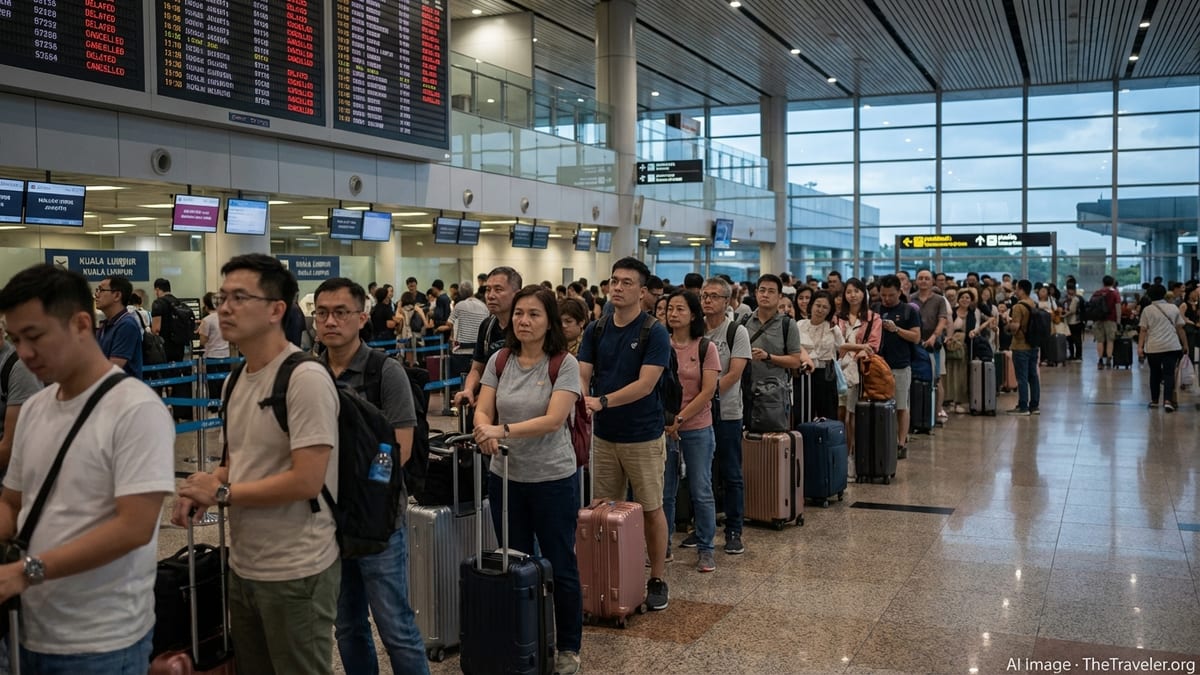
Regional Disruptions Hit Key Asian Hubs
Airports in Indonesia and Malaysia have been among the hardest hit, with fresh data from aviation trackers and local authorities indicating dozens of cancellations and more than a thousand delays across Asia in recent days. Jakarta’s Soekarno Hatta International Airport and Kuala Lumpur International Airport are reporting heavy knock-on effects as regional carriers struggle to recover normal operations.
Indonesia, Malaysia, Singapore, Japan and China together have seen at least 89 flights cancelled and more than 1,100 delayed, affecting routes through Jakarta and Kuala Lumpur as well as other regional hubs. Low-cost and full-service airlines alike are feeling the strain, with carriers such as Batik Air, Garuda Indonesia and Citilink among those forced to alter schedules at short notice.
The ripple effect is being felt by travelers well beyond the immediate region. Southeast Asia’s major gateways act as connectors between Australia, the Middle East, Europe and North Asia, meaning a missed connection in Jakarta or Kuala Lumpur can cascade into long delays for trips that began thousands of kilometers away.
Airport officials and airlines stress that safety remains the primary consideration, but they acknowledge that the scale of disruption is testing ground handling capacity, customer service and communication channels during already busy travel weeks.
Jakarta and Bali: Weather and Network Knock-ons
In Indonesia, Jakarta’s main international hub has seen a wave of late departures and missed slots as carriers juggle congested schedules and tight turnaround times. While there has been no single catastrophic incident, a combination of seasonal storms, air-traffic flow constraints and upstream delays from other Asian airports has produced long queues at check in, security and immigration.
Bali’s I Gusti Ngurah Rai International Airport, one of the region’s most tourism-dependent gateways, briefly diverted several flights this week when heavy rain and strong winds hit the island. Airport authorities confirmed that operations have since normalized, but the diversions and holding patterns contributed to broader schedule instability for airlines operating multi-leg routes through Denpasar.
Travelers on popular holiday routes between Bali, Jakarta, Singapore and Australian cities have reported extended waits on the tarmac and in terminal departure areas as crews and aircraft were repositioned. Even where flights operated, many departed outside their scheduled windows, forcing some visitors to adjust hotel check-out times, tours and onward ferry trips.
Indonesian aviation officials have urged passengers to build additional buffer time into itineraries and to remain alert to weather advisories during the current rainy period, especially when connecting domestically through Jakarta before or after international flights.
Kuala Lumpur: Technical Glitches and Runway Constraints
Kuala Lumpur International Airport is facing a combination of infrastructure and capacity pressures. A technical systems glitch affecting terminal services, including flight information displays, check in and baggage handling, has forced Malaysia Airports Holdings to deploy additional staff on the ground and to work through the night to stabilize operations.
At the same time, the temporary closure of one of KLIA’s runways for rectification work has reduced runway capacity, prompting airlines such as AirAsia to warn passengers of likely delays. With fewer available landing and takeoff slots, minor timetable slippages can quickly accumulate into significant backlogs, particularly during peak morning and evening banks of flights.
The dual impact of systems disruption and runway constraints has translated into long lines at manual check-in counters, slower baggage delivery and an elevated risk of missed connections for passengers transiting through Kuala Lumpur. Airport management has advised travelers to arrive at least four hours before departure and to monitor airline communications closely for gate and time changes.
Airlines operating from KLIA and the low-cost terminal at klia2 are prioritizing departure of long-haul and bank-critical services where possible, meaning some shorter regional hops may be rescheduled or consolidated at short notice.
Hong Kong and Wider Asian Knock-on Effects
Hong Kong International Airport, a key bridge between Southeast Asia and major markets in North Asia, Europe and North America, is also wrestling with the secondary impacts of regional disruption. While local weather in Hong Kong has been largely stable and unseasonably warm this February, delays from inbound flights originating in Jakarta, Kuala Lumpur and other affected cities are reshaping departure schedules throughout the day.
When aircraft and crews arrive late into Hong Kong, turn times compress and airlines may be forced to delay onward departures to protect safety checks and maintenance windows. This has resulted in clusters of delayed flights rather than large-scale cancellations, but the cumulative effect has been crowded departure lounges and tight margins for passengers attempting same-day connections onward to mainland China, Japan and beyond.
Travel analysts note that Hong Kong’s role as a transit hub means it is especially vulnerable to knock-ons from issues elsewhere in the network. Even when the airport’s own infrastructure is performing well, late inbound traffic from Southeast Asia and the broader region can lead to rolling delays that only fully ease overnight.
Passengers on multi-sector itineraries touching both Southeast and Northeast Asia are therefore urged to consider longer minimum connection times than they might typically accept, particularly on separate tickets where airlines are not obliged to rebook missed onward flights.
What Travelers Should Do Now
For those scheduled to travel through Jakarta, Bali, Kuala Lumpur or Hong Kong over the coming days, industry and consumer advocates are united on one point: information and flexibility are crucial. Airlines are regularly updating estimated departure and arrival times, often at short notice, and some are allowing free date or time changes in response to operational disruption.
Travelers are advised to monitor their flight status repeatedly in the 24 hours before departure and again on the day of travel, and to enable app notifications where possible so that gate changes and retimings are received promptly. Where technical systems at the airport are unstable, on-site staff and airline counters are becoming the primary source of real-time information.
Those beginning long-haul trips that rely on tight regional connections should speak with airlines or travel agents about rebooking onto earlier feeder flights or consolidating tickets under a single carrier, so that missed connections can be protected. Building in additional layover time, even at the cost of a longer journey, can significantly reduce the risk of being stranded mid-route.
Finally, travel experts recommend reviewing insurance policies to confirm coverage for delays, missed connections and additional accommodation costs, and keeping detailed records of boarding passes, delay notifications and receipts. As Southeast Asia’s aviation system works to clear the current backlog, well-prepared passengers will be best placed to navigate a volatile travel landscape.