

More news on this day
Stormy spring weather and mounting air traffic bottlenecks converged across the southeastern United States on April 7, triggering hours of cascading flight delays at key hubs in Atlanta, Charlotte, Miami and Orlando and disrupting schedules across the national air network.
Get the latest news straight to your inbox!
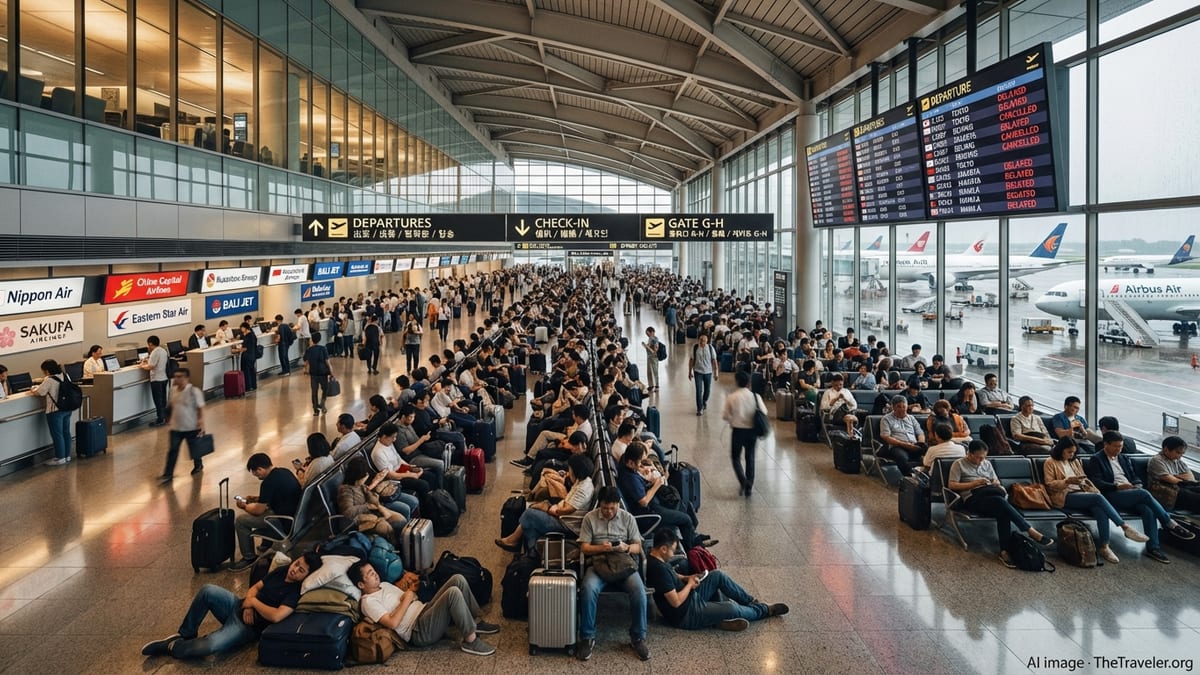
Southeast Hubs Buckle Under Weather and Volume
Published flight tracking data and airline operations dashboards on April 7 pointed to a fresh wave of disruption radiating from the Southeast, with Atlanta, Charlotte, Miami and Orlando all reporting elevated levels of delayed departures and arrivals. Industry-focused outlets that aggregate Federal Aviation Administration programs and airport performance highlighted more than 3,000 delayed flights nationwide by midafternoon, with a significant concentration at these hubs.
Travel trade coverage described Atlanta in particular as one of the day’s leading problem points, noting that Hartsfield Jackson Atlanta International Airport was among the airports with the highest volume of delayed flights as storms and congestion slowed traffic. One tally cited more than 190 cancellations and over 3,000 delays across the United States, with Atlanta and Miami both appearing on lists of airports experiencing unusually high disruption for a single weekday.
Operational data for specific routes illustrated how quickly problems spread. Recent tracking for flights such as American Airlines services between Charlotte and Houston showed estimated departures pushed back from scheduled late evening slots, a pattern mirrored on other short haul routes feeding the Southeast hub system. Similar schedule slippage appeared on flights touching Miami and Orlando, where late day operations are highly sensitive to upstream delays.
These real time issues landed on top of a winter and early spring marked by repeated weather shocks. Meteorological records show that a major March 2026 storm system brought severe thunderstorms, tornadoes and high winds across large parts of the South, while earlier winter events in January and February snarled air travel across wide swaths of the country. That pattern has left airlines and passengers entering the April travel period with thinner buffers and less room for recovery when new storms hit.
Ground Stops, Flow Controls and a Fragile Network
According to aviation industry analysis, the disruption seen across the Southeast on April 7 cannot be explained by weather alone. Recent reporting on national air traffic performance describes a system where staffing constraints at air traffic control centers and on the ramp combine with bouts of convective weather to create frequent ground stops and ground delay programs at major hubs.
Publicly available Federal Aviation Administration documentation explains that ground delay programs are used to meter arrivals into constrained airports when thunderstorms, reduced visibility or congestion limit how many aircraft can land each hour. When programs of this kind are issued for busy hubs like Atlanta or Charlotte, departures across the country are held at their origin airports, causing delays far from the original weather cell.
Specialist aviation media have reported in recent weeks that controller shortages and flow constraints have already triggered extensive delays at a number of major U.S. airports, including New York and Atlanta, with some airlines citing ground stops as a factor in weaker on time performance for March. Those conditions create a brittle environment in which even routine spring storms across the Southeast can tip the system into rolling disruption.
As a result, what begins as a line of thunderstorms over Georgia or the Carolinas can, within hours, lead to missed connections for travelers flying between midwestern cities, the Northeast and the Caribbean. The structure of the U.S. hub and spoke system, in which carriers like Delta Air Lines and American Airlines route large volumes of traffic through a small number of connecting airports, magnifies the impacts of each delay at those hubs.
Atlanta, Charlotte, Miami and Orlando at the Eye of the Storm
In this latest episode, the core Southeast hubs each faced a different mix of stresses. Atlanta, the busiest of them, saw delays mount as traffic backed up into evening departure banks. Flight statistics compiled by travel industry publications showed the airport among the top U.S. facilities for same day delays, reflecting both the weather pattern and the high number of daily movements concentrated into peak periods.
Charlotte Douglas International Airport, heavily used by American Airlines as a connecting point for East Coast and Midwest traffic, also registered elevated delay levels. Planning materials from airline and weather consultancies already identify Charlotte as particularly vulnerable to afternoon thunderstorms during severe weather seasons, noting that as many as one in five departures can be affected during intense convective episodes. The April 7 pattern, with storms flaring across the Carolinas, fit that risk profile.
Further south, Miami International Airport and Orlando International Airport contended with their own bottlenecks. Miami, a key gateway to Latin America and the Caribbean, appeared on daily disruption tables with more than 150 delayed flights, even though its raw cancellation count remained relatively modest. Orlando, one of the nation’s busiest leisure travel gateways, has a history of amplified delays when strong thunderstorms roll across central Florida, and recent local coverage has highlighted episodes in which ground stops and high wind gusts forced extended holding patterns and ramp closures.
Historical performance data reinforce how sensitive these airports can be when pressure builds. Comparative on time statistics compiled for major U.S. hubs show Atlanta and Charlotte typically performing better than Northeast airports in winter but still experiencing sizable swings in punctuality when volume peaks and storms linger in place. Miami and Orlando, meanwhile, are flagged in several analyses as hubs where crowding and airline scheduling choices can turn even minor weather into extended queues.
Passengers Face Missed Connections and Overnight Stays
For travelers moving through the Southeast on April 7, the operational story translated into long lines, rolling gate changes and a race for scarce rebooking options. Consumer travel guides published in recent weeks warn that in the current environment, roughly one in three flights at peak times can be delayed, and the day’s experience at Southeast hubs appeared to align with that warning.
Recent passenger accounts from earlier March disruptions at Atlanta foreshadowed the challenges. Travelers described spending hours on parked aircraft awaiting maintenance inspections after hail, diversions to nearby cities for fuel and crew time limit resets that forced cancellations even after storms had cleared. While those specific reports related to earlier events, they illustrate the sequence of knock on effects that can unfold when severe weather intersects with tight aircraft and crew schedules.
Consumer advocacy coverage continues to stress that airlines are generally not required to compensate passengers for delays or cancellations directly tied to weather. Public information from the U.S. Department of Transportation notes that carriers typically provide more generous support in cases where disruptions stem from controllable causes such as maintenance or staffing. In mixed events, where weather triggers a chain reaction that exposes other operational weaknesses, the boundary between those categories can feel blurred from a traveler’s perspective.
As delays mounted in the Southeast, widely shared advice urged passengers to seek written confirmation of the stated cause of a disruption, monitor airline apps and airport displays for gate and schedule changes, and, when possible, work on alternative routings before flights were formally canceled. Those tactics can make the difference between securing one of the limited remaining seats on a later departure and being stranded overnight.
Warning Signs for the Summer Travel Season
The turmoil at Southeast hubs on April 7 arrives near the start of the busy spring and summer travel period and follows a winter marked by several high impact storms. Recent government and industry analyses point to a confluence of factors that could keep pressure on the system in the months ahead, including rising passenger demand, persistent staffing gaps at air traffic control facilities and forecasts for another active severe weather season.
Benchmarking reports comparing U.S. and European air traffic performance show that, even in relatively stable years, large American hubs operate close to capacity during peak hours. That leaves limited margin when thunderstorms or other hazards temporarily reduce runway throughput. At airports like Atlanta, Charlotte, Miami and Orlando, where connecting flows are tightly banked into specific time windows, small disruptions can quickly accumulate into a cascade of missed slots and misaligned aircraft rotations.
Travel industry analysts therefore view the latest Southeast delays as both a localized event and a broader warning. If a single day of spring storms can trigger thousands of delays across the national network, a series of strong systems during the heart of summer could renew the kind of mass cancellations and multi day gridlock that travelers experienced during previous peak seasons.
For now, the disruption underscores an uncomfortable reality for air travelers in 2026. Delays at major Southeast hubs are no longer rare outliers but a recurring feature of a system under strain, where weather, workforce and infrastructure limits intersect and every storm cloud over Atlanta, Charlotte, Miami or Orlando has the potential to ripple from one side of the country to the other.