

More news on this day
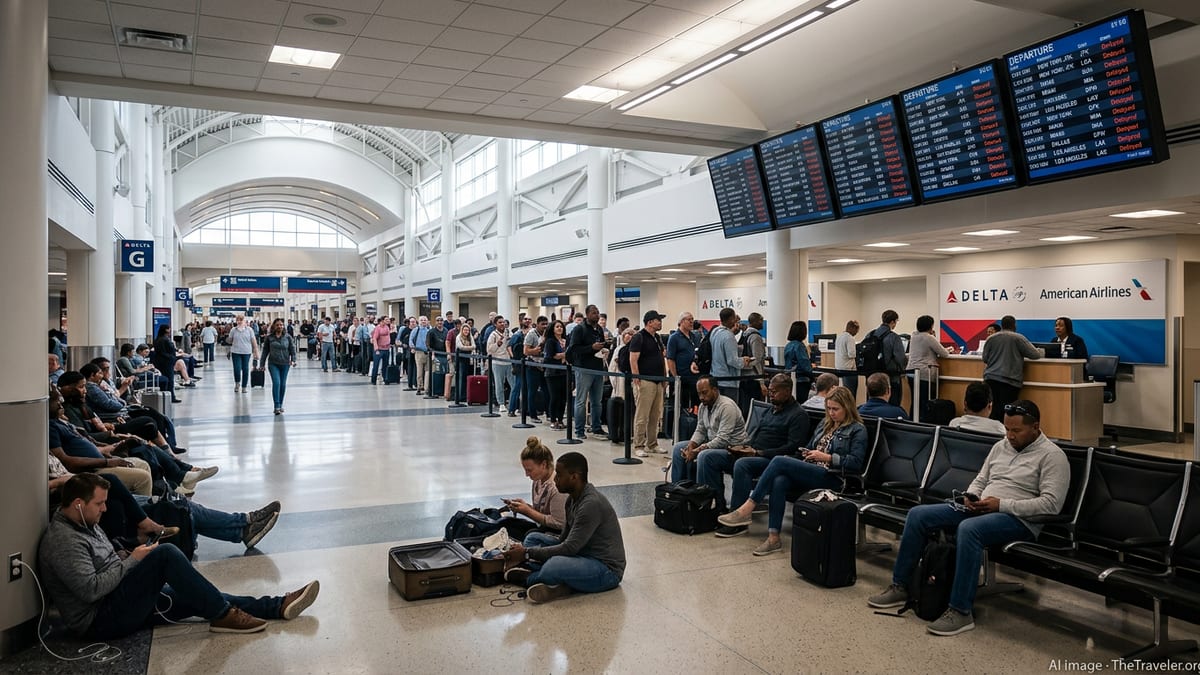
Major airports across the U.S. Southeast are experiencing significant disruption, with hundreds of delayed flights rippling through hubs in Atlanta, Miami, Charlotte and Tampa as spring travel peaks.
Get the latest news straight to your inbox!
Storm System and Holiday Crowds Create a Perfect Bottleneck
Reports from aviation trackers and travel industry outlets indicate that a slow-moving weather system and lingering instability in the national air traffic network are driving a new wave of disruption at Southeast hubs. The latest turbulence comes on the heels of Easter and early spring-break travel, a period when schedules are already operating near capacity and any disturbance can cascade across the network.
Recent coverage of airline performance shows that Atlanta Hartsfield Jackson International Airport, the world’s busiest hub, has been coping with dozens of cancellations and scores of late departures in recent days as thunderstorms and residual storm energy pass through key routes. Publicly available data for April 6 indicated more than 70 combined cancellations and delays at Atlanta alone, illustrating how quickly operations can back up when weather and peak demand collide.
Further south, Miami International Airport has emerged as one of the most heavily affected facilities. According to published coverage on April 7, the airport is dealing with more than 250 delayed flights and a smaller but still disruptive number of cancellations, affecting both domestic services and long-haul international departures. For many travelers, the disruptions are being felt as missed connections to the Caribbean, Latin America and transatlantic destinations.
Secondary hubs across Florida are also feeling the strain. Data from airport monitoring platforms for Tampa International show poor flying conditions early on Tuesday, with low clouds and rain hampering already busy morning operations and contributing to creeping delays on short-haul routes into and out of the Southeast.
Network Effects Radiate From Atlanta, Miami and Charlotte
The clustering of problems at a few major nodes is having an outsized impact because of the way large U.S. airlines structure their routes. Atlanta serves as the primary connecting hub for a leading legacy carrier, while Charlotte and Miami play similar roles for other major airlines. When departure banks at these airports are slowed by storms or air traffic management constraints, the delays ripple quickly into feeder cities across the region.
Industry performance analyses released over the past year have repeatedly identified Atlanta and Charlotte among the busiest and most delay-prone hubs, simply because of the volume of daily movements and the tight timing of connecting banks. Even under normal conditions, a relatively small percentage of late arrivals can lead to missed connections. During weather-affected periods, that dynamic is magnified as aircraft and crews end up out of position.
Miami’s role as a gateway for international traffic adds another layer of complexity. Long-haul departures cannot always be held to wait for late inbound passengers, particularly when crews are approaching duty time limits or when overseas curfews apply at destination airports. As a result, even modest delays in Southeast hubs can turn into overnight disruptions for travelers heading to Europe or South America.
Once bottlenecks form at these key hubs, recovery tends to be gradual rather than immediate. Schedules are already tightly packed for early April, and reports indicate that some airlines are resorting to selective cancellations to create space and reset their networks, a strategy that can reduce further knock-on delays but leaves some passengers facing unplanned overnight stays.
Staffing and Air Traffic Constraints Add to Weather Woes
While thunderstorms and low ceilings are the most visible culprits to passengers staring at departure boards, the current disruption is also unfolding against a backdrop of persistent staffing challenges. Recent aviation trade coverage has highlighted ongoing shortages of certified air traffic controllers at several key facilities, which can limit the number of flights allowed into congested airspace even when skies are clear.
An in-depth report published on April 7 detailed how controller staffing shortfalls have triggered ground stops and flow restrictions at major U.S. airports throughout late March and early April. In some cases, flights have been held at departure airports with no estimated time of release because nearby control centers lacked sufficient personnel to safely handle normal traffic volumes.
These constraints are particularly impactful in the Southeast, where busy terminal areas overlap and where storm systems frequently require more complex routing around hazardous cells. When weather and staffing issues align, the capacity of certain sectors is reduced, forcing airlines to slow their operations and accept delays even if individual airports remain open.
Airlines have acknowledged in public filings and earnings commentary that air traffic control constraints have weighed on on-time performance this spring. Some carriers have cited hundreds of flights in a single week being affected by flow restrictions into hubs such as Atlanta, compounding the delays already caused by unsettled weather and seasonal crowds.
Travelers Face Missed Connections and Overnight Disruptions
For passengers, the operational complexity behind the scenes translates into very tangible frustrations at the gate. Social media posts and local TV coverage across the Southeast on Monday and Tuesday have shown long lines at departure counters, crowded terminal seating areas and departure screens dominated by yellow and red delay indicators.
Travelers connecting through Southeast hubs are among the hardest hit. A late-arriving regional jet into Atlanta, Charlotte or Miami can mean a missed onward flight, particularly in the afternoon and evening waves when alternative options are limited. In some cases, passengers are being rebooked on flights leaving the following morning, effectively turning a short delay into a full-day disruption.
The situation has also revived concerns about the resilience of the U.S. aviation system after several high-profile meltdowns in recent years. Consumer advocates note that even when extreme weather is involved, network design and scheduling strategies play a major role in determining how widely those disruptions spread and how quickly airlines can recover.
Publicly accessible guidance from airports and travel organizations continues to stress the importance of contingency planning for spring travelers, particularly those relying on tight connections through hub airports. Recommendations commonly include booking earlier flights when possible, allowing extra connection time, monitoring flight status apps closely on the day of travel and being prepared with backup plans if a key hub experiences a fresh round of delays.
Outlook for the Coming Days Across Southeast Gateways
Short-range forecasts suggest that pockets of unsettled weather will linger over parts of the Southeast and Mid Atlantic through the week, raising the possibility of further rounds of disruption at already stressed hubs. Even as individual storm cells move on, the backlog of aircraft and crews can take several cycles to unwind, meaning that Tuesday’s problems may still be visible in schedules on Wednesday and beyond.
Operational data from recent storm events show that some hubs can take a full day or more to return to normal after a period of widespread delays. Airlines often need to reposition aircraft, reset crew rotations and accommodate displaced passengers before they can restore their planned schedules, particularly at large connecting complexes such as Atlanta and Charlotte.
Travel industry analysts observing the current disruptions indicate that the episode may add momentum to ongoing debates in Washington over air traffic control staffing and modernization. A recent congressional hearing featured requests for expanded hiring of controllers, a move that aviation groups argue is essential to improve resilience when weather and peak demand collide.
For now, however, passengers passing through the Southeast’s busiest hubs are being urged by airlines and airports, through public advisories and online notices, to build in extra time, stay flexible and be prepared for last-minute gate changes and rolling departure times as carriers work through another turbulent week of flight operations.