

More news on this day
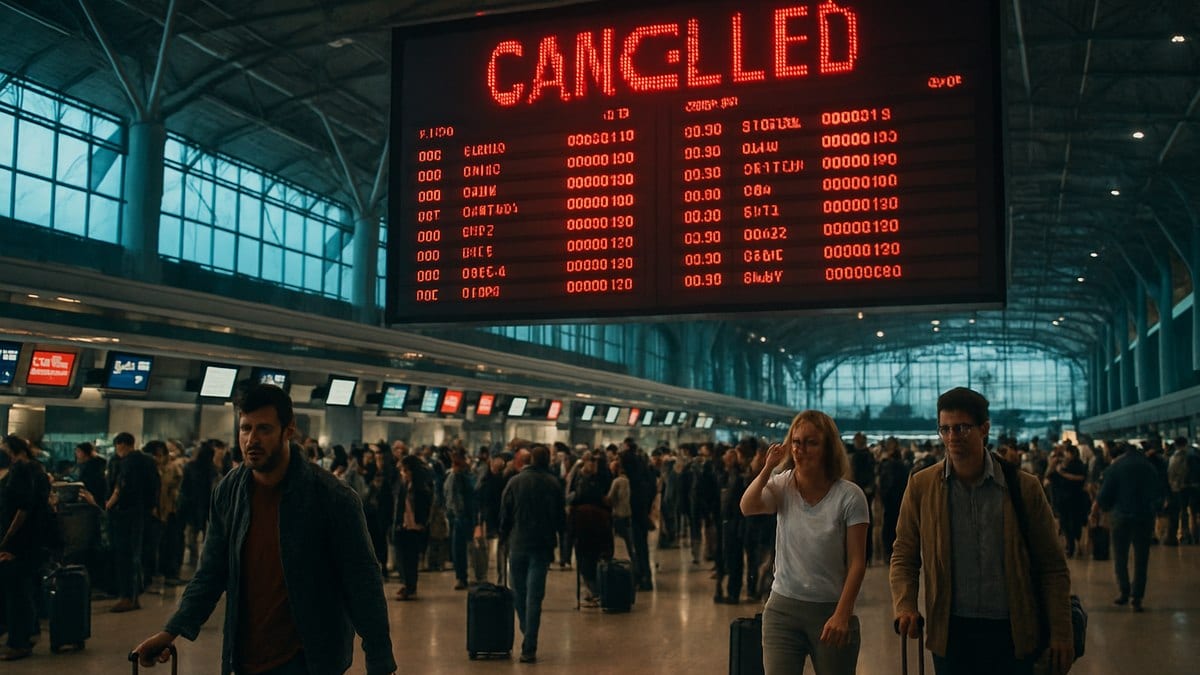
Flight disruption across Asia to Gulf routes has intensified as Chinese and Hong Kong carriers cancel 54 services, underscoring how ongoing conflict in the Middle East is reshaping key global air corridors.
Get the latest news straight to your inbox!
Security Shockwaves Close Airspace and Ground Flights
Recent military escalation involving the United States, Israel and Iran has led to a patchwork of airspace closures across the Middle East, forcing airlines in Asia to rapidly rework or suspend services. Publicly available information shows that countries including Iran, Iraq, Israel, Kuwait, Qatar and Bahrain have all limited overflights at various points, squeezing the primary corridor that connects East Asia to the Gulf.
The resulting bottleneck has translated into immediate flight cancellations on Asia to Gulf routes. Aviation data referenced in regional media coverage indicates that dozens of services between China or Hong Kong and hubs such as Dubai and Doha have been grounded in recent days, with the impact spilling into cargo operations as well as passenger traffic.
Industry monitoring platforms highlight that the central Middle East corridor now carries heightened operational risk, with airlines facing longer diversions, higher fuel costs and complex schedule planning. Even where limited airspace has reopened, carriers have been slow to restore pre conflict timetables, citing continuing uncertainty and evolving advisories from regulators.
What began as a security crisis over the Gulf has rapidly evolved into a major aviation story, as airlines recalculate the viability of routes that only months ago underpinned booming traffic between Asia and the Middle East.
Chinese Carriers at the Heart of 54 Flight Cancellations
The headline figure of 54 cancelled flights centers on links between Hong Kong and the Middle East, where Chinese and Hong Kong based carriers are prominent operators. Checks of published schedules summarized in regional business reports show that services between Hong Kong and Dubai have been particularly hard hit, with a combination of passenger and freighter flights withdrawn.
Analysis of those reports indicates that at least 27 of the affected flights involve the Hong Kong Dubai pairing alone, including multiple widebody cargo rotations, while additional cancellations cover other Gulf points such as Doha and Abu Dhabi. The adjustments reflect both direct exposure to closed airspace and indirect disruption as Gulf hubs temporarily scaled back operations during the height of recent strikes.
Publicly available data on airline operations suggests that key mainland Chinese carriers, including Air China, China Eastern Airlines, China Southern Airlines and Sichuan Airlines, account for a significant share of cancellations on broader China Middle East sectors. These carriers are important providers of lift for business travelers, labor flows and cargo linking major Chinese cities with the Gulf and beyond.
While many of the cancelled flights were scheduled over a window of several days rather than being permanent route withdrawals, analysts note that repeated short term suspensions erode confidence among travelers and freight forwarders who rely on consistent connectivity.
Asia Gulf Passenger Journeys Thrown Off Course
The sharp reduction in capacity has left passengers across Asia scrambling to rebook or reroute journeys that depend on Gulf hubs as transit gateways to Europe, Africa and the wider Middle East. Travel news coverage from Hong Kong and Singapore in recent weeks has described scenes of long queues at airline counters and crowded customer service hotlines as itineraries are rearranged at short notice.
Some travelers heading from East Asia to destinations in Europe have found that routings via northern or southern detours, such as Turkey or Egypt, now involve extra flying time that can add several hours to total journey durations. Others have opted to delay trips altogether, particularly where corporate travel policies restrict passage through conflict affected regions.
For Gulf based residents with ties to China and Southeast Asia, the cancellations have created a different set of challenges. With fewer nonstop and one stop options available, many have turned to secondary carriers or multi stop connections that involve longer layovers and more complex ticketing. This has placed additional pressure on airlines that still operate via relatively unconstrained corridors.
Reports from aviation analytics firms suggest that cumulative cancellations and reroutes since late February already run into the tens of thousands of flights across the wider Gulf and Levant region. The 54 flights cut on Asia Gulf routes represent a concentrated example of how those disruptions translate into real world inconvenience for travelers.
Knock On Effects for Cargo and Regional Trade
The flight chaos is not confined to passengers. Freighter operations and bellyhold cargo carried on passenger jets have also been heavily affected, with implications for high value and time sensitive trade between China and Gulf economies. Media coverage focused on logistics highlights that a notable share of the 54 cancelled flights are dedicated cargo services or passenger flights with significant freight capacity.
These cancellations complicate supply chains for sectors that rely on rapid air transport, including electronics, fashion and perishables. Forwarders have reported, through industry circulars and trade press, that shipments are being rerouted via longer paths or shifted onto sea air combinations that use alternative hubs well outside the immediate conflict zone.
Longer routings increase fuel burn and handling costs, which can feed into higher freight rates. For exporters in China and importers in Gulf states, this raises overall logistics expenses at a time when many companies are already dealing with volatile energy prices and softening demand in some consumer markets.
Portions of the cargo market have shown some resilience, with operators exploiting remaining corridors through safer airspace or boosting frequencies on unaffected sectors. Yet the withdrawal of dozens of flights in a short span underscores how vulnerable just in time trade flows remain to geopolitical shocks.
Uncertain Outlook for Recovery on Asia Gulf Routes
Looking ahead, the timetable for restoring full Asia Gulf connectivity remains unclear. A recent ceasefire announcement between key parties in the conflict has prompted some Gulf and international airlines to cautiously resume selected services, but many carriers continue to publish adjusted schedules that avoid critical airspace or cap flights into the region.
Travel industry analysts quoted in regional financial coverage suggest that airlines will only normalize operations once they see a sustained reduction in security incidents and a stable framework of overflight permissions. Insurers and corporate travel buyers are expected to play an important role in shaping demand, as risk assessments filter into decisions on where and when staff can fly.
For Chinese and Hong Kong carriers, strategic choices over the coming weeks will revolve around whether to consolidate operations on a handful of safer gateways, or to gradually re expand across the Gulf as conditions allow. In the meantime, passengers are being advised by travel agents and online booking platforms to check flight status frequently, anticipate last minute changes and build extra time into connections.
The cancellation of 54 flights on Asia Gulf routes stands as a stark indicator of how quickly a regional conflict can unsettle long distance travel patterns. With airspace still constrained and airline planners cautious, volatility on these corridors is likely to persist in the near term.