

More news on this day
Chinese airlines have triggered fresh turbulence across key Asia–Gulf corridors as operational data shows 54 flights scrubbed from schedules in a single day, intensifying an already volatile period for travel between mainland China, Southeast Asia and major hubs in the United Arab Emirates and wider Gulf region.
Get the latest news straight to your inbox!
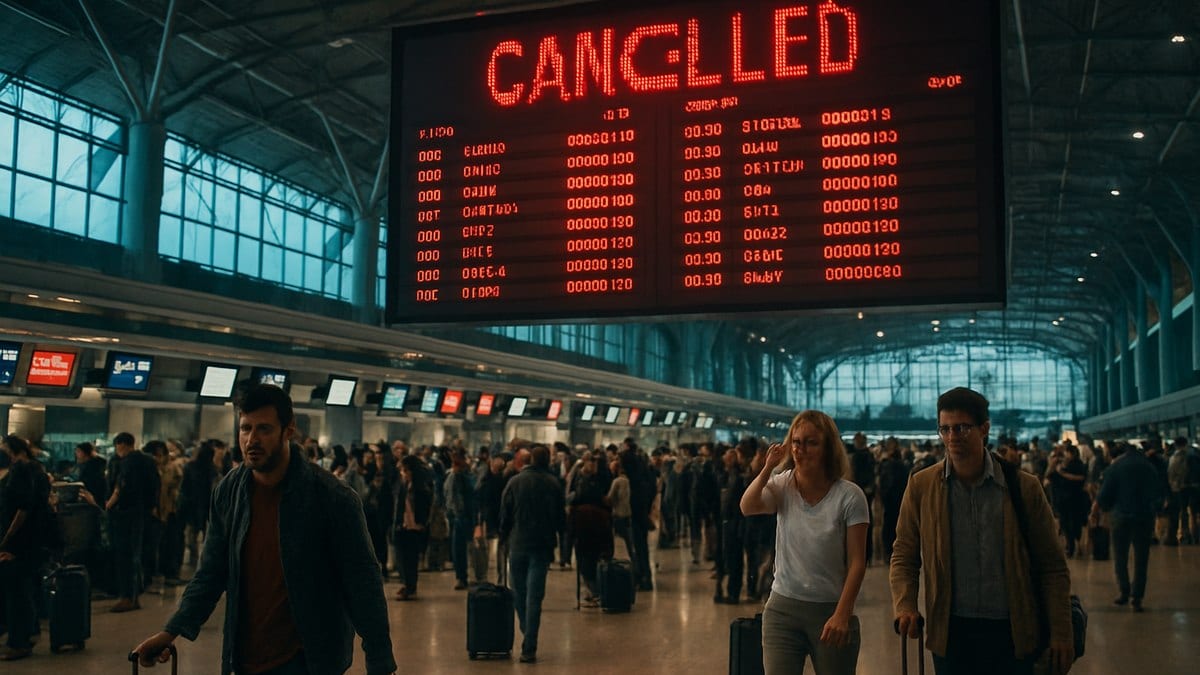
Targeted Cancellations Disrupt Key Asia–Gulf Corridors
Operational snapshots from regional aviation trackers and airport reporting systems indicate that the latest wave of disruption is concentrated on high‑traffic routes linking Chinese and broader Asian cities with Gulf hubs such as Dubai, Abu Dhabi and Riyadh. Within a broader tally of hundreds of cancellations and thousands of delays across Asia on April 10, 2026, at least 54 flights operated by Chinese and China‑linked carriers on Asia–Gulf and connecting itineraries were marked as canceled, affecting both point‑to‑point and one‑stop journeys via the Middle East.
The withdrawn flights are part of a wider pattern captured in daily operational round‑ups, which show China, Indonesia, Japan, South Korea and the United Arab Emirates collectively canceling hundreds of services in recent days, with Dubai and other Gulf gateways featuring prominently in disruption reports. Data tables compiled by specialist travel outlets highlight Chinese carriers among those with some of the highest same‑day cancellation percentages, underscoring how quickly schedule stability on these corridors has eroded.
While many of the 54 cancellations are short‑haul or regional segments feeding into long‑haul services, their removal has had an outsized impact on itineraries built around Gulf connections. Passengers bound for Europe, Africa and the Middle East via Dubai or other regional hubs have found that the loss of a single China–Asia or China–Gulf leg can unravel entire multi‑segment trips, especially where alternative routings are already constrained by previous waves of schedule cuts.
Publicly available timetables and airline notices show that some of the affected flights include services into major Chinese coastal centers that normally funnel traffic onward to the Gulf, as well as direct links between secondary Chinese cities and Middle Eastern hubs. Even where carriers have not formally suspended entire routes, targeted daily cancellations have become common, transforming what used to be high‑frequency corridors into patchwork offerings that change with little notice.
Security, Airspace Limits and Insurance Costs Drive Decisions
The concentrated cancellations across Asia–Gulf routes are unfolding against a backdrop of heightened security sensitivities in Middle Eastern airspace. Industry briefings from consultancies and logistics providers describe a complex patchwork of restrictions affecting overflight permissions across parts of Iran, Iraq, Israel, Jordan, Kuwait, Qatar, Bahrain, Syria and the United Arab Emirates, with thousands of flights canceled region‑wide during earlier phases of the disruption and lingering constraints still in effect.
Reports on the recent escalation of tensions highlight that several European and Asian airlines have already extended suspensions of flights to key Middle Eastern cities. Coverage of Air France and Lufthansa schedule changes, for example, notes longer‑than‑expected pauses on services to Tel Aviv, Beirut, Dubai and Riyadh, citing security risk assessments on airspace exposure. Hong Kong‑based Cathay Pacific is also reported to have prolonged the suspension of flights to Dubai and Riyadh, signaling a broader industry caution on certain Gulf‑related routings.
Analyses by aviation and risk‑management specialists emphasize that war‑risk insurance premiums for operating in and around Gulf airspace have risen markedly since the latest round of hostilities, reshaping route economics even where airspace technically remains open. For Chinese carriers, which often operate on thinner margins on long‑haul and connecting services, the combination of elevated insurance costs, potential rerouting and the risk of sudden airspace closures has encouraged a strategy of selective cancellations while maintaining a nominal presence in published schedules.
Travel advisories and corporate travel bulletins circulated since late February have also urged operators to build in greater flexibility on Middle East routings, including temporary reductions in frequencies and the consolidation of services. The 54 Chinese‑operated flights scratched across Asia–Gulf networks in one day reflect that guidance in practice, as airlines recalibrate capacity to match both demand uncertainty and operational risk.
Chinese Carriers Adjust Networks and Ticket Policies
Even before the latest cluster of 54 cancellations, Chinese state‑owned airlines had begun reshaping their exposure to the Gulf amid shifting security and demand dynamics. Earlier in March, China Eastern Airlines issued special ticket regulations for routes involving Dubai, Abu Dhabi, Riyadh and Muscat, allowing affected passengers holding tickets for departures between March 16 and May 31, 2026, to access flexible changes or refunds. The measures were framed as a way to help travelers adjust plans in response to the evolving Middle East security situation.
Network‑wide operational summaries from Chinese airports show that national carriers such as Air China, China Southern Airlines and China Eastern have simultaneously been grappling with large domestic disruption events, which in turn limit their ability to absorb new shocks on international services. Daily tallies from early April report thousands of delays and hundreds of cancellations across major hubs including Guangzhou, Shanghai, Beijing and Shenzhen, creating knock‑on effects for crews, aircraft positioning and maintenance windows that underpin international rotations.
These operational realities coincide with broader strategic shifts. Industry data compiled for the aviation sector indicates that Chinese airlines have already curtailed capacity on several international markets this year, including a sharp reduction in flights to Japan as security advisories and geopolitical tensions weighed on demand. The same tools and playbooks developed for those network adjustments are now being applied to Gulf‑linked routes, with carriers fine‑tuning day‑by‑day schedules and pruning high‑risk or low‑yield services first.
Published coverage in regional business media notes that airlines across Asia are also coordinating travel waivers and flexible rebooking options to handle the volatility. Ticketing rules released by Chinese carriers and their partners show expanded eligibility windows for free changes on itineraries touching the Middle East, suggesting that the current wave of cancellations is being treated as part of a longer, managed period of instability rather than a short, exceptional event.
Passenger Impact Spreads From China to Southeast Asia and Beyond
For travelers, the practical impact of 54 Chinese‑operated flight cancellations on Asia–Gulf routes is magnified by broader congestion and disruption across the region. On April 10, Asia‑wide reports logged more than 500 cancellations and over 6,000 delays across multiple countries, with Dubai and other Gulf airports playing a central role as connection points. Passengers starting journeys in Beijing, Shanghai, Guangzhou, Jakarta, Tokyo, Seoul and Taipei are encountering missed connections, involuntary overnight stays and enforced rerouting via alternative hubs in Europe or South Asia.
Travel‑industry round‑ups describe scenes of crowded transfer desks and long queues at airline customer service counters in both Asian and Gulf airports, as carriers attempt to reaccommodate passengers from scrapped flights while managing their own tight operational margins. The reduction in frequencies to Gulf hubs has left some travelers with far fewer same‑day alternatives, especially on routes that were already operating at reduced schedules compared with pre‑crisis patterns.
Corporate travel managers and tour operators tracked in trade media have reported particular difficulties for group itineraries built around Gulf connections, such as multi‑stop business delegations or package tours combining Gulf city breaks with onward journeys to Europe and Africa. With aircraft operating close to capacity on remaining services, blocks of seats large enough to accommodate groups are proving hard to secure at short notice, forcing some organizers to postpone or reconfigure trips entirely.
The disruption also has implications for cargo carried in the bellies of passenger aircraft on these routes. Logistics updates reveal that the temporary loss of dozens of flights can translate into significant shortfalls in lift for high‑value, time‑sensitive goods moving between Chinese manufacturing centers, Southeast Asian suppliers and Middle Eastern distribution hubs. Freight forwarders are being pushed to explore alternative routings via secondary hubs or dedicated freighter services, often at higher cost and with longer transit times.
What Travelers on Asia–Gulf Routes Should Expect Next
Recent operational and risk briefings indicate that the environment for Asia–Gulf air travel is likely to remain fluid in the coming weeks, even as some carriers cautiously restore capacity to certain Middle Eastern destinations. KPMG aviation and logistics assessments point to ongoing airspace restrictions and elevated security thresholds across parts of the region, suggesting that airlines will continue to rely on short‑notice schedule changes as conditions evolve.
At the same time, not all airlines are reacting identically. Business and travel media note that while some Gulf and European carriers have extended suspensions to cities such as Dubai, Abu Dhabi and Riyadh, others based in the region are working to preserve a core network using adjusted routings and timing. For Chinese carriers, which must balance domestic recovery, international expansion and external security risks, the most probable outcome is a prolonged period of tactical capacity management rather than a rapid return to stable, published schedules.
Travel‑industry guidance circulating since late March advises passengers booked on Asia–Gulf itineraries to expect rolling changes, even when tickets appear confirmed. In practice, this means monitoring airline apps and airport departure boards closely in the 24 to 48 hours before travel, building longer connection times into self‑planned itineraries and remaining flexible about routing through alternative hubs such as Singapore, Bangkok or European gateways when Gulf options tighten.
For now, the cancellation of 54 Chinese‑operated flights across Asia–Gulf routes in a single day stands as a stark indicator of how sensitive the region’s air connectivity remains to geopolitical and operational shocks. As carriers continue to adjust, travelers and the wider tourism industry are being forced to adapt to a new norm in which flight plans on these once‑reliable corridors are provisional rather than guaranteed.