

More news on this day
Travelers moving through Argentina’s Ministro Pistarini International Airport near Buenos Aires on March 30 faced a tangle of delays and cancellations that rippled across key routes to São Paulo, Miami and New York, underscoring how quickly regional disruptions can cascade through long-haul networks.
Get the latest news straight to your inbox!
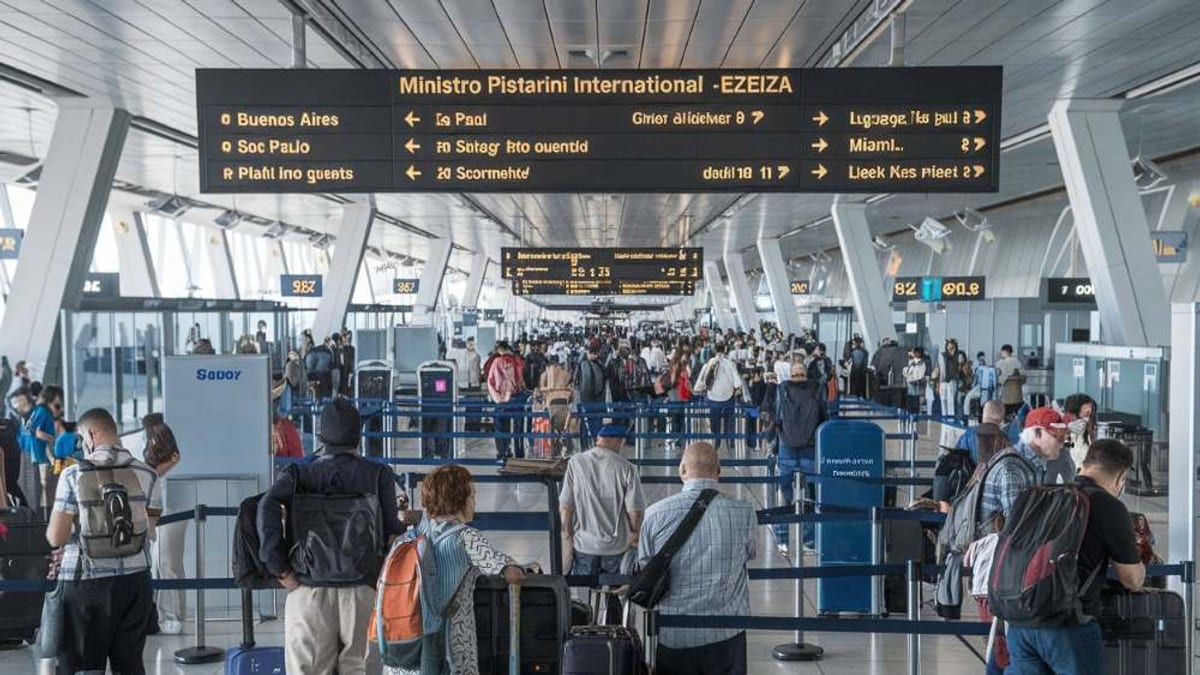
Image by Travel and Tour World – Tourism, Airline, Destination, MICE, Gobal Travel Market, Hotel news that you will find only over here.
Delays and Cancellations Snarl Key South American Gateways
Publicly available flight-tracking data for March 30 indicates that operations at Ministro Pistarini International Airport, better known as Ezeiza, were under pressure for much of the day, with at least 19 departures and arrivals delayed and six flights canceled on international links. The disruptions affected services connecting Buenos Aires with São Paulo, Miami and New York’s John F. Kennedy International Airport, among other destinations.
The pattern of disruption involved a mix of regional and long-haul operators. Low-cost carrier Flybondi, which concentrates much of its international flying at Ezeiza, showed multiple late departures, while larger network airlines including American Airlines, Copa Airlines and LATAM Airlines Group adjusted schedules on routes to the United States and Brazil. In several cases, delays in Buenos Aires translated directly into late arrivals or missed connections in São Paulo, Miami and New York.
Although flight irregularities are common during the Southern Hemisphere summer peak and the transition into the autumn travel period, the concentration of issues on March 30 stood out for travelers trying to move between South America and the United States. For many passengers, the impact was magnified by tight connections onto onward flights in Miami and at JFK, as aircraft and crews arrived late from Argentina.
Operational data and local reporting also suggest that congestion in security and check-in areas at Ezeiza compounded the situation. Travelers arriving at the airport in Buenos Aires reported lengthy lines and processing times that increased the risk of missed departures, even where flights were operating close to schedule.
Flybondi Under Scrutiny as Reliability Concerns Resurface
The disruptions placed renewed attention on Flybondi, Argentina’s leading low-cost airline, which has faced persistent criticism from some travelers over schedule reliability. Recent online accounts from passengers highlight a pattern of late-running flights, last-minute schedule adjustments and occasional cancellations on domestic and regional routes touching Ezeiza and Buenos Aires’ city airport.
On March 30, Flybondi’s operations at Ezeiza were again affected, with delays reported on routes feeding into Brazil and onward international networks. When a carrier with a relatively small fleet faces even modest operational issues, the knock-on effect can be significant, as there are limited spare aircraft to absorb unexpected maintenance or weather-related disruptions.
Industry analyses of the Argentine aviation market have noted that low-cost operators are navigating a challenging environment that includes evolving infrastructure projects, changing regulatory conditions and recent labor actions at airports. These structural factors can leave airlines more exposed when regional storms, staffing shortages or air traffic control constraints occur, as schedule buffers are already tight.
Travel forums and consumer reports in early 2026 have repeatedly urged visitors to Argentina to build extra time into itineraries involving Flybondi, particularly when connecting from domestic flights at Ezeiza to long-haul services on other airlines. The events of March 30 are likely to reinforce that advice for travelers planning multi-leg trips that rely on precise timing.
American, Copa and LATAM Manage Knock-on U.S. Route Disruptions
The turbulence at Ezeiza also affected established full-service carriers linking Argentina with North America. According to airline status pages and independent tracking platforms, American Airlines adjusted departure times on several services connecting Miami and New York with South America during the last week of March, reflecting both residual issues from earlier U.S. weather events and fresh delays on South American legs.
Copa Airlines and LATAM, which operate extensive networks through hubs in Panama City and São Paulo respectively, also showed schedule changes for flights touching Argentina around March 30. When a key spoke like Buenos Aires experiences ground delays or extended turnaround times, aircraft arriving late into hub airports can quickly translate into missed connections on onward flights to the United States.
Earlier in March, severe storms in parts of the United States produced one of the most disrupted weekends for flying since the early pandemic era, with thousands of flights delayed or canceled across major hubs. Those events left many airlines operating with thin margins on aircraft rotations and crew availability. Against that backdrop, even modest issues in Buenos Aires and São Paulo can reverberate onto long-haul routes to Miami and JFK as airlines juggle repositioning aircraft and reassigning crews.
For travelers, the convergence of U.S. weather disruptions and South American operational constraints has meant heightened uncertainty, even where individual flights remain technically scheduled. The March 30 pattern at Ezeiza illustrates how delays on a single city-pair can affect a web of itineraries spanning multiple countries and carriers.
Infrastructure, Labor and Seasonal Peaks Add Pressure
The conditions behind the March 30 disruptions appear to extend beyond any single airline. Argentina’s aviation authorities have outlined ongoing plans to upgrade runways and taxiways at Ezeiza as part of a broader modernization push, and construction or maintenance programs can temporarily constrain airport capacity. While these upgrades are intended to improve reliability in the long term, in the short term they can contribute to congestion during peak periods.
Labor tensions have also influenced Argentina’s air transport sector in recent months. Travel community discussions in March referenced airport strike actions and work stoppages that led to flight cancellations and forced passengers to rebook journeys at short notice. Even when no strike is active on a given day, the possibility of industrial action can prompt airlines to adjust schedules or consolidate services in anticipation of disruptions.
Seasonality adds another layer. Late March sits at the tail end of the Southern Hemisphere’s high season, when demand from international visitors and regional travelers remains elevated. High load factors reduce the number of spare seats available for rebooking when disruptions occur, turning relatively small operational problems into broader travel headaches as airlines struggle to re-accommodate affected passengers.
Published aviation market analyses for early 2026 describe Argentina’s international connectivity as expanding rapidly under a more liberalized “open skies” approach. While increased competition and new routes benefit travelers over the long term, rapid growth can strain existing airport infrastructure and ground services if capacity upgrades do not keep pace.
What Travelers Can Do if Their Ezeiza Flight Is Affected
The experience at Ezeiza on March 30 offers several practical lessons for travelers planning routes through Buenos Aires, São Paulo, Miami or New York in the coming months. Public information from airlines and travel-tracking services consistently emphasizes the importance of monitoring flight status closely in the 24 to 48 hours before departure and again on the day of travel, since schedule changes are often loaded into systems gradually.
Experts also recommend leaving generous connection times when combining low-cost carriers such as Flybondi with long-haul services on other airlines, particularly where separate tickets are involved. A delay or cancellation on a domestic or regional segment typically does not obligate a second airline to rebook passengers free of charge, making missed connections especially costly on complex itineraries.
Travelers connecting between Ezeiza and other airports, such as São Paulo’s Guarulhos or U.S. hubs at Miami and JFK, may wish to avoid late-night or single daily flights when possible, as those services offer fewer same-day alternatives if problems arise. Selecting routes with multiple daily frequencies can increase the chances of same-day recovery when irregular operations occur.
Finally, those with fixed plans in Argentina, Brazil or the United States can benefit from including at least one buffer day at critical points in their trip, particularly during late March and other peak seasons. The chain of disruptions centered on Ezeiza at the end of March 2026 underlines how even a handful of delayed and canceled flights can cascade into a wider travel nightmare across three countries and multiple major airlines.