

More news on this day
Europe’s busiest air routes are under severe strain this weekend, as widespread strike-related cancellations at Frankfurt coincide with mounting weather and air-traffic-control delays at London Heathrow and Gatwick, creating cascading disruption for passengers across the continent and beyond.
Get the latest news straight to your inbox!
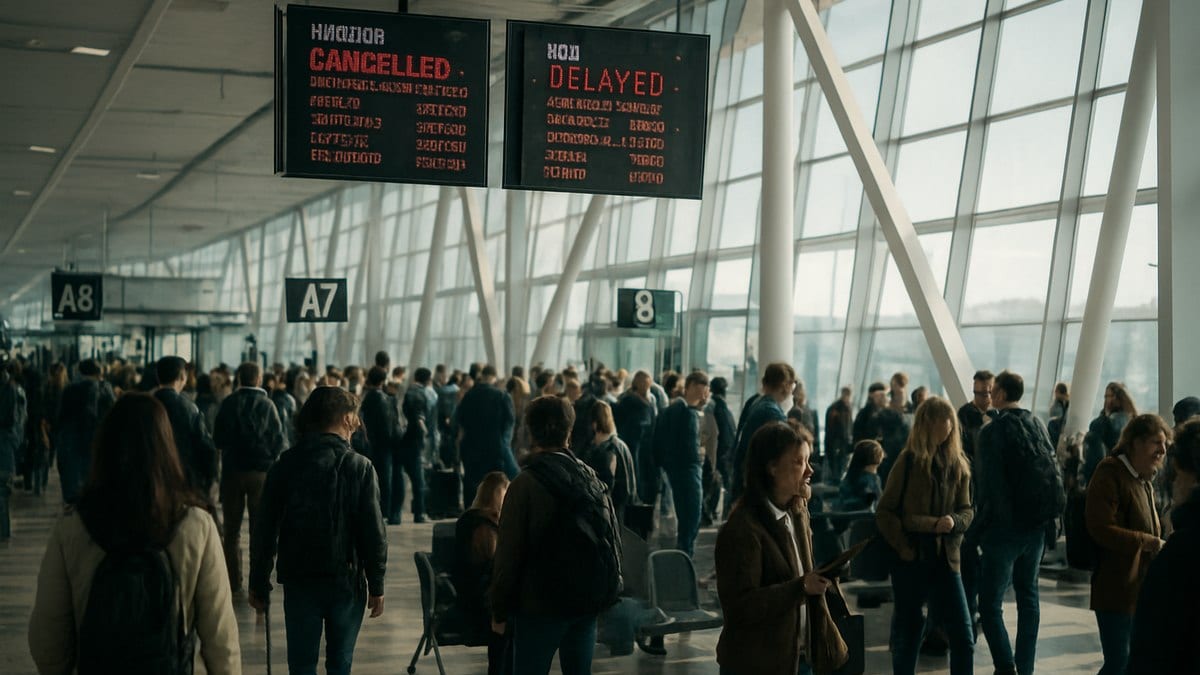
Frankfurt Strikes Trigger Wave of Cancellations
Frankfurt Airport, one of Europe’s key transfer hubs, has seen extensive disruption since Friday following industrial action affecting Lufthansa and its regional operations. A one day cabin crew walkout on April 10 led to the cancellation of hundreds of flights from Frankfurt and Munich, with services at several other German airports also heavily reduced. Published coverage indicates that more than 500 services were scrapped in a single day, stranding large numbers of connecting passengers at the peak of the Easter return period.
Reports from aviation news outlets and passenger-rights monitors suggest that the disruption has not been limited to the strike window itself. Aircraft and crew left out of position on Friday have continued to weigh on schedules into the weekend, with additional short notice cancellations and significant delays reported on April 11 and April 12. Frankfurt’s role as a long haul gateway has amplified the impact, as missed connections ripple onto transatlantic and Asian flights operated by partner airlines.
Publicly available information from Lufthansa shows a further escalation ahead, with a separate pilot strike called for April 13 and April 14 and a travel waiver in place for affected dates. That announcement has prompted some travelers to abandon their original itineraries altogether, either rebooking via other hubs or postponing trips. The result is a prolonged period of instability for flights into and out of Frankfurt, extending well beyond the initial day of industrial action.
London Heathrow and Gatwick Grapple With Heavy Delays
While Frankfurt battles strike fallout, London’s main airports are facing their own turmoil. Data compiled this week by passenger-compensation specialists and flight-tracking platforms points to more than 1,600 delayed flights in a 24 hour period across Europe, with Heathrow and Gatwick recording some of the worst punctuality. At both airports, typical delays in recent days have been reported in the 45 to 75 minute range, hitting already congested schedules.
Published reports attribute the London disruption to a mix of adverse weather and air traffic control constraints. Low cloud and gusty winds have reduced runway capacity at times, forcing holdings and slower arrival rates into Heathrow, which routinely operates close to its maximum throughput. Any such slowdown quickly creates a backlog, affecting onward connections and leading airlines to trim frequencies or consolidate flights.
Travel updates from long haul carriers serving London describe what they term “cascading delays,” where a late arrival in one direction knocks subsequent rotations off schedule for much of the day. With both Heathrow and Gatwick serving as critical links for intercontinental traffic, these delays are spilling over into routes connecting Europe with the Middle East, Asia, North America, and Africa.
Knock On Effects Across European and Long Haul Networks
The combination of strike action in Germany and operational strain in London is generating what analysts describe as a classic hub and spoke shock, where disruptions at a few mega hubs radiate outward. Frankfurt’s cancellations have forced widespread rebooking of passengers onto alternate routes via Amsterdam, Paris, Zurich, Vienna, and the London airports, shifting pressure rather than eliminating it.
At the same time, Heathrow and Gatwick’s reduced on time performance has complicated those rebookings. Travelers rerouted through London after losing Frankfurt connections are encountering fresh delays, missed onward flights, and in some cases overnight stays. Airlines have resorted to ad hoc schedule changes, swapping aircraft types and adjusting departure times to recover punctuality, but available information suggests that recovery has been slow.
European low cost carriers and non strike affected airlines are also feeling the strain. With Lufthansa trimming its schedule and some London based carriers reducing rotations to cope with congestion, the supply of last minute seats has tightened. Fare data published on travel search platforms shows sharp price spikes on competing routes into Germany and the United Kingdom over the Easter period, further complicating options for stranded passengers.
Passenger Rights and Practical Options Amid the Turmoil
The current wave of disruption is again drawing attention to passenger protections under European Union rules. Under EU261 regulations, travelers on eligible flights that are cancelled at short notice or suffer long delays may be entitled to meals, hotel accommodation, rebooking, and in some cases monetary compensation. Legal and consumer advocates note, however, that entitlement can depend on whether the cause is categorized as extraordinary circumstances, such as severe weather or certain air traffic control restrictions, or events within an airline’s control, including most forms of industrial action by its own staff.
Public information from Lufthansa and other affected carriers indicates that flexible rebooking policies and fee waivers are in place for many travelers scheduled to pass through Frankfurt on the strike dates. Separately, London based airlines have been advising customers to allow extra time at the airport, check in online where possible, and monitor flight status closely as weather and airspace constraints evolve through the day.
For passengers currently en route, industry observers recommend a pragmatic approach. Those with imminent connections at Frankfurt or the London hubs are urged, where feasible, to build additional layover time into itineraries, accept rerouting on alternative airlines, and be prepared for last minute gate or schedule changes. With congestion affecting multiple major airports at once, the usual strategy of diverting via a different hub may offer only partial relief.
Outlook for the Coming Days
Looking ahead, the situation remains fluid. Forecasts for the next few days in southern England point to periods of unsettled weather that could continue to constrain runway operations at Heathrow and Gatwick. Air traffic control agencies have already implemented capacity management measures on several occasions this month, and further restrictions remain possible if conditions deteriorate.
In Germany, the announced pilot strike at Lufthansa for April 13 and April 14 suggests that Frankfurt and Munich will face renewed disruption early in the working week, just as airlines attempt to clear the Easter holiday backlog. Travel waivers now extend into that period, signaling an expectation of further cancellations and major schedule reshuffles.
Industry analysts note that while Europe’s aviation system has become more resilient since the height of the pandemic, simultaneous shocks at multiple core hubs still expose structural vulnerabilities. With passenger demand running high and spare capacity limited, even short bursts of industrial action or adverse weather can quickly snowball into multi day crises, as seen in the current chaos gripping Frankfurt and London.