

More news on this day
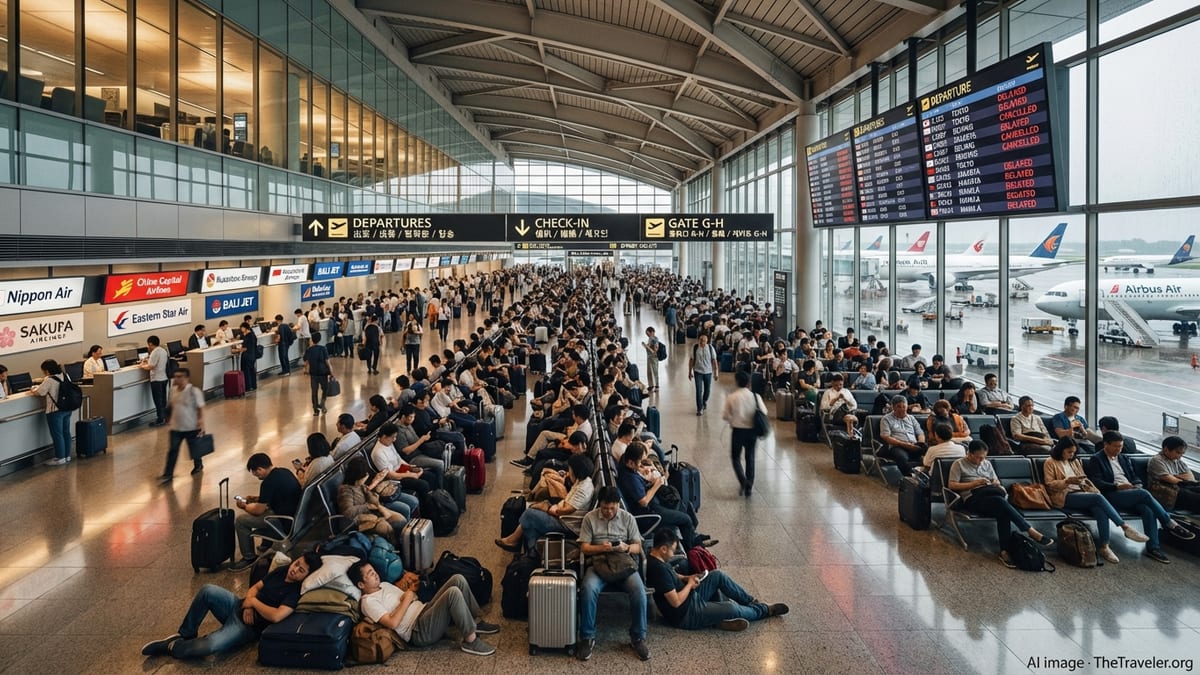
Air travel across Asia has been thrown into turmoil as major hubs from Tokyo and Hong Kong to Singapore and Guangzhou report thousands of delayed and cancelled flights, stranding passengers and stretching airline and airport operations at the height of a busy spring travel period.
Get the latest news straight to your inbox!
Thousands of Flights Disrupted Across Key Gateways
Recent operational data compiled from aviation tracking platforms and regional media coverage shows a sharp spike in flight disruption across Asia since early April. One industry roundup for April 7 cites more than 3,800 delayed flights and over 260 cancellations in a single day across the region, with large clusters at key hubs in China, Japan, Singapore and India.
Separate travel-industry reporting for April 7 indicates that airports such as Tokyo Haneda, Narita, Hong Kong, Guangzhou, Shenzhen, Incheon, Singapore Changi, Beijing Capital and Daxing, Manila and New Chitose have each seen triple-digit delay counts on some days. On one recent day, more than 3,000 delays and over 150 cancellations were recorded across a concentration of East and Southeast Asian airports, underscoring the breadth of the disruption.
The pattern has not been confined to a single country or carrier. Full-service and low-cost airlines operating domestic and international routes have all reported knock-on effects as congested hubs struggle to clear backlogs, aircraft and crew are left out of position, and passengers face missed connections and overnight stays.
While aviation in Asia has largely recovered from pandemic-era lows, the latest disruptions highlight how quickly pressure can build when multiple stress factors converge during a period of elevated demand such as the Easter and Qingming holiday overlap and early spring travel peak.
Weather, Congestion and Infrastructure Strain Converge
Published coverage and airline advisories point to a mix of causes behind the wave of disruption. In several cases, adverse weather has triggered the first delays at hub airports, with thunderstorms, reduced visibility and strong winds prompting air traffic control to reduce arrival and departure rates. Once schedules slip at a major airport, the effects often cascade across an entire route network.
Airports including Tokyo, Shanghai and Jakarta have recently been highlighted by aviation news outlets for heavy weather-related disruption, with hundreds of delays recorded within hours. Reports indicate that a combination of bad weather and air traffic control constraints on April 3 alone contributed to nearly 4,000 delayed flights and close to 300 cancellations at six major hubs across Asia and the Middle East.
At the same time, infrastructure and terminal congestion are adding to the strain. Passenger numbers in Hong Kong surged over the Easter and Qingming break, with immigration data showing more than one million cross-border movements on the first day of the holiday period and tens of thousands of outbound air travelers by mid-morning. Similar demand spikes are being reported at other urban hubs where airport capacity, ground handling resources and security screening are already stretched.
Even relatively small operational changes can reverberate. In South Korea, travelers have complained publicly about crowding and longer processing times at Incheon’s Terminal 2 following airline relocations earlier in the year, while notices in Singapore detail stand closures and works at parts of Changi’s cargo apron. These localized constraints can reduce flexibility at precisely the time airports need more room to absorb irregular operations.
Geopolitical Tensions and Fuel Supply Pressures
Beyond weather and congestion, geopolitical tension and energy-market disruption are increasingly shaping flight patterns in Asia. Coverage from regional business media on April 7 highlights how the conflict involving Iran and the closure of key maritime chokepoints have tightened jet fuel supplies, prompting airlines to trim schedules, load extra fuel from home bases and add additional refuelling stops on certain routes.
Airlines across Asia are reported to be adjusting long-haul operations, with some carriers adding intermediate stops and others temporarily scaling back frequencies to affected destinations. Industry briefings note that such measures raise operating costs and can limit an airline’s ability to respond to surges in demand or recover quickly from delays.
Middle East airspace restrictions have also forced widespread rerouting and, in some cases, suspensions of services. Publicly available airline notices show that flights linking Asian hubs such as Singapore and Hong Kong with cities in the Gulf have been cancelled or reduced in recent weeks, with some of those suspensions extended into late April and May. Travel advisories aimed at passengers in Southeast and South Asia stress that routings via alternative hubs in Europe, Central Asia or Africa may be required, often at higher cost and with longer journey times.
These geopolitical and fuel-related constraints sit atop already tight schedules at Asian airports, reducing buffers and leaving less margin to absorb routine operational issues. When combined with seasonal storms or local technical problems, the result can be a sharp, sudden escalation in delays and cancellations across multiple hubs.
Knock-on Effects for Travelers and Airlines
The immediate impact for travelers has been long waits, missed connections and a surge in rebooking requests. Consumer forums and social media feeds across Japan, South Korea, Hong Kong and Southeast Asia feature accounts of passengers facing multi-hour delays, last-minute aircraft swaps and overnight stays after flights from busy hubs such as Haneda were cancelled or retimed at short notice.
When disruption hits a major transfer hub, the effects can quickly become global. A cancelled evening departure from Tokyo or Singapore can strand connecting passengers arriving from North America or Europe, who then require hotel accommodation and new onward flights. Airlines must reposition aircraft and crew while also rerouting luggage and managing growing queues at call centres and service desks.
For carriers already contending with higher fuel costs and constrained capacity on some long-haul sectors, these irregular operations add financial and operational pressure. Additional fuel uplifts, extra technical stops and the need to block seats for missed-connection protection all reduce revenue-generating capacity. Some airlines are responding by proactively trimming schedules on vulnerable routes, consolidating low-demand flights and focusing resources on maintaining reliability on core services.
Airports, meanwhile, are contending with crowding in check-in halls, security lanes and departure areas as delayed passengers linger and new waves of travelers arrive. Public information channels in several markets now emphasize the importance of checking flight status before heading to the airport and allowing additional time for formalities during peak travel days.
What Passengers Can Expect in the Coming Weeks
Based on current patterns, travel analysts and industry coverage suggest that operational volatility at Asian hubs is likely to persist in the near term. As weather systems move through East and Southeast Asia in April and May, and as fuel markets and Middle East airspace conditions remain uncertain, airlines and airports may continue to adjust schedules with relatively short notice.
Passengers planning trips through major gateways such as Tokyo, Hong Kong, Singapore, Guangzhou, Shanghai, Manila and Incheon are being advised by travel providers to monitor bookings closely, use airline mobile apps or notification services, and consider slightly longer connection times than they might have chosen in more stable conditions. Some commentators also note that early-morning flights can sometimes be less exposed to same-day knock-on delays, although this varies by route and carrier.
Industry observers say the current wave of disruption underscores longer-term questions about resilience in Asia’s aviation network. Rapid demand recovery, infrastructure constraints at some urban airports, and emerging geopolitical and energy-market risks are combining to test existing contingency plans. How airlines, regulators and airport operators respond over the coming months may shape not only the upcoming summer travel season, but also the broader reliability of air travel across the region in the years ahead.