

More news on this day
Air travel across Australia’s east coast faced another difficult day as a fresh wave of cancellations and delays in Sydney, Melbourne, Brisbane and Canberra disrupted 164 flights, snarling schedules for Qantas, QantasLink, American Airlines and several other domestic and international carriers.
Get the latest news straight to your inbox!
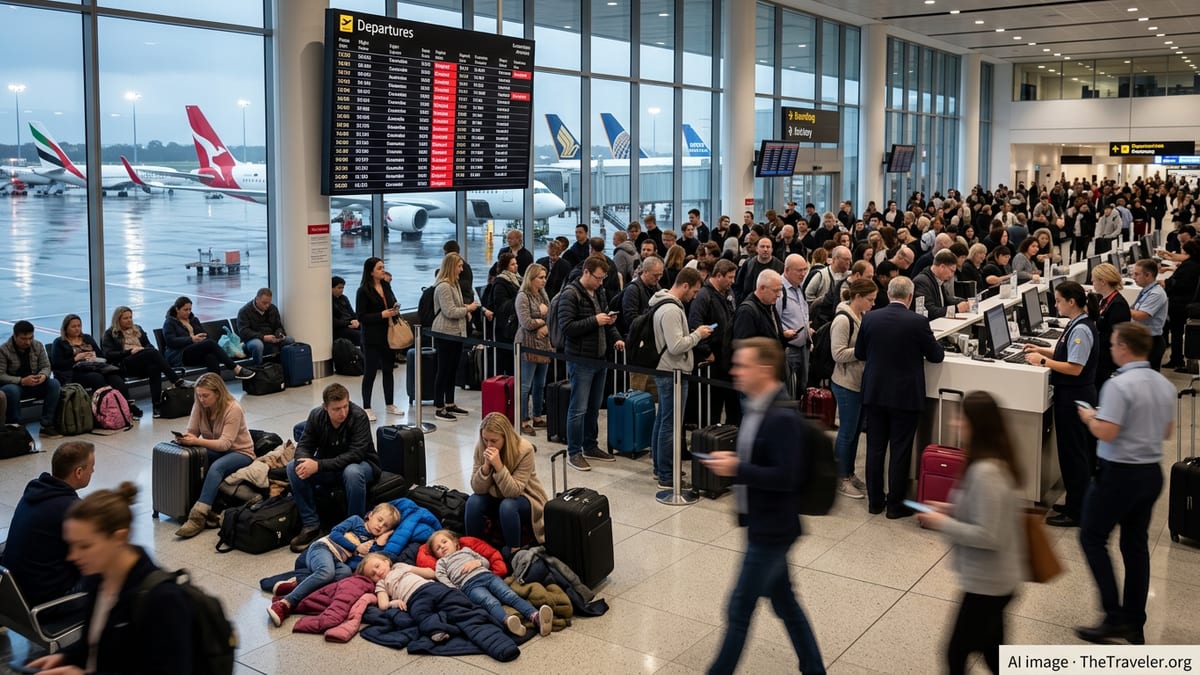
Fresh Disruptions Across Key East Coast Gateways
Operational data and flight-tracking reports indicate that Australia’s busiest east coast gateways once again experienced heightened disruption, with a combined 164 services cancelled or significantly delayed across Sydney, Melbourne, Brisbane and Canberra. The issues affected a mix of domestic trunk routes and long haul international connections, compounding a pattern of irregular operations seen in recent days.
Published coverage points to Sydney and Melbourne bearing the brunt of today’s problems, with dense schedules and tightly timed banked departures leaving little room to absorb delays. Brisbane and Canberra, while smaller in absolute numbers, saw a disproportionate impact on business-heavy routes, where cancellations and rolling delays quickly cascaded through the day’s timetable.
The latest figures come on the heels of earlier disruption this week in which hundreds of flights across Australian hubs were delayed or cancelled, suggesting the system has had limited opportunity to recover. With aircraft and crew already out of position from previous days, even ordinary levels of congestion and minor weather complications have translated into significant schedule volatility.
For many passengers, the result was a familiar mix of missed connections, extended time in terminal queues and rebooked itineraries that now route through alternative hubs or involve overnight layovers.
Qantas, QantasLink, American Airlines and Others Affected
Qantas and its regional brand QantasLink accounted for a large share of the disrupted services, reflecting their dominant presence on east coast domestic routes and at Canberra in particular. Publicly available data on recent operational performance shows the group already managing elevated cancellation and delay rates on key sectors connecting Canberra with Sydney, Melbourne and Brisbane, making today’s wave of disruption especially sensitive for frequent flyers.
American Airlines was also affected through its transpacific and codeshare operations, where changes to departure times or equipment on Australian sectors can quickly ripple onto connecting services in the United States. Passengers booked under American flight numbers but travelling on Qantas-operated aircraft were among those who faced last-minute schedule changes, illustrating the vulnerability of alliance and codeshare networks when a primary operating carrier encounters operational stress.
Other international airlines serving Sydney, Melbourne and Brisbane reported knock-on effects as they adjusted departure slots, turnaround times and crew rosters to accommodate congestion and late-arriving feeder traffic. Reports indicate that several carriers opted for extended ground holds rather than outright cancellations in an attempt to preserve long haul rotations, though this left many flights departing hours behind schedule.
Regional operators and low cost competitors were not immune, with published coverage noting delays on secondary routes that rely on shared ground handling, air traffic management and airport infrastructure. As those shared systems strain, smaller carriers often find less flexibility to adjust without directly impacting passengers.
Weather, Capacity Constraints and Staffing Pressures Combine
While clear-cut single causes are difficult to assign, recent weather patterns along Australia’s east coast have contributed to periodic flow restrictions at major airports. Forecasts in recent days have highlighted cooler conditions and showers across parts of New South Wales, Victoria and southeast Queensland, conditions that can tighten separation requirements between aircraft, slow ground handling and force adjustments to runway configurations.
At the same time, industry analysis and regulatory reporting over the past year have pointed to persistent structural pressures within the domestic aviation system. These include air traffic control staffing constraints, limited spare aircraft capacity and ongoing fleet transitions at major airlines. When combined with near-peak travel demand at the start of April, these constraints leave networks more exposed to disruption from even modest weather and operational challenges.
Competition and consumer watchdog reports have previously documented elevated cancellation rates on some east coast routes, particularly those linking Canberra with larger hubs. Observers note that carriers can legally cancel a portion of scheduled services each season without penalty to airport take-off and landing slots, which can encourage airlines to trim less profitable frequencies on short notice when crews or aircraft are stretched.
Industry commentary suggests that until additional resilience is built into schedules, including deeper crew reserves and more flexible infrastructure at key hubs, episodes like today’s may recur during busy travel periods and in shoulder seasons where weather is variable.
Traveler Impact and Passenger Options
For travelers caught up in the latest disruptions, experiences varied widely depending on airline, route and timing. Early morning cancellations pushed some passengers onto mid-morning and afternoon departures, quickly filling remaining seats and leaving limited same-day alternatives on busy city pairs such as Sydney to Melbourne and Brisbane to Sydney.
International passengers faced particular challenges when missed domestic connections jeopardized long haul departures to North America, Asia and the Middle East. In some cases, travelers were rebooked via alternative Australian gateways or routed through partner hubs overseas, extending total journey times by many hours.
Publicly available guidance from airlines and airports continues to emphasize the importance of monitoring flight status through mobile apps and departure boards, arriving at the airport earlier than usual during periods of disruption, and building generous buffers into itineraries that rely on same-day domestic-to-international connections. Travel advisers also recommend prioritizing morning departures where possible, as earlier flights tend to be less exposed to the cumulative effects of rolling delays.
Consumer advocates caution that compensation and care policies vary by airline and ticket type, and that passengers should review fare conditions and any applicable voluntary assistance measures when seeking hotel vouchers or alternative routing. Some carriers have been offering fee-free changes or flexible rebooking options during recent disruption windows, though these typically apply only to affected travel dates and specific flight ranges.
Ongoing Monitoring as Holiday and Business Travel Build
The timing of the current disruption is sensitive for both leisure and corporate travel segments. Early April sits within a busy stretch for domestic trips tied to school holidays in some jurisdictions, while also marking the ramp-up of second quarter corporate travel and government-related flying in and out of Canberra.
Industry watchers are closely tracking whether Australian airlines can stabilize on-time performance and cancellation rates as autumn progresses. With several carriers in the midst of fleet renewal and network adjustments, any further shocks to the system from weather, industrial relations issues or infrastructure constraints could prolong irregular operations.
For now, travel experts suggest that passengers planning near-term trips through Sydney, Melbourne, Brisbane or Canberra build additional contingency time into their journeys, particularly when a missed sector would jeopardize an onward international connection. Flexible fares, comprehensive travel insurance and a willingness to consider alternative routings or departure days are being framed as valuable safeguards during a period of elevated operational risk.
As airlines, airports and air traffic managers work through the immediate backlog created by the 164 affected services, attention is turning to whether schedule refinements and targeted investments can reduce the likelihood and severity of similar disruption events over the months ahead.