

More news on this day
Air travel across the United States faced a fresh wave of disruption on April 10 as 3,159 flights were reported delayed at major hubs, compounding an already unsettled spring for passengers navigating busy terminals and weather sensitive schedules.
Get the latest news straight to your inbox!
Disruptions Spread Across the Nation’s Busiest Airports
Data compiled from flight tracking platforms on April 10 pointed to thousands of delayed departures and arrivals, with a heavy concentration at the country’s largest connecting hubs. The pattern reflected an aviation system operating near capacity, where relatively small disturbances quickly translated into widespread timetable slippage.
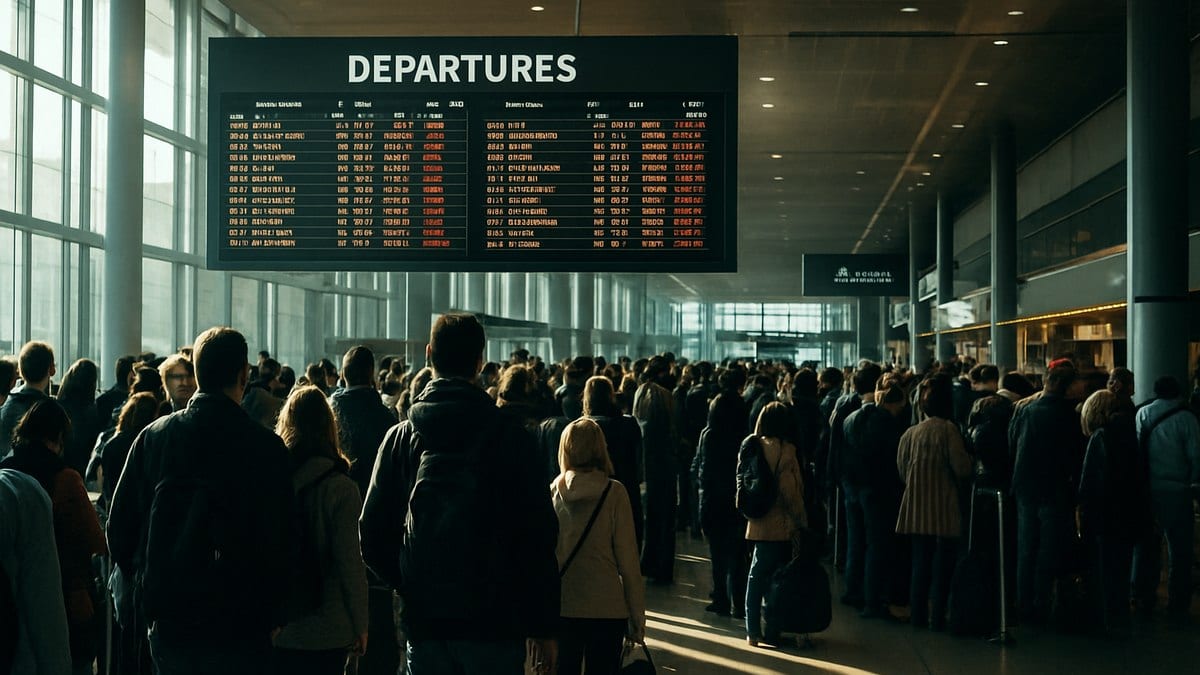
Reports indicated that high volume airports such as Atlanta, Chicago, Houston, New York area facilities, Orlando, San Francisco and Philadelphia again featured prominently among locations seeing rolling hold times. Travel industry coverage described passengers facing long queues at security, crowded gate areas and a steady stream of gate change and delay announcements as airlines worked to re-sequence aircraft and crews.
The 3,159 delays recorded across the United States on April 10 followed an already disrupted week in which several carriers had logged more than one hundred delayed flights in a single day. While outright cancellations appeared more limited, the cumulative effect of late departures and missed connections created a difficult operating environment for both airlines and travelers.
Operational data and public reporting suggested that, on average, affected flights were running anywhere from 30 minutes to several hours behind schedule, with knock-on consequences for evening departures as aircraft arrived late into hub airports and turned around behind plan.
Weather, Congested Airspace and Tight Schedules Combine
Spring weather remained a central driver of the April 10 disruption. Recent coverage has highlighted how storm systems sweeping across the Mid Atlantic and Northeast have repeatedly triggered ground delay programs at major airports, forcing airlines to reduce arrival rates and hold departures on the ground until conditions improve.
Even when storms do not directly hit a given field, unsettled conditions along key routes can lead to reroutings and longer flight times. Aviation analysts have noted that this can push aircraft and crew schedules out of sync, particularly at complex hubs where an aircraft may be scheduled to operate several legs in quick succession. Once one early sector runs late, the rest of the day’s pattern can be difficult to recover.
Structural factors also contributed. Published analysis on the US network has pointed to chronic congestion in certain airspace corridors and at some of the largest metro area airports, where high demand outpaces the practical capacity of runways and air traffic control staffing. Recent rule changes and construction at San Francisco International Airport, for example, are expected to limit the number of arrivals per hour, increasing the risk that even modest disturbances will cascade into delays.
Industry reports further suggest that ongoing efforts to balance staffing, cost control and schedule growth leave relatively little slack in daily operations. When airlines add flights in peak periods without a corresponding buffer of spare aircraft and crews, the system becomes more sensitive to each thunderstorm, minor technical issue or ground equipment problem.
Travelers Confront Long Lines and Limited Options
For travelers passing through the affected hubs on April 10, the statistics translated into missed connections, overnight stays and reshuffled plans. Publicly available information from airports and consumer travel outlets described busy terminal corridors, crowded seating areas and passengers queuing to speak with agents after receiving delay notifications on their mobile devices.
Because many of the delays were concentrated at connecting hubs, travelers on multi segment itineraries were especially vulnerable. Even when an initial delay was relatively short, tighter connection times left little room to absorb it, leading passengers to arrive at their transfer point only to find their onward flight already closed or departing.
In some cases, airlines were able to rebook customers onto later services the same day, particularly on dense domestic routes where multiple departures operate between large cities. However, where seat availability was limited or where the disruption pushed trips into late evening hours, some travelers reportedly faced the prospect of overnight stays or substantial schedule changes.
Consumer advocates quoted in recent coverage have emphasized that passengers benefit from monitoring their flight status across several channels, including airline apps and airport information displays, rather than relying solely on early morning estimates. With conditions changing throughout the day, adjustments to gate assignments and departure times can come with relatively short notice.
Patterns Reflect a Broader Year of Aviation Strain
The April 10 wave of 3,159 delays formed part of a broader pattern of strain visible in US aviation during early 2026. Travel and tourism reports over recent weeks have documented repeated pockets of disruption, including weather related travel waivers in major hubs such as Chicago and Houston, isolated power and technology issues at airports, and industrial or regulatory actions affecting overseas airspace that can ripple into US schedules.
Recent research into long term delay trends in the United States has underscored how a blend of weather, air traffic control constraints, security procedures and late arriving aircraft shape punctuality at large hubs. While technological upgrades and revised operating rules are intended to improve safety and efficiency, analysts note that many of these measures can temporarily reduce capacity or introduce new points of friction as systems and staff adapt.
Official statistics for April 2026 will take time to compile, but early snapshots from flight tracking platforms and airline reporting indicate that the start of the spring travel season has been volatile. High leisure demand, business travel rebounds and major events have all added volume to a system still working through the aftereffects of previous years’ disruptions and staffing adjustments.
For airports, the recurring episodes of mass delays raise questions about long term investments in runway capacity, terminal design and ground transport links. Several large hubs are already pursuing expansion and modernization projects, though these works can, in the short term, contribute to additional congestion as construction temporarily limits gates or taxiways.
What April 10 Means for Upcoming Spring and Summer Travel
The scale of the April 10 disruption serves as a timely indicator for travelers planning trips later in the spring and into the busy summer period. Travel publications are advising passengers to treat the day’s 3,159 delays as a reminder that even on days without extreme weather or headline making incidents, the cumulative effect of smaller issues can significantly affect reliability.
Advisories from airports and travel experts consistently recommend building more margin into itineraries when connecting through major hubs, particularly in the afternoon and evening windows when the system is most stressed. Choosing slightly longer connection times, early day departures where possible and being flexible about routing can help reduce the risk of becoming stranded when delays escalate.
At the same time, analysts point out that tools for navigating disruption have improved. Many airlines now support same day flight changes through their apps, and third party services make it easier for passengers to see alternate options in real time when a delay threatens a connection. On a day like April 10, when problems are widely distributed, those who respond quickly often have the best chance of securing scarce remaining seats.
Looking ahead, the aviation industry’s performance through the remainder of April and into the peak summer season will offer a clearer view of whether the United States network is stabilizing or whether days with delay totals in the thousands will remain a recurring feature of the travel landscape in 2026.