

More news on this day
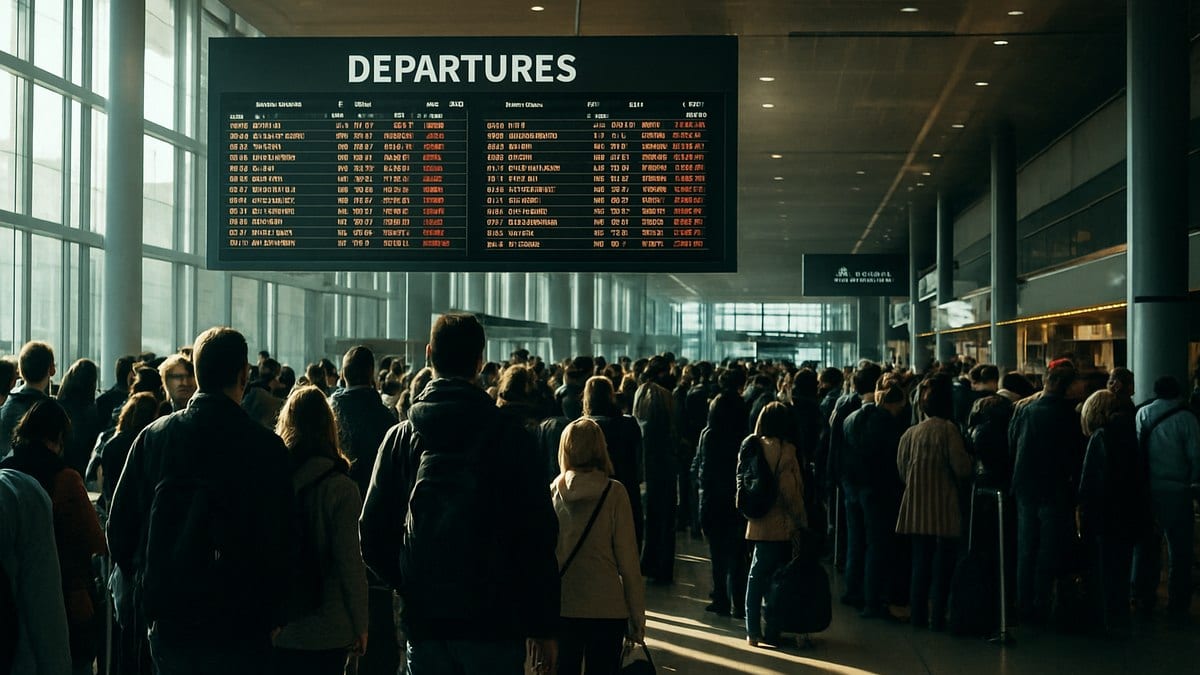
Flight operations across the United States came under acute strain on April 10, as publicly available tracking data indicated 3,159 delays nationwide, snarling traffic at key hubs and leaving passengers facing extensive knock-on disruption.
Get the latest news straight to your inbox!
Major Hubs Bear the Brunt of Nationwide Disruption
Data compiled from open flight-tracking dashboards and airport status boards points to the heaviest disruption clustering around the country’s largest connecting hubs, where dense schedules leave little margin for recovery. Airports in Chicago, Atlanta, New York, Houston, San Francisco and Orlando all reported elevated levels of delay activity across much of the day, with arrival and departure banks pushed back as congestion built.
These hubs anchor the domestic network, handling a high proportion of connecting traffic that depends on tight turnaround times. When early waves of flights run late, subsequent rotations often inherit those delays, creating rolling backlogs across terminals and concourses. Reports from aviation and travel outlets note that even modest schedule imbalances can quickly scale into hundreds of late departures once peak periods begin.
In several cities, regional feeders and shorter-haul services appeared particularly exposed, with smaller markets experiencing late inbound aircraft and missed connections as airlines prioritized long-haul and trunk routes. Communities that rely on single daily links into major hubs saw significant schedule slippage, highlighting the wider reach of disruptions that begin at big-city airports.
Publicly available operational summaries suggest that while outright cancellations remained limited compared with severe winter storm events earlier in the year, the cumulative effect of thousands of delayed sectors produced widespread crowding at gates, longer lines at customer service desks and tighter turnaround windows for ground handlers.
Weather Systems and Airspace Constraints Add Pressure
Spring weather patterns played a visible role in the April 10 disruption picture. Meteorological reports and recent coverage of Mid-Atlantic and Northeast conditions indicate that storm lines and unsettled systems continued to move through heavily travelled corridors, following several days of turbulence for airports such as Washington Dulles and other East Coast gateways.
When convective weather, low cloud or strong crosswinds move into major metropolitan areas, air traffic managers typically reduce arrival and departure rates to maintain safety margins. That in turn leads to ground delay programs, holding stacks and reroutes, all of which lengthen flight times and compress schedules. Once a hub loses capacity during one or two key banks, airlines frequently struggle to re-balance aircraft and crew positions before the end of the operating day.
Beyond local conditions, airspace constraints elsewhere in the network can feed into the United States system. Recent episodes in other regions, including temporary airspace closures and technical issues at foreign control centers, have illustrated how quickly ripple effects can reach transatlantic and long-haul flights arriving at American hubs. While no single external trigger has been identified for April 10, industry analysis consistently shows that even short-lived restrictions can echo through global schedules for many hours.
Published research on delay propagation in large aviation networks also underscores how complex the interplay between weather, traffic volume and operational practices has become. Studies of the United States system over the past decade describe an environment where capacity is tightly optimized, leaving airlines more vulnerable to relatively small shocks that might once have been absorbed without visible impact to passengers.
Airlines Balance Recovery Efforts With Packed Spring Schedules
The April 10 disruption unfolded against the backdrop of an already busy spring travel season, with trade outlets highlighting record or near-record demand between early March and late April. In this context, airlines have limited room to thin schedules or add significant spare capacity when operational challenges arise.
Publicly sourced data from previous days shows that several major carriers have recently contended with technology outages, rolling weather disruptions and local bottlenecks at individual hubs. While those events were largely contained, they have left airlines working to keep aircraft cycles and crew rotations aligned as they move into another peak weekend, making the network more sensitive to new delays.
On April 10, the pattern visible in tracking tools suggested that carriers concentrated on keeping long-haul and key business routes operating, even if at reduced punctuality, while attempting to re-accommodate displaced passengers from late-running feeder flights. In many cases that meant revised departure times, swapped aircraft and occasional diversions, which can create further complexity for baggage handling and onward connections.
Operational updates issued through airline channels encouraged travelers to monitor mobile apps and status boards closely, reflecting a broader shift toward real-time digital communication when disruptions mount. Consumer forums and travel community reports indicate that passengers who actively tracked their itineraries and rebooked quickly often secured better outcomes than those who waited for gate announcements alone.
Knock-On Effects Likely to Extend Into the Weekend
With many aircraft and crews ending April 10 in non-standard positions, aviation analysts expect at least some residual impact to carry over into April 11. Historically, days that register several thousand delays tend to be followed by mornings with elevated late departures, as airlines reposition equipment and normalize schedules.
The risk is particularly acute at complex connecting hubs, where tight early-morning banks feed both business and leisure flows. If inbound aircraft arrive behind schedule or overnight maintenance takes longer than planned, knock-on delays can reappear in the first wave of departures. Publicly available delay histories from recent months show this pattern recurring in several weather-affected periods.
Travel coverage notes that carriers sometimes opt for strategic cancellations on following days to create space in the schedule and restore reliability, especially if forecasts point to further adverse weather or airspace restrictions. While there was no immediate indication of widespread pre-emptive cancellations for April 11, observers will be watching early-morning statistics closely to gauge how quickly the network recovers.
For passengers with near-term itineraries, the elevated delay count on April 10 serves as a reminder that recovery can take time even after the most acute disruption has passed. Industry guidance typically recommends allowing additional buffer time for connections in the days immediately after large-scale delay events, particularly when itineraries route through multiple hubs.
What the April 10 Turbulence Signals for US Air Travel
The scale of the 3,159 delays logged on April 10 reinforces growing concerns about how frequently the United States air travel system has been operating near its limits. While the day did not see the extreme cancellation numbers associated with major winter storms or ground stops, the breadth of disruption across hubs suggests that even routine operational stresses are now capable of triggering significant turbulence for travelers.
Recent academic work and policy papers have highlighted staffing challenges in air traffic control, aging infrastructure and the continued expansion of flight schedules as key structural factors behind persistent congestion. Airlines have invested heavily in newer aircraft and digital tools, yet the underlying capacity of runways, taxiways and airspace sectors has not always kept pace with demand growth.
Regulators and airport operators are exploring measures such as voluntary schedule caps at the most crowded hubs, revised slot coordination and infrastructure upgrades designed to boost resilience. Public notices and federal register filings in recent months point to continued efforts to fine-tune how peak-hour traffic is managed in cities like Chicago and New York in order to reduce chronic delays.
For travelers, the April 10 episode underscores the importance of planning for potential disruption, especially during busy seasons. Industry watchers frequently recommend booking longer connection windows at congestion-prone hubs, traveling earlier in the day when possible, and making use of real-time tracking tools to stay ahead of cascading delays. As the busy summer period approaches, the performance of days like April 10 will be closely scrutinized as an indicator of how the system may cope with even higher traffic volumes ahead.