

More news on this day
Spring getaway plans were upended for thousands of passengers on April 7 as Hartsfield-Jackson Atlanta International Airport recorded 73 flight cancellations and hundreds of delays, creating widespread disruption across the United States and key international routes.
Get the latest news straight to your inbox!
Severe Weather and Heavy Demand Collide at Key Hub
Publicly available flight-tracking data and industry coverage indicate that Atlanta’s primary airport has become a focal point for a new round of aviation disruption, with 73 flights canceled and roughly 300 to 330 delayed on April 7. The numbers place Hartsfield-Jackson among the most affected U.S. hubs during a week of turbulent spring weather.
Reports describe a combination of thunderstorms, low clouds and airspace constraints across the Southeast and Midwest that periodically restricted arrivals and departures into Atlanta. These conditions coincided with strong spring travel demand tied to school breaks and early vacations, leaving airlines with limited flexibility to absorb cascading delays.
Several major carriers with substantial operations in Atlanta have been affected, including large network airlines and low cost competitors. Coverage from aviation and travel outlets notes that disruptions are hitting both short haul domestic routes and longer international services, amplifying the knock on impact for travelers making onward connections.
The disruption in Atlanta follows a broader pattern seen throughout March and early April, when weather systems and operational bottlenecks produced tens of thousands of delays and cancellations across North and Central America. Analysts tracking the data point out that each fresh wave of storms is now landing on an already stretched system.
Knock On Disruptions Across U.S. and Transatlantic Routes
Although the latest problems are centered on Atlanta, their effects extend well beyond Georgia. Published reports highlight that cancellations and delays at Hartsfield-Jackson are affecting flights to major U.S. cities such as New York, Chicago, Miami and Orlando, while also touching transatlantic links to the United Kingdom and parts of Europe.
In a tightly interconnected hub and spoke network, one canceled flight leaving Atlanta can translate into missed connections hours later in another city. Aircraft and crews that do not arrive on time in Atlanta can in turn delay departures on subsequent legs, a dynamic that has been especially evident during this spring’s weather volatility.
Travel industry coverage suggests that carriers are prioritizing certain trunk routes while trimming frequencies and consolidating flights elsewhere to stabilize schedules. That approach can reduce operational strain, but it also leaves some passengers facing longer layovers or unexpected overnight stays when their original flights are removed from the schedule.
For international travelers, the timing is particularly sensitive. The April disruption overlaps with a period in which some overseas services from Atlanta have already been affected by earlier geopolitical and weather related schedule changes, making alternative routings more complicated and, in some cases, more expensive.
Strain on Spring Break and Easter Travel Period
The latest cancellations come on the heels of a March that already tested airline resilience. Data compiled by aviation analysts and summarized in recent coverage from travel news outlets suggest that more than 31,000 flights across the Americas were delayed or canceled during March, with several severe weather events concentrating the impact on major hubs including Atlanta.
Spring break and Easter travel periods traditionally bring a sharp increase in leisure demand, filling aircraft and limiting the spare capacity carriers can use to recover when storms or technical issues occur. With planes already flying at high load factors, even relatively localized weather around a single hub like Atlanta can rapidly spill across an airline’s entire network.
Observers note that airlines have made efforts in recent years to build more slack into schedules and invest in technology that can better predict bottlenecks. However, the persistent pattern of rolling disruptions this spring indicates that the system remains vulnerable when high demand overlaps with adverse weather and tight staffing.
For passengers, the result is an increasingly unpredictable environment in which a routine weekend trip or family holiday can suddenly involve multiple rebookings, extended waits in crowded terminals and unplanned overnight stays at intermediate hubs.
What Travelers Are Experiencing on the Ground
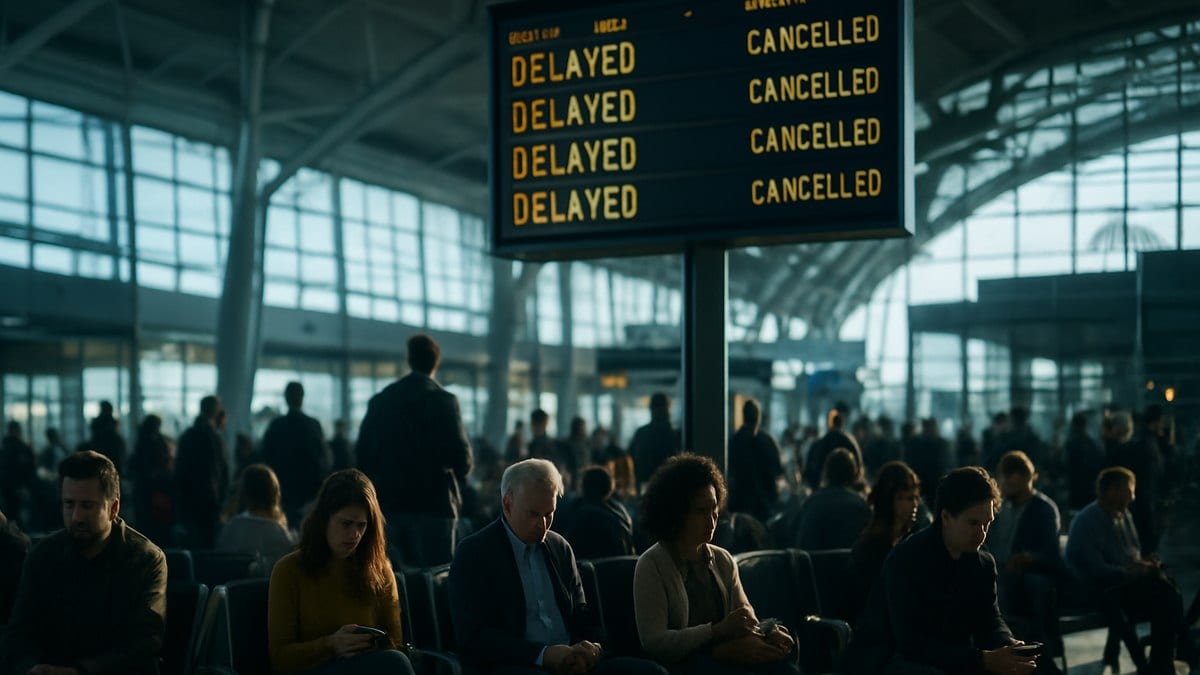
Images and descriptions shared publicly in media reports from Atlanta during the latest disruption depict long queues at check in counters and customer service desks as travelers seek alternative flights. Seating areas near departure gates and central concourses appear heavily crowded, with many passengers waiting out rolling delays as new departure times are posted.
Reports from travel outlets indicate that some passengers whose flights were canceled have been rebooked on later services the same day, while others have been offered flights on subsequent days or rerouted through secondary hubs. In a number of cases, travelers with nonrefundable hotel and activity bookings at their destinations have been left trying to salvage partial itineraries.
Public guidance shared by airlines and travel organizations in recent months underscores the importance for passengers of monitoring flight status frequently, checking in online as early as possible, and ensuring that contact details are up to date so that rebooking options can be communicated quickly when schedules change.
The congestion has also placed additional pressure on airport services such as food outlets and ground transportation. Extended delays keep passengers airside for longer, increasing demand for seating, charging points and restaurants, while late arrivals can push ride share, taxi and transit systems into the late evening and early morning hours.
Early Signal for a Challenging Summer Travel Season
For aviation analysts and consumer advocates, Atlanta’s latest bout of cancellations is being watched as a potential early signal of what the wider U.S. air travel system might face in the coming summer peak. March and early April have already highlighted how a combination of volatile weather, high demand and tight staffing can quickly strain operations at major hubs.
Recent historical examples, including large scale disruptions linked to storms and technology failures in previous years, continue to inform public debate about airline preparedness. The current Atlanta figures are far smaller than those extreme events, but they arrive at a time when travelers are particularly sensitive to reliability after several years of headline making meltdowns.
Published commentary from travel industry observers suggests that airlines operating in and out of Atlanta may further adjust schedules, tweak connection times and refine crew planning as they analyze this week’s disruption. Similar steps are expected across other major U.S. hubs that have seen elevated delay and cancellation numbers in recent weeks.
For travelers planning spring and summer trips, the experience in Atlanta is likely to reinforce advice that has become standard in recent seasons: build extra time into itineraries, favor morning departures where possible, and be prepared with contingency plans if a single cancellation or long delay threatens to unravel a carefully planned journey.