

More news on this day
German air travel faced renewed disruption on March 26, 2026, as a fresh wave of cancellations by Lufthansa, KLM Royal Dutch Airlines, Icelandair, Gulf Air, Air France and other carriers wiped more than 20 departures from schedules, disrupting links from Frankfurt and Munich to Bahrain, Amsterdam, Keflavik, Paris, Brussels, Stockholm, Copenhagen, Tel Aviv and additional destinations.
Get the latest news straight to your inbox!
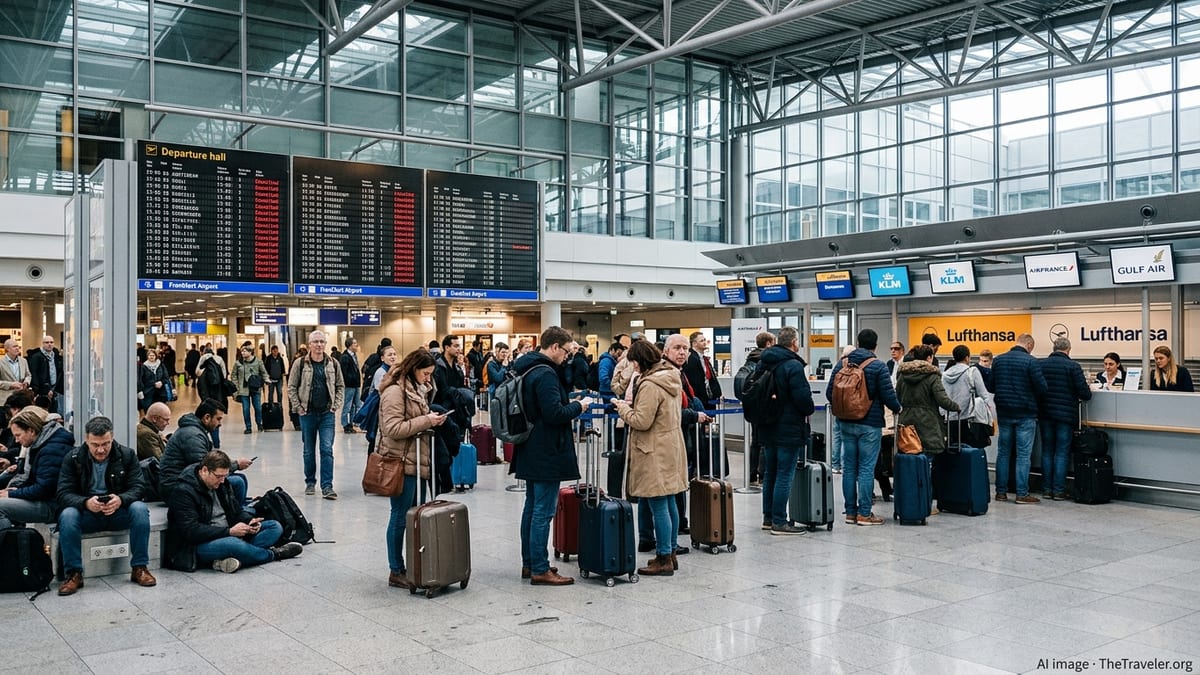
German Hubs Hit by a New Round of Cancellations
Real-time departure boards at Germany’s largest hubs showed a broad pattern of short-notice cancellations affecting both intra-European and long-haul services. Frankfurt Airport, the country’s primary intercontinental gateway, and Munich, an important secondary hub, recorded multiple scrapped departures operated by Lufthansa and partner airlines, alongside flights run by KLM, Icelandair, Gulf Air, Air France and other foreign carriers.
The latest wave came on top of an already fragile operating environment in early 2026, marked by rolling operational challenges and shifting airspace constraints on some Middle East routes. Publicly available information indicates that airlines had been trimming services to and from Tel Aviv and other destinations in the region in recent weeks, with some suspensions now stretching across the summer season. Against that backdrop, the sudden loss of more than 20 departures in a single day deepened the strain on passengers using German hubs as transit points.
Departures to major capitals including Amsterdam, Paris, Brussels, Stockholm and Copenhagen were among those affected, reducing connectivity across northwest Europe. Flights linking Frankfurt with Keflavik via Icelandair and Bahrain via Gulf Air were also listed as cancelled, reducing options for travelers heading to northern Europe and the Gulf.
The disruption forced hundreds of passengers into same-day rebooking queues or overnight stays in nearby hotels as connection banks unraveled, particularly at Frankfurt, where many long-haul itineraries rely on tightly timed transfers.
Airline Networks Under Pressure on Tel Aviv and Gulf Routes
Network data for early 2026 already showed significant adjustments by European carriers on routes into Israel and parts of the Gulf region. Public records describe how Lufthansa extended a broad suspension of flights to Tel Aviv into the summer schedule period, while also limiting other services in the eastern Mediterranean and Middle East. KLM likewise reduced operations between Amsterdam and Tel Aviv and on selected Gulf routes during March, reflecting a more cautious approach to flying in the region.
The latest cancellations in Germany built on those existing cuts. Travelers reported finding entire days with no direct Lufthansa-operated departures to Tel Aviv listed from German hubs, with alternative routings via partner airlines or other European gateways often sold out or significantly more expensive. Similar gaps emerged on some Bahrain-bound services when Gulf Air flights were removed from departure boards, narrowing options for both leisure and business traffic bound for the Gulf.
Air France and KLM, which funnel large volumes of transfer passengers through Paris Charles de Gaulle and Amsterdam Schiphol, were also affected. Reduced frequencies and day-of-departure flight cuts to and from Germany complicated itineraries that rely on smooth connections between German cities and long-haul services to North America, Africa and Asia.
In practical terms, passengers bound for Tel Aviv, Bahrain and other Middle East destinations from German airports faced a mix of extended layovers, forced overnight stops in third countries or lengthy re-routings via alternative hubs such as London or Istanbul.
Weather, Operational Strains and Broader Network Disruption
The cancellations unfolded in a season already associated with challenging weather in northern Europe. Earlier in 2026, major storms sweeping across the continent had forced large-scale schedule reductions at Amsterdam Schiphol, with hundreds of flights scrubbed in a single day and KLM among the hardest-hit operators. Those events underscored how quickly capacity constraints at one hub can cascade through airline networks.
While the immediate triggers for individual cancellations in Germany on March 26 varied by airline and route, the broader context included tight aircraft and crew availability after weeks of irregular operations. Published accounts of recent industrial actions and staffing shortages in the wider European aviation sector have pointed to thinner resilience when new disruptions arise, making it more likely that airlines cancel entire rotations rather than risk knock-on delays across their networks.
For passengers traveling through Frankfurt and Munich, that dynamic was visible in the pattern of scrapped services. Several cancellations appeared among early-morning and late-evening departures that form part of tightly scheduled aircraft rotations, where even modest delays can ripple through subsequent flights. By cutting those flights outright, carriers attempted to stabilize the rest of the day’s timetable, even as affected travelers faced longer journeys.
The situation also highlighted the vulnerability of smaller point-to-point routes from German hubs, where a single daily flight to a destination such as Keflavik or Bahrain can be the only nonstop option. When those departures are cancelled, alternatives often require multiple connections and significantly longer travel times.
Passenger Impact and Rights Under European Rules
The sudden cancellations left many travelers scrambling at short notice. Social media posts and forum discussions described passengers being notified only hours before departure that their flights from German airports had been removed from the schedule, prompting urgent searches for alternative connections. Some reported being rebooked on flights one or more days later, while others opted to reroute via different hubs or even different airlines to keep itineraries on track.
Under European passenger protection rules, travelers departing from EU airports whose flights are cancelled are generally entitled to a choice between rerouting at the earliest opportunity or a refund, along with meals, refreshments and hotel accommodation where necessary. Financial compensation may also be due when cancellations are not caused by extraordinary circumstances outside the airline’s control. However, travelers often have to assert these rights proactively, documenting disruptions and submitting claims directly to the carrier.
Consumer advocates consistently recommend that passengers affected by cancellations in Germany retain boarding passes, booking confirmations and any written communication from airlines, as well as receipts for out-of-pocket expenses such as meals or lodging. These records can be crucial when pursuing reimbursement or statutory compensation after travel.
Given the number of cancelled departures and the mix of carriers involved on March 26, passenger rights organizations are advising travelers to check both their operating airline and, in the case of codeshare tickets, the marketing carrier’s policies, as responsibilities for assistance can vary depending on the ticket structure.
Planning Ahead as German and European Networks Remain Volatile
Travel industry observers note that the disruption in Germany is part of a broader pattern of volatility across European aviation through late winter and early spring 2026. Capacity adjustments linked to regional security concerns, lingering operational bottlenecks and weather-related events have combined to make schedules less predictable, especially on complex multi-leg itineraries that depend on smooth connections at major hubs.
For travelers planning trips through Frankfurt, Munich or other large European airports, current advice emphasizes building in additional buffers between connecting flights, particularly when itineraries involve Tel Aviv, Gulf destinations or smaller secondary airports. Booking slightly longer connection times can reduce the risk of missed onward flights if earlier segments are delayed or rescheduled.
Passengers are also encouraged to monitor their bookings closely in the days leading up to departure using airline apps and departure boards, as well as to verify flight status again before leaving for the airport. Same-day schedule changes have become more common as airlines respond dynamically to operational constraints, weather forecasts and evolving airspace limitations.
With major carriers such as Lufthansa, KLM, Icelandair, Gulf Air and Air France adjusting their German operations, travelers using the country’s hubs in the coming weeks are likely to face a more fluid environment than in previous years. Flexibility in routing, a clear understanding of passenger rights and careful advance planning are emerging as essential tools for navigating Europe’s shifting air travel landscape in 2026.