

More news on this day
Major Asian aviation hubs are grappling with a fresh wave of disruption this week, as thousands of delays and hundreds of cancellations ripple through interlinked flight schedules from Northeast Asia to the Gulf, snarling travel plans for passengers across the region and beyond.
Get the latest news straight to your inbox!
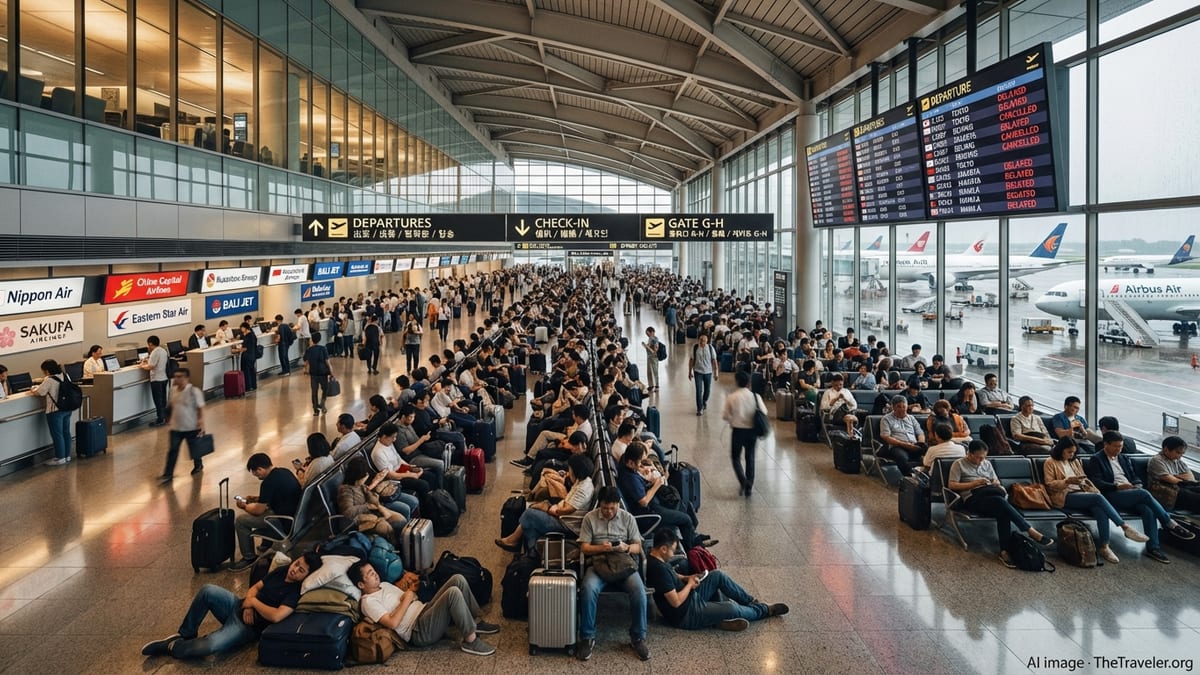
Multi‑Day Disruptions Hit Key Asian Gateways
Publicly available flight tracking data for early April 2026 show several consecutive days in which more than 3,000 flights across Asia were either delayed or cancelled, with disruption concentrated at major transfer hubs in China, Japan, Southeast Asia and the Middle East. Aggregated figures for one 24 hour period indicate roughly 264 cancellations and over 3,800 delays affecting airports in China, Japan, Singapore, India and Saudi Arabia, underscoring the scale of the strain on regional operations.
Recent tallies compiled by aviation analytics platforms highlight airports such as Tokyo Haneda and Narita, Shanghai, Guangzhou, Shenzhen, Beijing Capital and Daxing, Singapore Changi, Bangkok Suvarnabhumi, Kuala Lumpur and Jakarta as recurring hotspots. In several instances, individual hubs recorded hundreds of delayed departures in a single day, with knock‑on effects spreading to secondary cities and long haul routes.
According to published coverage drawing on these datasets, low cost and full service carriers alike are caught up in the turmoil. Regional airlines including AirAsia and Batik Air feature prominently in Southeast Asian delay statistics, while major flag carriers in Japan, China, South Korea and India are facing rolling schedule adjustments as they attempt to restore network stability.
The numbers suggest that Asia is now experiencing repeated spikes of disruption rather than isolated incidents. Industry commentary points to a structural vulnerability in which clusters of hubs across the region experience simultaneous stress, producing systemwide ripple effects that can take days to unwind.
How Hub Networks Turn Local Problems Into Cascading Delays
The current wave of disruption illustrates how tightly coupled Asian hub networks can amplify relatively localized shocks. Reports on recent operations at Bangkok, Shenzhen and Beijing Daxing describe a familiar pattern: an initial surge of late arriving aircraft, often linked to weather, congestion or rerouting, leaves aircraft and crews out of position for subsequent departures, which then depart late or are cancelled altogether.
When this happens at multiple hubs at the same time, connections begin to unravel. Passengers who miss onward flights in Bangkok, Singapore or Doha must be rebooked onto later services, filling remaining seats and reducing flexibility for airlines to recover their schedules. Terminal congestion grows as queues build at check in counters, transfer desks and security checkpoints, extending processing times and in turn contributing to further delays at the gate.
Operational analyses published by aviation data providers note that large domestic and regional networks in China are especially prone to this cascade effect. A single delayed arrival into a hub such as Shenzhen or Guangzhou can disrupt dozens of onward flights to smaller cities, which then affects the availability of aircraft for evening departures back to the main gateways or on to international destinations.
Researchers who model hub and spoke air traffic systems have warned that these networks can behave like self‑organizing critical systems, in which periods of apparent stability are punctuated by extreme spikes in disruption. The recent run of large scale delay events across Asia aligns with this pattern, as multiple hubs reach capacity limits at roughly the same time and struggle to absorb even modest shocks.
Weather, War and Capacity Constraints Converge
Several overlapping factors are feeding the current flight chaos. Industry reporting points first to adverse weather at key airports in China and Japan, where seasonal storms and low visibility have repeatedly forced ground delay programs and temporary capacity reductions. When combined with already tight schedules and heavy demand, even a few hours of weather related constraints can push a hub into sustained disruption.
Geopolitical tensions and airspace restrictions are adding a second layer of complexity. Since late February 2026, the conflict involving Iran and wider security concerns in the Gulf region have led to extensive closures and restrictions affecting major Middle Eastern hubs such as Dubai, Doha and Abu Dhabi. Regional briefings and government notices describe Saudi airspace as one of the few remaining primary east west corridors, with traffic density and air traffic control workloads at unprecedented levels.
These closures have forced long haul carriers between Europe and Asia to reroute around conflict zones, extending flight times, consuming additional fuel and compressing available fleet capacity. Published analyses from Asia Pacific aviation bodies describe how some airlines have suspended or curtailed services to the Middle East altogether, while others have shifted connecting flows to Southeast Asian hubs, increasing pressure on airports in Singapore, Kuala Lumpur and Bangkok.
At the same time, higher jet fuel prices, rising insurance premiums and lingering staffing constraints are limiting the ability of airlines to maintain generous operational buffers. Trade press coverage notes that carriers across the region are still rebuilding workforces and fleets after the pandemic, leaving them with fewer spare aircraft and crews to absorb disruptions when they occur.
Passengers Confront Long Queues, Missed Trips and Complex Rights
For travelers, the cascading nature of the disruptions is translating into long queues, missed connections and, in some cases, abandoned trips. Reports from affected airports in Tokyo, Hong Kong, Manila, Bangkok and Singapore describe crowded terminals and extended waits at rebooking counters as delays compound over the course of the day.
Consumer advocacy outlets and travel industry publications are urging passengers to familiarize themselves with compensation and rebooking rules, which vary by country of departure, airline and cause of disruption. In parts of Asia there is limited statutory protection compared with European Union regulations, meaning that travelers on delayed or cancelled flights may have fewer automatic entitlements when disruptions stem from weather, security issues or airspace closures.
Specialist travel advisories emphasize that many airlines are issuing flexible travel waivers for itineraries touching the most affected hubs or regions, allowing date changes without fees and, in some cases, route changes subject to seat availability. However, the rapid pace of schedule changes means that seats on alternative flights can be scarce during peak disruption windows, particularly on key trunk routes linking Asia with Europe and North America.
Travel planners are advising customers with time sensitive trips to build in longer connection times, monitor flights closely through airline apps and trackers, and consider routings that avoid the most congested hubs where alternatives exist. While such steps cannot eliminate the risk of delay, they may reduce the chance of missed long haul connections at the height of a disruption wave.
Outlook: Persistent Volatility Across the Spring Travel Season
Looking ahead, publicly available forecasts from regional air navigation and airline associations suggest that volatility is likely to persist across the northern spring travel season. Demand for international travel in Asia continues to recover strongly, with many carriers reporting load factors close to or exceeding pre pandemic levels on popular routes even as they contend with higher operating costs.
Analysts note that the same forces driving the current disruptions remain in play. Weather sensitive operations will continue at crowded coastal hubs in East Asia, geopolitical risk in the Middle East remains elevated, and capacity constraints in aircraft, crew and air traffic management infrastructure will take time to ease. Any additional shocks, whether from severe storms, technical outages or further route restrictions, could quickly tip already stretched hub networks back into crisis.
In the near term, industry observers expect airlines to keep adjusting schedules, adding recovery time where possible and using fleet swaps or tactical cancellations to protect the most important long haul links. Airports, for their part, are under pressure to optimize ground handling, decongest terminals and coordinate more closely with air traffic control to manage peak flows.
For travelers planning journeys through Asia, the message from recent days is that conditions can change quickly, and that disruptions in one part of the network can rapidly cascade across multiple hubs. Flexible itineraries, real time information and a willingness to reroute at short notice may be essential tools for navigating a region where flight operations remain under exceptional strain.