

More news on this day
Air travel across Europe faced significant disruption on 4 April as operational bottlenecks and knock-on scheduling issues delayed more than 300 flights and forced dozens of cancellations, affecting passengers on KLM, Ryanair, Iberia and other major carriers.
Get the latest news straight to your inbox!
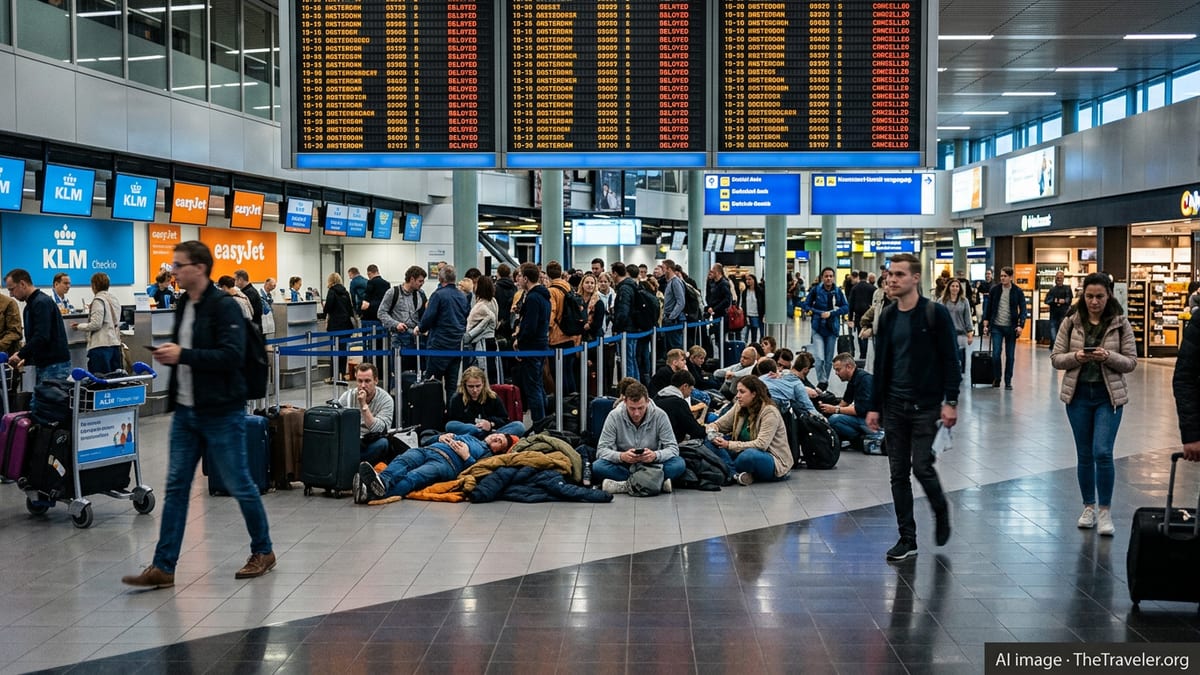
Delays Mount Across Key European Hubs
Operational data from multiple tracking platforms on 4 April indicated that more than 305 flights were delayed and at least 45 services were cancelled across a swath of European airports, with the United Kingdom, Switzerland and the Netherlands among the hardest hit. The disruption was concentrated in the morning and early afternoon peaks, when traffic levels are typically at their highest and recovery margins are thinnest.
Dublin and Zurich featured prominently among the affected airports, alongside major UK and Dutch hubs that serve as gateways for transatlantic and intra European connections. Publicly available departure boards for Zurich showed a growing pattern of pushed back departure times through the early hours of 4 April, while crowd sourced updates from Dublin pointed to extended queues and rolling delays at check in and security.
Reports from European aviation monitors and airport analytics sites suggest that the day’s disruption formed part of a broader pattern of strain across northern European airspace in recent weeks, with peak traffic days seeing schedules run close to capacity. When even a handful of early morning flights depart late, rotations can quickly unravel and create a cascade of late arrivals and missed departure slots throughout the day.
Industry data from Eurocontrol and other regional bodies has already highlighted how tightly timed turnarounds and congested air traffic corridors leave limited room to absorb additional pressure. On 4 April, this translated into congested departure banks, irregular gate changes and a wave of rebookings that rippled well beyond the airports most visibly impacted.
Impact on KLM, Ryanair, Iberia and Other Carriers
The disruption on 4 April affected a broad mix of airlines operating both point to point and hub based networks. KLM, Ryanair and Iberia were among the most visible carriers caught up in the delays, in part because of their dense schedules across affected airports and their reliance on tightly sequenced aircraft rotations.
For KLM, morning and midday services linking Amsterdam with UK, Irish and Swiss destinations were particularly exposed to knock on impacts. When an early rotation into a regional airport runs late, the aircraft and crew required for onward legs are no longer available on time, forcing schedule adjustments that can compound throughout the day. Public travel alerts from the airline in recent days have already underlined a heightened risk of disruption across parts of its European network.
Ryanair, one of the largest operators at Dublin and a significant presence at several UK and continental bases, also saw delays as aircraft arrived late from earlier sectors. Low cost carriers are especially sensitive to this type of disruption because their business models rely on fast turnarounds and high aircraft utilisation, leaving relatively little slack to recover from morning misalignments.
Iberia and its regional affiliates encountered their own share of disruption as services linking Spanish hubs with northern Europe became entangled in the wider congestion. Even where Iberia flights operated on time at departure, late incoming aircraft from affected zones and slot restrictions at busy hubs led to schedule reshuffles and revised arrival times, particularly on routes intersecting with Dutch, Swiss and UK airspace.
Dublin and Zurich Feel the Pressure
Dublin Airport once again found itself under scrutiny as travellers reported lengthy early morning queues and an uptick in delayed departures on 4 April. While the airport has significantly improved operational performance compared with the height of the post pandemic recovery period, high spring traffic and ongoing debates over capacity caps have left stakeholders warning that the system remains vulnerable to days of concentrated disruption.
Recent regulatory papers on Dublin’s summer 2026 coordination parameters have highlighted how close the airport is operating to existing terminal and runway thresholds during peak hours. When combined with variable security processing times and a heavy reliance on a small number of dominant carriers, this creates the conditions for rapid escalation whenever irregular operations occur.
Zurich, one of Europe’s key premium hubs, also came under pressure as April schedules ramped up. Flight boards on 4 April showed a cluster of delayed departures in the early bank of leisure and long haul services, with subsequent knock on effects through the mid morning and midday waves. The airport has seen an increase in flight movements compared with the previous year, which has expanded choice for travellers but also added complexity to daily operations.
Swiss carriers and their partners have been adjusting schedules and aircraft deployment to meet strong demand out of Zurich, yet reports from recent weeks suggest that tight turnaround times and limited spare capacity can quickly translate into wider network disruption when weather, technical checks or air traffic flow management interventions slow operations.
Role of Air Traffic Control and New Border Checks
Aviation industry associations have repeatedly warned that chronic air traffic control bottlenecks across parts of Europe remain a significant driver of delays. Recent economic studies from regional and global airline bodies indicate that millions of flights over the past decade have suffered extended air traffic flow management delays, resulting in tens of millions of minutes of lost time in European skies.
On 4 April, traffic flowed through some of Europe’s busiest corridors at early season highs, increasing the likelihood that even modest route restrictions or staffing constraints could yield disproportionate knock on effects. When controllers apply flow measures, flights may be held on the ground awaiting departure slots, contributing to the kind of rolling departure delays seen at several hubs.
Separately, airlines and airport groups have been voicing concern about the phased implementation of the European Union’s new Entry Exit System for non EU travellers. Industry statements ahead of the Easter and spring travel peaks caution that registering all third country nationals at external Schengen borders risks slowing processing times at already busy passport control points.
While the specific delays on 4 April appear to be primarily linked to operational and air traffic factors, the broader context is one of multiple overlapping pressures on European airports and airlines. The combination of high demand, structural ATC constraints, evolving border systems and limited spare capacity continues to leave the network vulnerable to days of outsized disruption.
What Travellers Can Expect Next
With the European summer season ramping up, public data and industry commentary suggest that travellers should be prepared for further bouts of irregular operations in the coming weeks. Airlines are gradually adjusting schedules, adding crew and refining contingency plans, but tightening capacity at both airports and in the skies means even routine issues can still trigger significant knock on effects.
Passenger rights frameworks such as EU Regulation 261/2004 remain in force across the European Union, providing compensation and assistance in many cases of long delay or cancellation. Consumer organisations and specialist claims firms continue to encourage passengers to retain boarding passes, written delay notifications and receipts for any additional expenses incurred during extended disruptions.
Travel advisers recommend that passengers build extra time into itineraries that involve connections through hubs such as Dublin, Zurich, Amsterdam and major UK airports, particularly during morning and evening peaks. Choosing slightly longer connection windows and monitoring flight status closely on the day of travel can reduce the risk of missed onward flights when disruptions like those on 4 April occur.
As airlines and airports work to stabilise operations, data from monitoring services will offer an early warning of whether 4 April proves to be an isolated spike or an early sign of a more prolonged period of strain. For now, the day stands as a reminder of how quickly Europe’s densely interconnected air network can be knocked off balance when multiple pressure points align.