

More news on this day
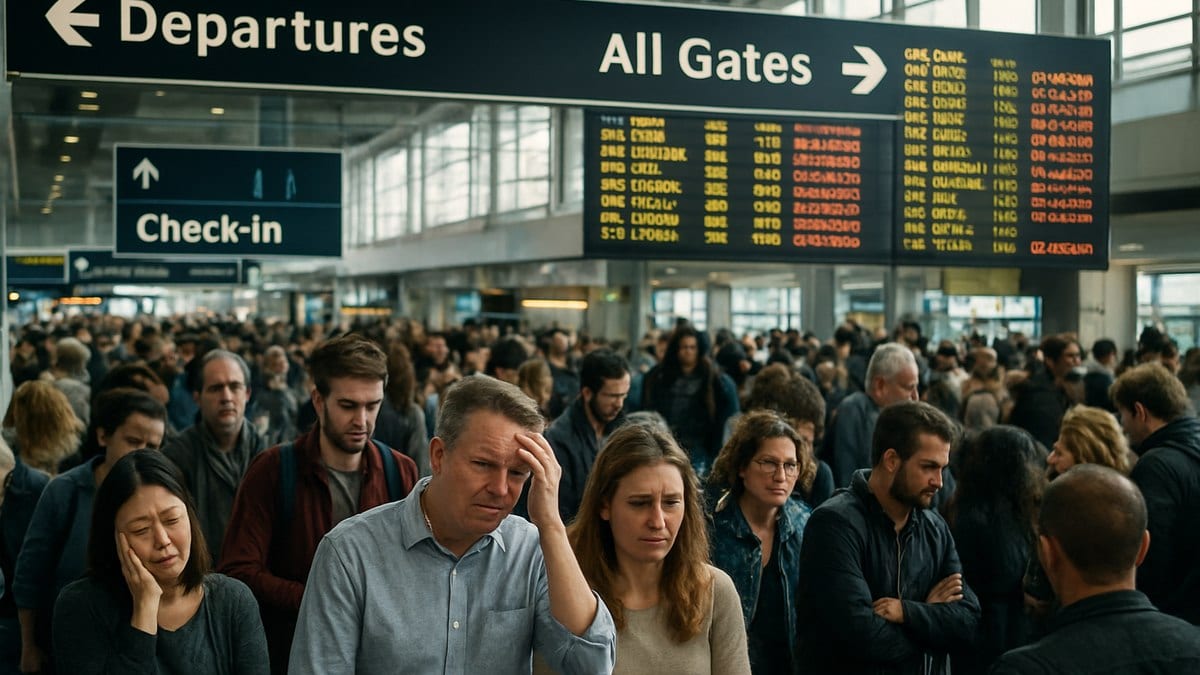
A fresh wave of flight disruption across Asia has left travelers stranded from South Asia to the Gulf and major Chinese hubs, as at least 54 cancellations in a single day cascaded through already stretched airline and airport networks.
Get the latest news straight to your inbox!
Scattered Cancellations, Concentrated Pain for Travelers
Recent data compiled from flight tracking services and regional travel outlets points to dozens of cancellations scattered across major Asian hubs, including airports in China, Southeast Asia, India and the Gulf. While the total number of disrupted services is modest compared with the region’s overall traffic, the impact on passengers has been severe, with many facing long queues, missed connections and unexpected overnight stays.
Reports from regional travel industry publications describe clusters of cancellations at airports such as Shenzhen Bao’an, Jakarta Soekarno Hatta and Beijing Daxing in recent days, where at least 65 flights were called off in a single operational window alongside hundreds of delays. On another heavily disrupted day, analysis of Asia-wide flight movements indicated that more than 4,000 services were delayed and close to 200 were cancelled, with at least 54 of those cancellations concentrated on routes linking major regional hubs.
For travelers, the distinction between a delay and a cancellation often feels academic. With many long haul and connecting itineraries built around tight transfer times, even a relatively small number of cancelled flights can ripple through the system, closing off rebooking options and leaving passengers effectively stranded in transit cities far from home.
Social media posts and travel forums over the past week have highlighted travelers sleeping in terminal corridors, queuing for hours at transfer desks and struggling to receive clear information about new departure times or hotel arrangements as operations faltered across multiple hubs at once.
Weather, War and Network Strain Collide
The latest wave of disruption reflects a convergence of familiar stress factors for Asian aviation. Seasonal storms and high winds continue to force short notice schedule changes at coastal and island airports, including key leisure gateways. In early April, for example, severe weather at Jeju in South Korea led to hundreds of cancellations and stranded thousands, underlining how quickly local conditions can shut down a major node in the regional network.
At the same time, ongoing conflict in parts of the Middle East has narrowed usable air corridors for flights linking Asia with Europe and Africa. Publicly available airline schedule data and business press coverage indicate that carriers in India and the Gulf have trimmed or rerouted international services as they balance fuel costs, overflight restrictions and crew duty limits. Each cancelled rotation removes capacity that would otherwise help absorb knock-on disruption when problems arise elsewhere.
Operational resilience remains under pressure as airlines work with tight fleets and crew rosters following the post‑pandemic rebound in demand. Industry analyses note that when aircraft and staff are scheduled close to their limits, even modest disruptions in one region can cascade into broader schedule instability, pushing some services into cancellation rather than delay to keep overall operations manageable.
Airport infrastructure limits also play a role. Several rapidly growing hubs in South and Southeast Asia continue to report terminal crowding and bottlenecks at immigration, baggage handling and ground transport. When irregular operations hit, those constraints can slow recovery, prolonging the time passengers spend in limbo between cancelled and replacement flights.
Stranded Passengers Face Patchwork Support
The experience of stranded passengers across Asia varies widely depending on where they are flying, which carrier they booked and whether their itinerary touches jurisdictions with strong air passenger protections. Consumer advocacy groups point out that only a handful of Asian markets have compensation regimes comparable to Europe’s EC 261 framework, leaving many travelers reliant on airline goodwill and ticket conditions when flights are cancelled.
Recent guidance from global compensation platforms has emphasized that travelers departing from or arriving in the European Union on certain carriers may qualify for payouts when cancellations are within airline control, even if the disruption occurs at an Asian airport. By contrast, passengers on purely regional itineraries, or on routes cancelled due to weather or airspace closures, often receive only rebooking, basic refreshments and, in some cases, hotel vouchers.
Reports from South Asian and Gulf airports in recent weeks describe confusion at check in and transfer counters as travelers arrive without prior notification that their flights are no longer operating. With call centers overwhelmed and airline mobile apps struggling to keep pace with frequent schedule changes, many stranded passengers have turned to informal channels, including social media and messaging groups, to share real time information on open seats and viable rerouting options.
Travel insurers say the current pattern of disruption is driving a spike in claims related to missed connections, additional accommodation and alternative transport. Industry commentary suggests that travelers who purchased higher tier policies with trip disruption coverage are generally faring better, underscoring the widening gap between those protected by robust insurance and statutory rights and those left to negotiate directly with airlines at the airport.
Tourism and Business Travel Feel the Shock
The timing of the latest cancellations is particularly difficult for tourism dependent economies and corporate travelers. Several of the affected airports serve as primary gateways to beach and cultural destinations in Southeast Asia, as well as key financial and technology centers in East Asia and the Gulf. Even a short burst of cancellations can lead to lost hotel nights, missed tours and rebooked meetings, eroding confidence in already fragile travel plans.
Regional travel publications have pointed to repeated episodes of mass delays and cancellations in China’s largest hubs during peak holiday periods, where hundreds of flights have been cut or significantly delayed in a single day. Similar pressure has been reported at airports in Indonesia and Thailand as they juggle surging visitor numbers with weather related constraints and air traffic control capacity.
Business travelers are particularly exposed when cancellations affect early morning and late night bank of flights that underpin same day or short stay trips between financial centers. Corporate travel managers report rising use of remote meeting alternatives and more conservative scheduling, with teams building in extra buffer days around critical engagements to hedge against disruption.
For tourism boards trying to project reliability and ease of access, recurring scenes of stranded passengers and overflowing airport terminals across multiple Asian hubs pose a reputational challenge. While many disruptions stem from factors outside local control, the perception of systemic fragility can influence traveler decisions about where, and how often, to fly.
What Today’s Chaos Signals About Asia’s Skies
Industry analysts view the cluster of at least 54 cancellations across Asia in a single disruption cycle as a warning sign for the region’s aviation ecosystem rather than an isolated incident. The figures are small relative to total daily movements, but the passenger experience reveals how quickly minor schedule cuts can snowball when networks operate near capacity and contingency plans are stretched.
Experts argue that reducing the impact of future disruption will require a mix of investments and policy changes, including upgrades to air traffic management, better integration of real time data between airports and airlines, and clearer regional standards on passenger care when cancellations occur. There is also growing attention on climate resilience, as more volatile weather patterns threaten to make sudden airport closures and reroutes more common.
For individual travelers, the current wave of flight chaos serves as a reminder to build flexibility into itineraries. Travel advisors increasingly recommend longer connection windows on multi leg journeys, booking through tickets on a single carrier or alliance where possible, and carrying digital copies of booking records and contact details to speed rebooking if flights are dropped from the schedule.
As Asia’s skies grow busier heading into peak travel seasons, the latest round of cancellations stands as a stark illustration of the region’s interconnected vulnerabilities. A relatively small set of grounded aircraft can upend plans for thousands, revealing both the strength of Asia’s aviation growth and the fragility that lies just beneath the surface of its crowded flight boards.