

More news on this day
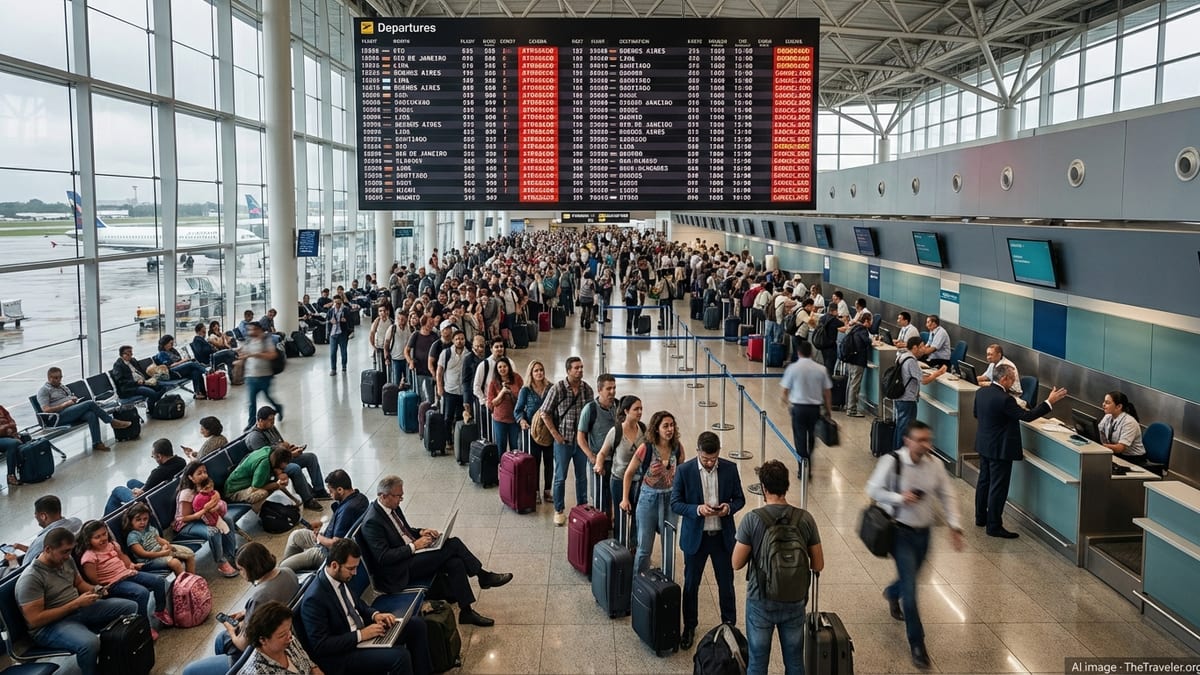
Hundreds of passengers were stranded on Friday across major hubs from Providenciales and Panama City to São Paulo, Bogotá and Buenos Aires, as a fresh wave of cancellations and delays by InterCaribbean Airways, LATAM Brasil, Azul and Copa Airlines rippled through already stressed flight networks in the Caribbean and Latin America.
Widespread Disruptions Across Key Hubs
Operational data compiled from airport boards and aviation tracking services on February 20 indicate that at least 19 flights operated by InterCaribbean Airways, LATAM Brasil, Azul and Copa Airlines were canceled and around 44 more delayed, concentrating disruption at regional gateways in the Caribbean, Brazil, Colombia, Panama and Argentina. While the number of affected flights is modest in global terms, the impact on travelers has been outsized because many of the routes involved are essential short and medium haul links with limited alternatives.
In Providenciales, a critical connection point for the Turks and Caicos Islands, InterCaribbean passengers bound for other Caribbean territories reported wait times stretching into the late evening after a cluster of cancellations and rolling delays. With few competing carriers on many island-to-island routes, a single canceled rotation often means passengers must wait until the next day or be re-routed through distant hubs, adding both cost and complexity.
Similar scenes played out further south as LATAM Brasil and Azul, two of Brazil’s biggest domestic operators, coped with heavy holiday demand layered over ongoing operational strains at São Paulo’s Guarulhos airport. Cancellations and multi hour delays there quickly cascaded into missed connections for passengers headed to Bogotá, Panama City and Buenos Aires on Copa and LATAM’s international services, tightening what was already a fragile regional network at the tail end of the Southern Hemisphere summer peak.
Brazil’s Congested Skies Amplify the Chaos
Brazilian airports have been under growing pressure throughout February as Carnival travel surged, leaving airlines with little buffer to absorb new shocks. Earlier this week, Guarulhos, Brasília and Rio de Janeiro’s Galeão together saw dozens of cancellations and more than a hundred delays in a single day as storms moved through the Southeast corridor and aircraft and crew were stretched to their limits. That operational hangover has persisted into the current wave of disruptions, with LATAM Brasil and Azul still struggling to rebalance aircraft positioning and crew schedules.
At Guarulhos, passengers for LATAM’s key trunk routes to Rio de Janeiro, Brasília and northeastern capitals again faced lines spilling into public areas, with departure boards peppered with flights showing delays of 90 minutes or more. Those knock on effects were particularly painful for travelers connecting onward to regional destinations such as Bogotá and Buenos Aires, where banks of late arriving feeder flights forced airlines to hold departures or rebook customers onto later services.
Azul, which remains in the midst of a complex financial restructuring, has been running its aircraft at tight utilization levels, leaving limited slack in the system. Even relatively minor weather or air traffic control constraints can therefore spiral into widespread delays. Combined with the Carnival travel surge and earlier drone related disruptions over São Paulo’s main hub, the conditions on Friday created a precarious operating environment that left airlines vulnerable when new irregularities emerged.
Caribbean and Central American Links Under Strain
In the northern Caribbean, InterCaribbean Airways bore the brunt of frustration in Providenciales, where its short hop flights are often the only nonstop option to smaller islands. With several departures canceled or retimed, passengers bound for destinations such as Puerto Plata, Santo Domingo and other regional points reported being offered overnight hotel stays or rebookings up to 24 hours later. For many leisure travelers on tight itineraries, losing a day represented a significant portion of their holiday.
Panama City, Copa Airlines’ primary hub, also felt the strain as delays on Brazil and Colombia sectors spilled across the airline’s tightly banked schedule. Copa’s business model relies on quick turnarounds and closely timed waves of arrivals and departures to connect cities across the Americas. When inbound flights from São Paulo, Rio de Janeiro or Bogotá run late, connecting passengers to Caribbean and Southern Cone destinations can be left scrambling to rebook. By Friday afternoon, local media in Panama were reporting long queues at rebooking counters and customer service desks, with wait times stretching beyond an hour for some travelers.
These disruptions come on top of lingering instability in Caribbean air networks following recent airspace restrictions and geopolitical tensions further east. Although Friday’s problems were concentrated in western Caribbean and Latin American hubs, they added to a sense among many travelers that the region’s skies have become markedly less predictable in recent months, putting pressure on airlines to improve contingency planning and communication.
Pressure Mounts on LATAM Brasil, Azul and Copa
The latest operational turmoil lands at a sensitive time for several of the carriers involved. LATAM Brasil, the country’s largest airline by market share, is juggling high demand with tight staffing margins and complex network patterns that span domestic and international markets. Recent days have seen the carrier cited as one of the most affected by cancellations and delays at Brazil’s main hubs, as successive weather, airspace and holiday related challenges exposed structural vulnerabilities in its schedule design.
Azul, meanwhile, is working to stabilize operations as it moves closer to exiting Chapter 11 restructuring. The airline has already announced a significant rationalization of its route network, trimming less profitable regional services to focus resources on major markets such as São Paulo, Rio de Janeiro and Brasília and on key international corridors. While these cuts are aimed at shoring up the airline’s long term financial health, they have also reduced redundancy on certain domestic links, meaning passengers have fewer back up options when flights are disrupted.
For Copa Airlines, Friday’s delays represent a setback to its reputation for reliability as a connecting carrier for the Americas. Copa has long marketed its Panama City hub as a punctual and efficient choice for travelers moving between North, Central and South America. But tight scheduling leaves little room for error, and when disruptions in Brazil and elsewhere propagate through the network, Copa faces the difficult choice of either holding connecting flights and compounding delays, or leaving late arriving passengers behind and dealing with the customer service fallout.
Scenes of Frustration From Providenciales to Buenos Aires
Across affected airports, the human impact of Friday’s disruptions was visible long before the full scale of cancellations and delays became clear. In Providenciales, families sat on the floor near departures, their luggage repurposed as makeshift seating as they waited for news from InterCaribbean’s ground staff. Some passengers reported receiving multiple, conflicting text messages about new departure times before flights were ultimately canceled, deepening a sense of confusion.
In São Paulo and Rio de Janeiro, airline lounges and gate areas filled with a mix of business travelers and Carnival returnees trying to salvage missed connections. Travelers bound for Bogotá and Panama City described watching their outbound flights slip further down the board even as arrival times for key feeder flights were repeatedly revised. Social media posts showed long queues at customer service counters, with some passengers claiming waits of more than two hours to speak to an agent about rebooking and hotel vouchers.
Buenos Aires also saw knock on effects as inbound flights from Brazil and Panama arrived late or, in some cases, not at all. Passengers arriving after midnight faced limited ground transport options and long immigration lines, while those whose flights were canceled outright were forced to negotiate last minute hotel stays in an already busy summer season. For many, the immediate concern was less about compensation and more about simply reaching their final destination in time for work, family commitments or connecting travel.
Underlying Causes: Weather, Airspace and Thin Margins
Behind the visible scenes of stranded passengers lies a complex web of contributing factors that have made regional operations unusually fragile. Meteorologists pointed to unsettled weather patterns over parts of Brazil and northern South America, including storm cells that periodically forced rerouting and temporary ground stops at major airports. Even brief closures can have outsized effects in a high demand period when airlines are flying near maximum capacity.
Air traffic management challenges have also played a role. Recent incidents involving drones and temporary closures at major Brazilian airports have underscored how vulnerable dense airspace can be to even small infringements. When a key hub such as São Paulo’s Guarulhos experiences an extended suspension or heavy flow control, the ripple effects spread far beyond Brazil’s borders, impacting flights to Panama City, Bogotá and Buenos Aires that rely on tight turnarounds and precise slot timings.
All of this is occurring against a backdrop of airlines operating with slim operational margins. After years of financial strain, several Latin American carriers have restructured their fleets and schedules to extract maximum efficiency, often leaving little slack for spare aircraft or reserve crews. While this approach helps contain costs, it also means that when something goes wrong, recovery is slower and passengers feel the impact more acutely.
Airlines’ Response and Passenger Rights
By late Friday, affected airlines were deploying standard disruption management measures, including offering hotel vouchers, meal coupons and free rebookings on the next available flights. In some cases, carriers sought to reroute passengers via alternative hubs, sending travelers bound for the Caribbean through Miami or Bogotá instead of Panama City, or using secondary Brazilian airports to reposition aircraft and crew.
However, passengers reported inconsistent information at many airports, with some ground staff appearing overwhelmed and unable to provide clear timelines for recovery. Consumer advocates in Brazil and other affected countries reiterated that passengers whose flights are canceled or severely delayed may be entitled to care, refunds or compensation depending on local regulations and the cause of the disruption. Travelers were urged to keep boarding passes and receipts for meals or hotels and to document communication with airlines to support any future claims.
In markets such as Brazil, where aviation authorities have strengthened consumer protections in recent years, airlines may be obliged to provide accommodation and alternative transport options in the event of significant schedule disruptions, except in strictly defined cases of extraordinary circumstances. But applying those rules in real time during multi country, multi carrier events can be complex, leaving some passengers uncertain about their immediate rights and remedies.
What Travelers Should Expect in the Coming Days
Aviation analysts cautioned that while the bulk of Friday’s cancellations and delays were expected to be resolved within 24 to 48 hours, residual disruption could linger through the weekend as airlines work to reposition aircraft and crews and clear a backlog of stranded passengers. Travelers with upcoming flights involving Providenciales, São Paulo, Rio de Janeiro, Bogotá, Panama City or Buenos Aires were advised to monitor their bookings closely and to arrive at the airport earlier than usual.
Industry observers also noted that February’s combination of peak seasonal demand, evolving weather patterns and ongoing financial restructuring at several carriers has exposed the fragility of air connectivity across the Caribbean and Latin America. Unless airlines and regulators can build greater resilience into schedules, infrastructure and contingency planning, similar episodes of cascading disruption are likely to recur, particularly around major holidays and high travel periods.
For now, hundreds of passengers are learning firsthand how a relatively small number of canceled and delayed flights can strand travelers across an entire region when networks are tightly interlinked. As InterCaribbean Airways, LATAM Brasil, Azul and Copa Airlines work through the immediate crisis, the longer term challenge will be restoring confidence among travelers who increasingly view itineraries through Latin American and Caribbean hubs as a calculated risk rather than a routine journey.