

More news on this day
Hundreds of passengers were left stranded across airports in the Caribbean and Latin America on February 20 as InterCaribbean Airways, LATAM Brasil, Azul and Copa Airlines canceled at least 19 flights and delayed 44 more, snarling travel through key hubs in Providenciales, São Paulo, Bogotá, Panama City and Buenos Aires.
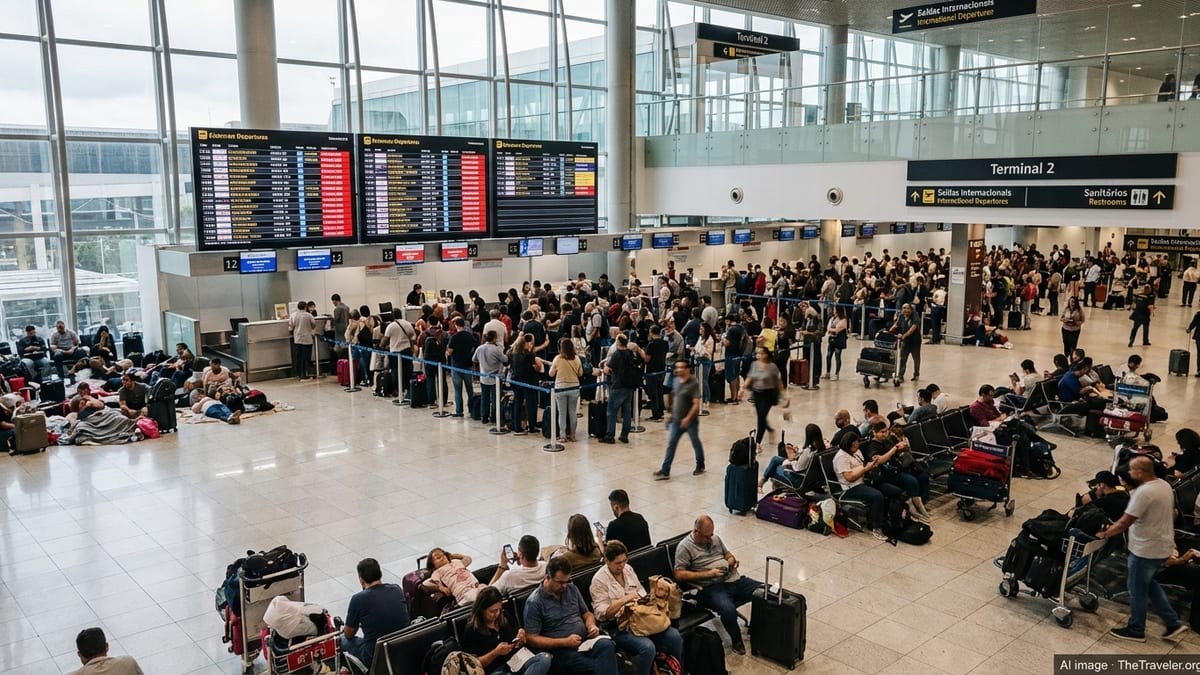
Wave of Disruptions From Caribbean Hubs to Southern Cone Gateways
The latest wave of disruption hit a string of regional gateways on Thursday, with cancellations and long delays rippling across the networks of InterCaribbean Airways, LATAM Brasil, Azul and Copa Airlines. Passengers reported crowded terminals, rolling notifications of schedule changes and scarce information as airlines worked to reassign crews and reposition aircraft.
In Providenciales, the primary hub for InterCaribbean Airways, travelers bound for other Caribbean islands faced extended waits after the carrier pulled multiple departures from the schedule. The knock-on effects quickly spread to connecting points in the Dominican Republic and Jamaica, forcing some passengers to seek overnight accommodation or abandon trips altogether.
Further south, in Bogotá, Panama City and Buenos Aires, regional operations on Copa and LATAM were also disrupted, particularly on routes linking Central America with Colombia and Argentina. While many flights ultimately departed, extended ground holds and late arriving aircraft left passengers missing onward connections and rebooking onto already busy services.
Across the day, operations data from regional trackers indicated at least 19 outright cancellations and 44 departures facing significant delays across the four airlines, a modest number in absolute terms but enough to trigger severe crowding and frustration at several medium sized airports with limited spare capacity.
Providenciales Turmoil Highlights Fragility of Caribbean Connectivity
In the Turks and Caicos Islands, Providenciales International Airport once again underscored its role as both a lifeline and a single point of failure for intra Caribbean travel. InterCaribbean Airways, which relies on a tight rotation of regional turboprops, saw schedule disruptions cascade as one early aircraft went out of rotation, according to passengers who spoke with local media.
With limited redundancy in the fleet and relatively few alternative carriers operating the same thin routes, even a small clutch of cancellations left entire groups of travelers stranded. Families heading to smaller islands such as Grand Turk and South Caicos reported being told they would have to wait until at least the following day for confirmed seats, with some being offered only partial refunds or vouchers.
Travel agents in Providenciales said they spent much of the morning rerouting clients through larger hubs like Miami and San Juan, often at significantly higher cost. For residents of neighboring islands, however, such workarounds were not an option, as passports, visas or ticket restrictions prevented last minute international detours to reach destinations that are normally just a short hop away.
The disruptions came just weeks after other Caribbean carriers, including European long haul operators, were forced to adjust routes in response to airspace restrictions over parts of northern South America, reinforcing concerns that regional connectivity remains highly vulnerable to both operational and geopolitical shocks.
Brazilian Airports Struggle Under Carnival Pressure
In Brazil, the latest disruptions compounded an already difficult Carnival travel period for the country’s busiest airports. São Paulo Guarulhos and Congonhas, along with Rio de Janeiro’s Galeão and Santos Dumont, have faced several days of elevated cancellations and delays driven by a mix of thunderstorms, staffing challenges and intense holiday demand.
LATAM Brasil and Azul, two of the main domestic and regional players, again reported off schedule operations on Thursday, adding to a tally of disruptions that has steadily grown since the Carnival peak began on February 13. Earlier in the week, local aviation trackers and travel advisories had flagged dozens of cancellations at major hubs, warning business and leisure travelers to build in extra time for connections.
Passengers at São Paulo Guarulhos described departure boards heavily studded with red and amber markers as flights to secondary Brazilian cities in the northeast and south left hours behind schedule. International routes including links to Buenos Aires and other South American capitals also saw retimed departures as aircraft and crews were repositioned.
Industry analysts noted that while Brazil’s major airlines have made strides in improving on time performance over the past two years, the compressed Carnival season continues to expose structural weaknesses. Tight crew scheduling, limited spare aircraft and congested airspace mean that when one part of the system falters, irregular operations can spread quickly across the country’s dense domestic network.
Panama City and Bogotá Feel the Strain on Regional Links
Tocumen International Airport in Panama City, the principal hub for Copa Airlines, also reported a bout of operational strain as the carrier adjusted regional rotations. While many flights, including core services between Panama City and Bogotá, ultimately operated close to schedule, a cluster of delays on short haul legs left some passengers stranded mid journey.
Travelers connecting through Panama from Caribbean points and Brazilian cities recounted missing onward flights to Colombia and the Southern Cone despite arriving in the hub on what initially appeared to be reasonable layovers. With aircraft tightly banked to maximize connectivity, even minor inbound delays were enough to break connection chains, forcing agents to scramble for same day alternatives.
In Bogotá, El Dorado Airport saw its own share of late departures as Copa’s Panama shuttle, along with other regional services, contended with slot congestion and weather related constraints. Airport staff worked to prioritize flights with large volumes of international connections, sometimes leaving smaller regional routes to wait on the tarmac for departure slots.
For passengers, the practical impact was long queues at service desks and a rush on available hotel rooms near the airport as airlines issued meal vouchers and overnight accommodation to those who could not be rebooked the same day. Travel insurance providers said they expected a spike in claims linked to missed connections and incidental expenses.
Argentina General Strike Adds to Buenos Aires Disruptions
In Buenos Aires, the situation was further complicated by wider labor unrest. LATAM confirmed this week that it had altered operations to and from Argentina on February 19 in response to a general strike called by the country’s main labor confederation, acknowledging that some flights would see changes to schedules and dates even if not formally canceled.
The latest round of cancellations and delays on routes linking Argentina with Brazil and other regional destinations arrived against that backdrop. Travelers reported last minute schedule changes on flights into Buenos Aires from São Paulo and other Brazilian cities, with some services pushed back by several hours and others removed from schedules entirely.
Local aviation observers said the combination of industrial action, high seasonal demand and existing operational pressures on regional carriers created a volatile mix. Airlines were forced to navigate both staffing constraints on the ground and in the air, as well as potential disruptions to airport services provided by third party contractors.
For passengers, the result was confusion over who was responsible for providing assistance. Some faced long waits to secure written confirmation of cancellations or significant delays, documentation often required by travel insurers and, in some cases, by employers for corporate travelers seeking reimbursement of additional costs.
Airlines Cite Weather, Staffing and Airspace Restrictions
Across the affected carriers, a familiar trio of explanations emerged for Thursday’s disruptions: adverse weather, crew shortages and airspace limitations. In Brazil, a sequence of summer storms moving through the southeast region forced air traffic control to slow arrival and departure rates at key hubs, compounding existing congestion linked to the Carnival getaway period.
Airlines also continued to grapple with staffing gaps, particularly among flight crews and ground handling teams, after several years of volatile demand, pandemic related cuts and subsequent rehiring efforts. Even as carriers such as Azul pursue fresh investment to stabilize their finances and rebuild operations, they remain vulnerable to sudden spikes in demand or unplanned absences that can push rosters beyond their limits.
In the Caribbean and along certain routes between Brazil and the Dutch Caribbean, carriers have additionally had to contend with temporary restrictions in nearby airspace linked to geopolitical developments in northern South America. These constraints can force detours, technical stops or adjustments to flight profiles, increasing flight times and reducing scheduling flexibility.
Combined, these factors leave relatively little margin for error in tightly banked regional networks. A single extended delay early in the day can cascade into multiple missed rotations, particularly for turboprop and narrowbody fleets that may operate six or more sectors daily across scattered island and secondary city destinations.
Stranded Passengers Face Long Queues and Limited Options
For travelers caught up in the disruption, the most immediate experience was of long queues, crowded departure halls and limited options. At São Paulo Guarulhos, photos and descriptions shared by passengers showed dense crowds around check in and customer service counters, with many people seated on the floor near power outlets as they waited for updates.
In Providenciales, some travelers bound for smaller Caribbean islands said they were offered itineraries that would require overnight stays in third countries or long detours through the United States, options that were not feasible for those without visas or with tight schedules. Others reported difficulty securing clear written explanations from airlines, complicating efforts to claim compensation or accommodation.
At Panama City and Bogotá, hotel availability near the airports tightened as the day progressed. Travelers who were not proactive in seeking vouchers or rebooking possibilities early often found themselves at the back of queues, as limited seat inventory on remaining flights quickly disappeared. Social media accounts from the terminals described tempers fraying as passengers jostled for assistance.
Despite the frustration, local authorities in several countries reiterated that there is currently no unified regional framework governing passenger rights in the event of cancellations and long delays, beyond general consumer protection rules. This patchwork often leaves travelers dependent on each airline’s internal policies and goodwill, rather than standard, enforceable minimums.
What Travelers Should Know and How to Prepare
Travel specialists say this latest episode underscores the importance of preparation for anyone planning itineraries that cross multiple regional hubs in the Caribbean and Latin America, particularly during peak holiday periods and in times of political or labor unrest. Longer connection windows, flexible dates and comprehensive travel insurance can all provide a measure of protection when operations begin to falter.
Passengers are advised to monitor flight status closely in the 24 hours before departure, using both airline apps and independent trackers, and to register contact details with carriers to receive real time notifications of schedule changes. In situations where disruption appears likely, rebooking onto earlier flights or more direct routings, even at additional cost, may help avoid worst case scenarios.
Experts also encourage travelers to familiarize themselves with local consumer protection rules in the countries they are flying from and to. While there is no single regional equivalent of Europe’s EC261 regime, some jurisdictions provide stronger guarantees of care and reimbursement than others, and knowing those rules in advance can help passengers advocate for themselves at crowded service counters.
For now, with irregular operations still affecting pockets of the regional network, airlines are urging patience as they work to restore normal schedules. But for the hundreds of passengers spending an unexpected night in airport hotels from Providenciales to São Paulo and beyond, the latest bout of cancellations and delays is a reminder that even routine regional hops can quickly turn into multi day ordeals when the system comes under strain.