

More news on this day
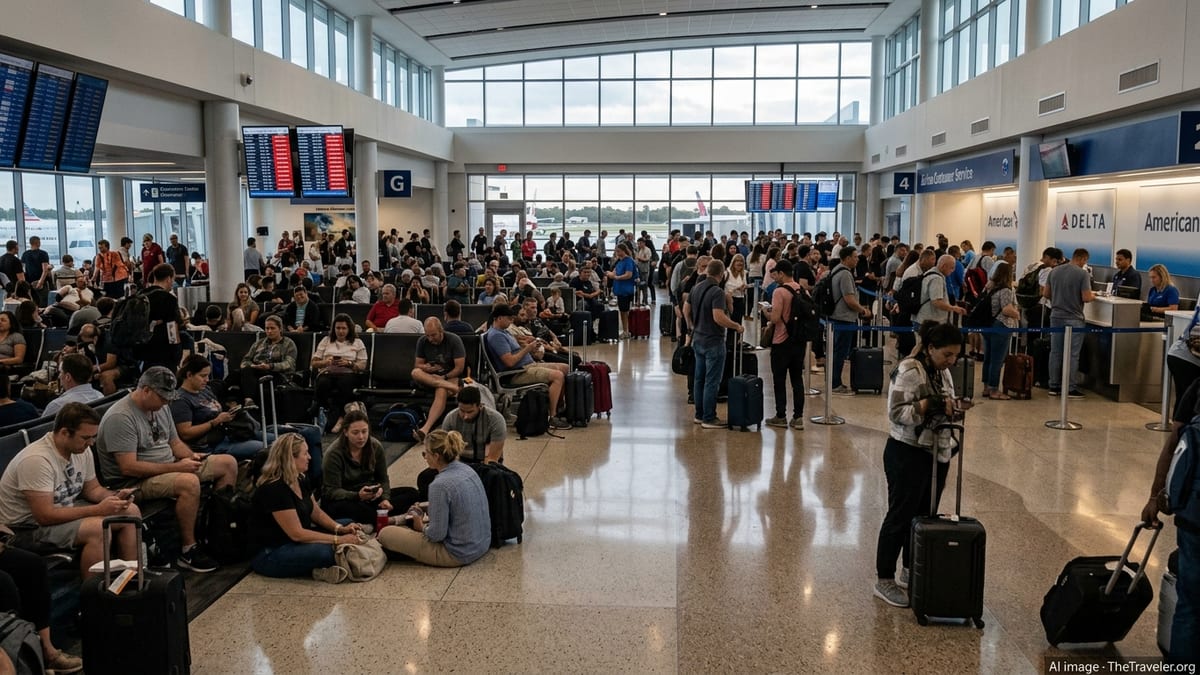
Hundreds of travelers were left stranded at Fort Lauderdale-Hollywood International Airport in Florida as a wave of disruptions rippled through South Florida and major U.S. hubs, with at least 244 flights delayed and 21 cancelled, snarling operations for American Airlines, Delta Air Lines, United Airlines and other carriers.
Get the latest news straight to your inbox!
Delays and Cancellations Snarl a Key South Florida Gateway
Fort Lauderdale-Hollywood International Airport, one of South Florida’s busiest gateways, experienced a sharp spike in operational disruption as delays and cancellations mounted across its domestic network. Tracking data and published coverage indicate that more than 240 flights linked to the airport were delayed, with at least 21 cancellations, affecting departures and arrivals throughout the day.
The disruption hit a mix of short-haul and medium-haul routes that connect Fort Lauderdale with New York, Atlanta, Chicago and Miami, along with other cities in the southeastern United States. Passengers reported lengthy waits in departure halls and crowded gate areas as aircraft remained out of position and turnaround times stretched well beyond scheduled departure slots.
Fort Lauderdale routinely handles millions of passengers each month across carriers such as Spirit, JetBlue, Southwest, Delta, United and American, making it especially vulnerable when irregular operations cascade through the national network. When schedules begin to slip at such a high-volume airport, the effects are typically felt far beyond South Florida, as aircraft and crews are needed to feed connecting services in other regions.
Airlines responded to the disruption by revising departure times throughout the day and consolidating some services where possible. While many flights ultimately departed, the mounting delays left large numbers of travelers facing missed connections, shortened vacations and abandoned same-day returns.
Ripple Effects From South Florida to New York, Atlanta and Chicago
The impact of Fort Lauderdale’s disruption extended well beyond Broward County. Tracking of affected routes showed knock-on delays across airports in New York, Atlanta, Chicago and Miami, where aircraft arriving late from South Florida pushed back subsequent departures and squeezed already tight turnarounds.
New York-area airports, which already operate near capacity during peak periods, were particularly exposed as late inbound flights from Fort Lauderdale forced gate and slot adjustments. Passengers on afternoon and evening departures encountered rolling schedule changes, with some services repeatedly pushed back before eventually leaving the gate.
In Atlanta and Chicago, both major domestic hubs, the ripple effects translated into missed connections for travelers transiting from Fort Lauderdale to other U.S. cities. Even when mainline flights operated, late-arriving passengers and baggage created additional congestion at transfer points, compounding delays for onward journeys and baggage handling.
Miami International Airport, only a short distance south of Fort Lauderdale, also felt the strain. Although Miami operates under a separate schedule, it shares much of the same weather environment and regional airspace, and disruptions in Fort Lauderdale can complicate traffic management throughout the South Florida corridor.
Major U.S. Carriers Grapple With Operational Strain
American Airlines, Delta Air Lines and United Airlines were among the major carriers affected as the day’s schedule at Fort Lauderdale fell behind. Publicly available airline and airport statistics show that all three carriers move significant passenger volumes through Fort Lauderdale, making them especially sensitive to delays at the airport.
When one or two early flights are delayed or cancelled at a busy station, aircraft and crews can quickly fall out of their planned rotations. That creates a domino effect, particularly on routes into high-demand markets such as New York, Atlanta and Chicago, where turnaround times are tightly scheduled and gate space is limited.
The disruptions also intersected with a broader environment in which airlines have been operating near full capacity on popular leisure and visiting-friends-and-relatives routes into South Florida. With limited spare aircraft and crew available, carriers had fewer options to deploy backup planes or add extra sections, leaving some passengers waiting for rebooking on later flights or alternative routings.
While low-cost and ultra-low-cost carriers also saw schedule pressure, the size of the networks operated by American, Delta and United meant that delays at Fort Lauderdale could affect a wide range of connecting journeys throughout the United States and, in some cases, onward international itineraries routed through their main hubs.
Passenger Experience: Long Lines, Uncertain Timetables
Inside Fort Lauderdale’s terminals, passengers contended with familiar scenes of irregular operations: long check-in and customer-service queues, crowded gate areas and frequent loudspeaker announcements revising departure times. Families, cruise passengers returning from nearby ports and business travelers all faced uncertainty as they waited for updates on their flights.
Reports from the airport described travelers camping out near power outlets to keep phones charged, with many attempting to rebook flights through mobile apps or call centers rather than waiting in line at service desks. For some, same-day travel plans became overnight stays, with limited same-evening capacity remaining to absorb the volume of disrupted passengers.
Confusion over changing departure times added to the frustration. In several cases, flights that initially showed modest delays were pushed back in increments as aircraft and crew availability shifted, leaving passengers unsure whether to remain at the gate area or seek accommodation. Those holding separate tickets for onward travel from other hubs were particularly affected, often losing nonrefundable segments when missed connections could not be protected.
The passenger experience was further complicated by the challenge of obtaining accurate, real-time information. Flight status boards, airline apps and third-party tracking tools sometimes displayed conflicting estimates, making it difficult for travelers to plan meals, ground transportation and hotel stays around evolving schedules.
What Disrupted Travelers Can Do Next
For those still working to recover their travel plans, consumer advocates recommend carefully reviewing airline communications and keeping documentation of delays, cancellations and out-of-pocket expenses. In the United States, refund eligibility typically hinges on whether a flight was cancelled or significantly changed, rather than simply delayed, and policies vary across carriers.
Travelers whose flights were cancelled or who experienced long delays at Fort Lauderdale are generally advised to retain boarding passes, receipts for meals and lodging and any written confirmations of schedule changes. This documentation can support later claims with airlines or travel insurers, particularly when itineraries involved missed connections at major hubs such as New York, Atlanta, Chicago or Miami.
Published guidance from federal regulators notes that airlines are required to provide refunds when they cancel a flight and the passenger chooses not to travel, even for nonrefundable tickets. Compensation for additional expenses, such as hotels or meals, is usually determined by each carrier’s own policies and conditions of carriage, which may provide goodwill accommodations during widespread disruptions.
For future trips, travel specialists often suggest building in longer connection times at busy hubs, especially during periods prone to weather or operational challenges, and considering travel insurance that covers delays and missed connections. While no policy can prevent mass disruptions like those seen at Fort Lauderdale, additional financial protection and more flexible itineraries can soften the impact when schedules suddenly unravel.