

More news on this day
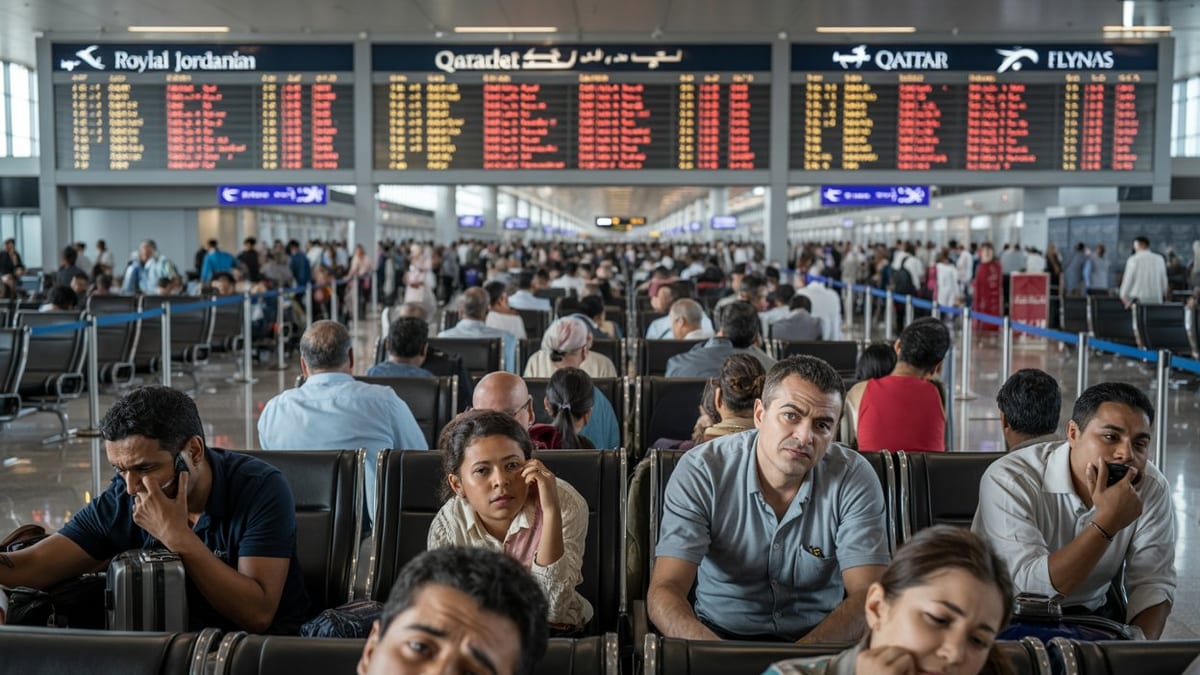
Hundreds of travelers were left in terminals across the United States on April 4 as a fresh wave of operational disruption led to 245 flight cancellations and 445 delays at major hubs including Hartsfield–Jackson Atlanta, Los Angeles, Chicago O’Hare, Denver, New York John F. Kennedy, Dallas–Fort Worth, San Francisco, Seattle–Tacoma, Houston Bush and Cincinnati/Northern Kentucky, according to aggregated flight-tracking data and published aviation coverage.
Get the latest news straight to your inbox!
Disruptions Concentrated at the Nation’s Busiest Airports
Publicly available flight-status dashboards show that Friday’s irregular operations were highly concentrated at ten large airports that anchor the U.S. network. Hartsfield–Jackson Atlanta International, Chicago O’Hare International, Dallas–Fort Worth International and Denver International again featured prominently, reflecting their role as high-volume connecting hubs where even modest slowdowns can cascade quickly through the system.
On the coasts, Los Angeles International, San Francisco International, Seattle–Tacoma International and New York’s John F. Kennedy International reported clusters of delayed departures, particularly on transcontinental and transpacific routes. These gateways already operate near capacity for large parts of the day, making them especially vulnerable when runway configurations are restricted or when aircraft and crews arrive late from elsewhere.
Houston George Bush Intercontinental and Cincinnati/Northern Kentucky International, while smaller than the biggest coastal hubs, also reported elevated disruption. Data from recent performance reports indicate that both airports typically maintain on-time departure rates in the mid-70 to high-70 percent range, yet the latest figures point to a marked short-term deterioration as cancellations and rolling delays mounted.
Travel analysts note that the ten affected airports collectively handle well over 250 million departing passengers in a typical year. When multiple hubs in this group experience problems on the same day, the impact is quickly felt on connecting itineraries across the United States and on long-haul flights to Europe, Latin America and Asia.
Weather, Congestion and Knock-on Effects Drive the Latest Wave
Reports from aviation trackers and industry outlets link the latest disruption to a blend of spring weather and lingering operational strain from earlier in the week. Thunderstorms and low cloud ceilings in the Midwest and South prompted temporary ground stops and flow-control measures at Chicago O’Hare, Dallas–Fort Worth, Denver and Houston, reducing the number of arrivals those airports could safely handle each hour.
At the same time, residual delays from a previous day’s nationwide disruption left airlines with aircraft and crew out of position as the April 4 schedules ramped up. Coverage of the broader spring 2026 disruption pattern highlights that carriers such as American, United, Southwest and several regional operators have already accumulated hundreds of delays and dozens of cancellations during this period, making it harder to absorb new shocks without canceling additional flights.
On the West Coast, runway work and traffic-management initiatives at San Francisco have periodically reduced arrival rates, while marine-layer conditions around Los Angeles and San Francisco have triggered instrument-approach operations that slow spacing between aircraft. In the Northeast, low clouds and congestion around the New York area, particularly at JFK, have contributed to arrival metering that reverberates across transcontinental schedules.
Industry data compiled for recent disruption reports suggest that when multiple hubs are simultaneously impacted by weather and congestion, same-day recovery becomes difficult. Aircraft that miss narrow connection windows at one airport often cannot be reinserted into the schedule without pushing subsequent flights later into the evening, leading to the pattern of rolling delays visible on departure boards.
Passengers Face Long Lines, Rapidly Shifting Rebooking Options
For travelers on the ground, the combination of 245 cancellations and 445 delays translated into long customer-service queues, changing departure times and, in some cases, unexpected overnight stays. At the largest hubs, lines formed early at rebooking counters as soon as the first wave of morning departures began to slip behind schedule.
Published guidance from consumer-rights organizations and airline advisories emphasizes that passengers whose flights are canceled are typically offered either a rebooking at no additional fare or a refund, depending on the carrier and fare type. However, when disruptions hit multiple hubs at once, same-day alternatives can quickly sell out, leaving travelers with limited options or circuitous routings that add many hours to their journeys.
Travel advocates point out that delays also carry a significant cost in missed connections. A flight that departs an hour late from Atlanta or Dallas–Fort Worth can cause travelers to misconnect at downstream hubs such as Denver, Los Angeles or Seattle–Tacoma, even if those airports are not experiencing severe weather at that moment. As a result, the number of people affected often exceeds the raw count of delayed and canceled flights.
Accommodation and meal support varies widely across carriers and depends in part on whether the disruption is attributed to factors within the airline’s control. Publicly available contract-of-carriage documents indicate that some airlines may provide hotel and meal vouchers for controllable issues, while disruptions linked primarily to weather are more likely to leave passengers arranging and paying for their own overnight stays.
Why These Ten Airports Matter So Much to the U.S. Network
The concentration of disruption at Hartsfield–Jackson Atlanta, Los Angeles, Chicago O’Hare, Denver, JFK, Dallas–Fort Worth, San Francisco, Seattle–Tacoma, Houston Bush and Cincinnati/Northern Kentucky underscores how central these airports are to the national system. Recent performance and traffic reports show that Atlanta and Chicago rank among the busiest airports in the country by departing passengers, with Dallas–Fort Worth, Denver, Los Angeles and JFK close behind.
These hubs serve as primary connection points for the largest U.S. carriers, linking hundreds of domestic city pairs and international destinations. When operations slow at Atlanta or Dallas–Fort Worth, for example, travelers flying between smaller regional airports frequently pass through those hubs, creating a multiplier effect when disruptions occur. Similar patterns hold for West Coast and transpacific traffic flowing through Los Angeles, San Francisco and Seattle–Tacoma.
Houston Bush and Cincinnati/Northern Kentucky play a different but still significant role, supporting key domestic and international routes while absorbing overflow traffic when other hubs are constrained. In recent seasons, Houston has been a critical gateway to Latin America and energy-related business destinations, while Cincinnati functions as a mid-continent connecting point and an important cargo hub.
Historical on-time performance data underline that even under normal conditions, large hubs operate with a thin buffer between smooth flow and congestion. Studies released in the past year indicate that several of the affected airports experience delay rates above 20 percent on busy travel days, leaving the system exposed when weather, airspace constraints or staffing challenges converge.
What Travelers Can Do on High-Risk Days
With spring travel building and instability in the system persisting, travel experts recommend a series of practical steps for passengers booked through the hardest-hit hubs. Monitoring airline apps and airport departure boards frequently is one of the most effective ways to catch schedule changes early, as most carriers now push real-time updates through mobile notifications.
Many airlines also issue travel waivers when large-scale disruption becomes likely, allowing customers to change travel dates or routings without additional change fees or fare differences. Public notices from recent disruption events show that these waivers are often targeted at specific hubs such as Chicago O’Hare, Dallas–Fort Worth, Houston Bush, Denver and Atlanta when severe weather is forecast or when operational bottlenecks are anticipated.
Travel planners suggest that, where possible, passengers on tight schedules consider booking earlier departures in the day from vulnerable hubs. Morning flights are statistically more likely to depart on time because aircraft and crews are already positioned, while later departures are more exposed to the cumulative effect of delays. Scheduling slightly longer connection times, especially when connecting through New York, Chicago, Dallas–Fort Worth or Denver, can also reduce the risk of missed onward flights.
For those already caught in disruption, consumer advocates advise documenting expenses and keeping records of all communications with airlines, as this information may be useful in seeking goodwill vouchers or compensation where policies permit. With 245 cancellations and 445 delays recorded across ten pivotal airports, the latest episode is a reminder that flexibility, preparation and careful monitoring remain essential tools for navigating the U.S. air travel network in a volatile season.