

More news on this day
Europe’s major airports are grappling with a turbulent start to April 2026, as a combination of severe weather, IT failures and wider geopolitical disruption triggers cascading delays and cancellations that have left thousands of passengers stranded across the continent’s busiest hubs.
Get the latest news straight to your inbox!
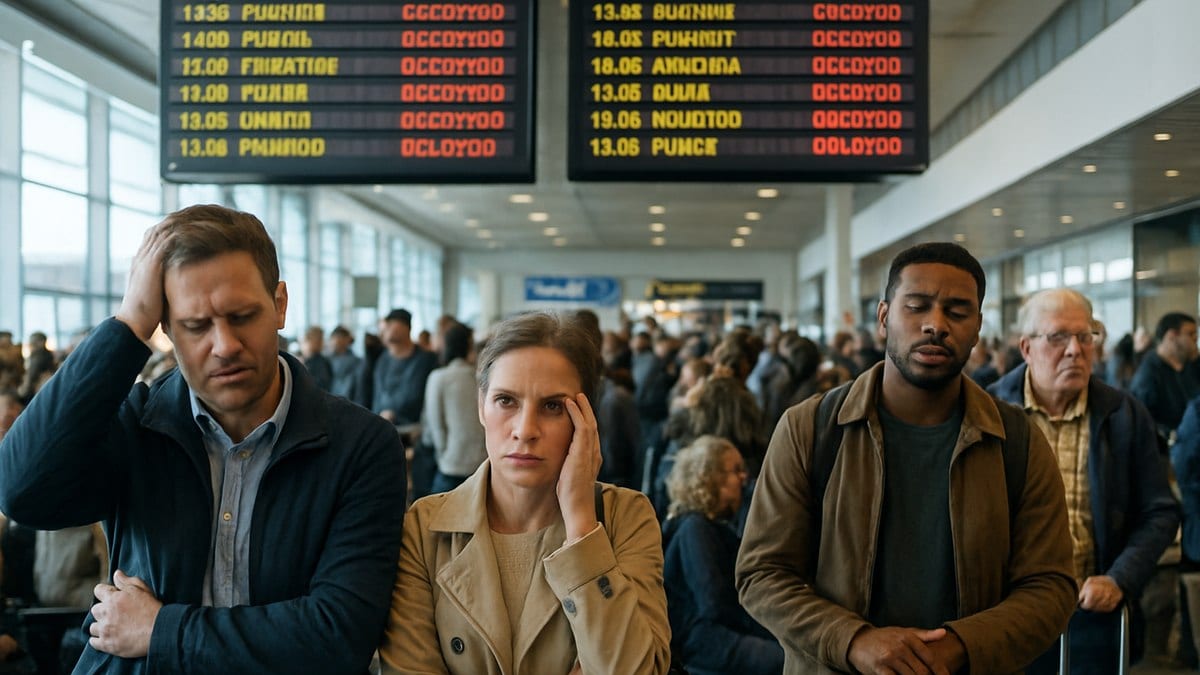
Delays Mount Across Europe’s Key Gateway Airports
Tracking data and industry analyses for the first week of April indicate that disruption has now become a daily feature at many of Europe’s biggest hubs, including Amsterdam Schiphol, London Heathrow, Frankfurt, Munich, Paris Charles de Gaulle, Madrid Barajas and Athens. In recent days, reports have pointed to more than 1,000 flights delayed or cancelled in a single 24 hour period across these airports, with knock on effects rippling through secondary cities.
Coverage from aviation and travel outlets on 1 April highlighted at least 1,695 delays and more than 100 cancellations across major airports in England, France, Germany, Greece, Spain and the Netherlands, affecting carriers such as Lufthansa, KLM, Air France, British Airways, easyJet, Ryanair and Vueling. Amsterdam, Athens, Barcelona, Madrid, London, Manchester, Paris, Nice, Frankfurt and Munich all reported triple digit delay counts, signalling broad pressure across Europe’s core aviation network.
Further reporting on 6 April described another wave of disruption, with around 1,475 flights delayed and 172 cancelled in a single day across multiple European countries. That tally again translated into thousands of passengers missing connections, sitting through lengthy queues at check in and security, or facing overnight stays in terminals and nearby hotels as airlines struggled to rehouse those whose journeys had collapsed mid itinerary.
Travel intelligence platforms note that when several hubs experience capacity constraints at the same time, the impact multiplies quickly. Aircraft and crews may be out of position, connection banks become misaligned, and a relatively modest number of cancellations can translate into hundreds of missed onward flights, leaving passengers stranded far from their original origin or destination.
Storm Systems, Cyber Incidents and Airspace Shocks Converge
The April chaos is not being driven by a single cause. Weather remains an important factor, with storm systems and unsettled conditions over Western and Northern Europe at the turn of March into April cutting runway capacity and forcing airlines to slow arrival and departure flows at major hubs such as Frankfurt, Munich, Madrid, Heathrow and Oslo. One analysis of the period described more than 470 flights disrupted by adverse weather alone at these airports.
At the same time, publicly available coverage points to significant IT and cyber related disruption. Reporting in early April described a widespread cyber incident affecting a major aviation technology supplier, with repercussions for operations at several large European airports. The incident reportedly affected systems used for passenger processing and flight handling, leading to cancellations and long queues as staff reverted to manual workarounds while systems were isolated and restored.
The European difficulties are also unfolding against a backdrop of severe disruption in Middle Eastern and Gulf airspace following military strikes on Iran in early March. Coverage from business travel and regional news outlets outlines how extended closures or restrictions at key hubs such as Dubai, Doha and others have forced airlines to reroute or suspend services. For Europe, this has translated into disrupted long haul connections, equipment shortages and schedule instability on routes that normally rely on smooth flows through Gulf hubs.
Analysts suggest that this convergence of weather, cyber and geopolitical shocks is exposing how little slack exists in modern hub and spoke networks. When air traffic control restrictions, ground system failures and rerouted long haul traffic all hit within a matter of weeks, even well resourced carriers can struggle to rebuild stable schedules quickly.
Knock On Effects for Passengers and Airlines
For travelers, the most visible impact has been long queues, missed connections and unplanned overnight stays in terminal buildings or airport hotels. Reports from affected hubs in early April describe passengers sleeping on the floor near departure gates, waiting for rebooking or for information screens to show viable alternatives after repeated delays turned into outright cancellations.
Consumer advocates note that under EU passenger rights rules, eligible travelers on flights departing from the European Union, or on EU carriers arriving into the bloc, may be entitled to care such as meals, refreshments and hotel accommodation during long delays, as well as compensation in some circumstances. However, the volume of disruption seen in recent days has at times overwhelmed customer service channels, with some passengers reporting difficulty in accessing support or clear guidance while lines to staffed desks stretch across terminals.
For airlines and airports, the financial and operational consequences are significant. Longer routings to avoid congested or restricted airspace increase fuel burn, while irregular operations require carriers to cover extra costs for crew duty time, aircraft repositioning and passenger accommodation. Airport operators must manage crowding in departure halls, reconfigure stand and gate allocations dynamically and coordinate closely with ground handling providers under intense time pressure.
Industry data also suggest that repeated waves of disruption can erode traveler confidence, particularly among business travelers who rely on tight schedules. Corporate travel managers are already being advised by specialist consultancies to allow more generous connection times, diversify routings across multiple hubs where possible and build contingency days into critical trips during periods of heightened volatility.
Structural Strain in Europe’s Air Traffic System
Beyond the immediate headlines, April’s difficulties are landing on an aviation system that has been showing signs of chronic strain. A December 2025 report from the International Air Transport Association highlighted that air traffic control related delays in Europe have more than doubled over the last decade, even though overall flight numbers have grown much more modestly. That finding underscores a structural capacity challenge that can compound the impact of short term shocks.
When weather or cyber incidents hit, air traffic flow management restrictions are commonly introduced to preserve safety margins, often by spacing aircraft further apart or limiting arrivals into already congested airspace. Expert analysis notes that these measures, while necessary for safety, reduce hourly throughput at key hubs and make it very difficult for airlines to recover lost time later in the day, particularly when many routes are tightly scheduled with narrow turnaround windows.
There are also broader network vulnerabilities in play. Europe’s dependence on a handful of mega hubs for long haul connectivity means that any disruption at Amsterdam, London, Paris, Frankfurt or Munich has immediate cross border consequences. The ongoing airspace issues in the Middle East further exacerbate this fragility, as traffic that would once have been spread between European and Gulf hubs is now more concentrated on Europe’s already busy gateways.
Calls for accelerated investment in air traffic management modernization, digital resilience and airport capacity expansion are likely to be amplified by this latest episode. Policy debates over passenger rights and environmental constraints will intersect with renewed pressure from airlines for more predictable, scalable infrastructure that can absorb shocks without producing multi day cascades of delays and cancellations.
What Travelers Can Expect Through the Rest of April
Forecasts from weather agencies and aviation data providers suggest that conditions may remain unsettled across parts of Europe through mid April, raising the risk of further weather related schedule changes on top of existing backlogs. At the same time, airlines are working to clear queues of displaced passengers while gradually restoring normal aircraft and crew rotations after the early April cyber and airspace disruptions.
Travel analysts indicate that while the most acute peaks of chaos may ease, knock on effects could linger for days at certain connection points as carriers rebuild network resilience. Routes that rely heavily on aircraft arriving from the Middle East and Asia may remain vulnerable to short notice timetable adjustments, particularly if further geopolitical or technical issues emerge in those regions.
Passenger advocacy groups and travel experts are encouraging travelers with imminent European itineraries to monitor airline apps and airport information channels closely in the 24 to 48 hours before departure, and to build in additional buffer time for connections where possible. Flexible tickets, travel insurance with disruption coverage and a clear understanding of carrier obligations under EU rules are being highlighted as useful safeguards in an environment where irregular operations have become more frequent.
For now, the opening days of April 2026 have offered a stark reminder of how quickly Europe’s tightly interconnected aviation system can become overloaded. With summer schedules and peak holiday travel still to come, the way airlines, airports and regulators respond to this latest bout of flight chaos will shape how resilient the continent’s air travel network feels to passengers in the months ahead.