

More news on this day
Travelers at John Glenn Columbus International Airport in Ohio and Salt Lake City International Airport in Utah faced mounting disruption on March 17, as more than 70 flights were cancelled across the two hubs, leaving thousands of passengers stranded and rippling delays throughout the national air network.
Get the latest news straight to your inbox!
Severe Weather Drives Another Wave of U.S. Flight Cancellations
The latest wave of disruptions at Columbus and Salt Lake City unfolded as a powerful March storm system continued to sweep across large portions of the United States from March 13 to March 17, 2026. Publicly available national data shows that the broader weather pattern has already forced thousands of cancellations nationwide since the weekend, with knock-on delays at many midwestern and western airports.
John Glenn Columbus International and Salt Lake City International are not the largest hubs in the country, but both sit near key east to west and north to south corridors. When adverse weather and high winds affect those routes, even moderate schedule cuts at these airports can create visible bottlenecks in concourses and gate areas as passengers wait for rebooking and crew repositioning.
Operational statistics published in recent months for both airports highlight how strong the rebound in air travel has been, with Columbus reporting record or near record passenger totals and Salt Lake City continuing to handle heavy traffic volumes. That growth has amplified the impact when weather systems move through during peak travel windows such as spring break.
By the morning of March 17, tracking services and airport status boards indicated that more than 70 flights combined had been cancelled at the two airports over roughly a 24 hour period, affecting both departures and arrivals. While the figure is modest compared with the worst days of nationwide disruption earlier in the season, it was sufficient to trigger long lines at ticket counters and crowded seating areas as travelers sought alternatives.
Columbus Passengers Face Packed Concourses and Rolling Delays
At John Glenn Columbus International, Monday’s problems followed an already busy early March period, when local travelers had reported longer security lines and fuller parking facilities as spring break traffic built. Recent airport reports show that Columbus has been among the faster growing mid sized U.S. airports, a trend that leaves less slack in the system when irregular operations occur.
On March 17, cancellations and delays at Columbus were concentrated among regional routes into the Great Lakes and upper Midwest along with select east coast destinations. Publicly accessible flight tracking dashboards showed clusters of cancelled departures in the morning and early afternoon, often paired with late arriving inbound aircraft that were unable to operate their next legs as scheduled.
The immediate causes varied by carrier and route, but the overarching driver was the lingering March 13 to 17 storm complex affecting parts of the northern United States. Strong winds, low clouds, and residual snow or ice at outstations triggered a chain of schedule adjustments that ultimately led to aircraft and crews being out of position for Columbus rotations.
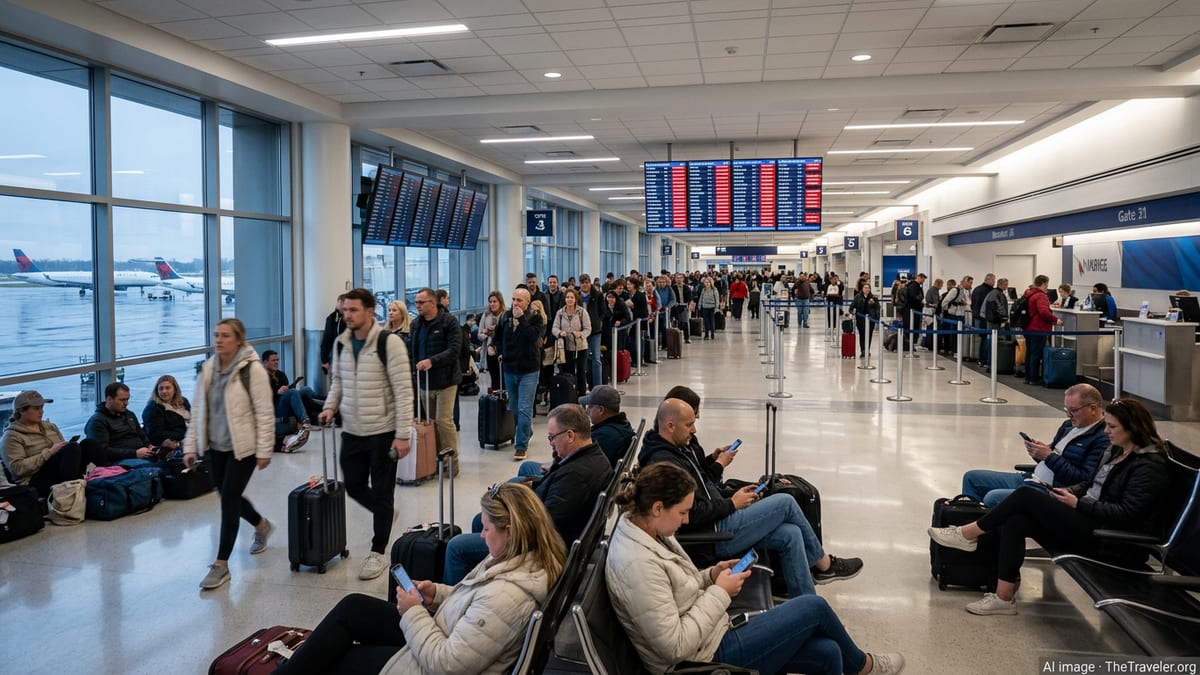
Inside the terminal, the effect was visible in the form of dense crowds near airline service desks and rebooking kiosks. Publicly available images and social media posts from travelers showed lines snaking into adjoining concourses, with many passengers attempting to switch to later flights or arrange overnight accommodation when same day options were no longer available.
Salt Lake City Disruption Compounded by Western Storm Impacts
Salt Lake City International, a key connecting point for routes across the Mountain West, also saw a wave of cancellations tied to the same broad weather pattern and secondary disturbances across higher elevations. Western-focused meteorological summaries for mid March described significant snowfall and gusty winds in nearby states, conditions that regularly trigger flow control measures and diversions for regional flights.
As with Columbus, the cancellations at Salt Lake City were heavily clustered in certain time bands, leaving some banked connection periods much thinner than planned. Afternoon and evening departures to neighboring states and select long haul routes were particularly affected as aircraft arrived late or not at all from weather impacted cities.
Airport traffic reports from the past year underscore Salt Lake City’s position as a high throughput facility with a strong mix of domestic and international service. That role as a connector meant that a single cancelled leg could strand not only local origin and destination passengers, but also transit travelers attempting to make onward flights to the Pacific Northwest, California, or the interior West.
Passengers reported spending hours in terminal gate areas monitoring status boards as airlines updated departure times in small increments. In some cases, flights initially listed as delayed were ultimately cancelled when crew duty time limits were reached or when connecting aircraft could not depart from other storm affected airports.
Nationwide Ripple Effects and Limited Rebooking Options
The problems at Columbus and Salt Lake City have unfolded against a national backdrop of elevated cancellations throughout March, following earlier winter storms in January and February that produced some of the highest disruption totals since the height of the pandemic. Weather archives for late January, for example, detailed more than ten thousand cancellations over several days during a separate winter storm, underscoring how fragile tight airline schedules can be when severe conditions strike multiple regions.
In this latest episode, the more than 70 cancellations at the two airports added strain to already busy spring break travel flows. Nationwide, carriers have been operating fuller planes, which limits the number of spare seats available to accommodate disrupted passengers. For many travelers at Columbus and Salt Lake City, that has meant accepting rebookings one or two days out or considering alternative itineraries that connect through secondary airports.
Hotel availability has also tightened around the affected airports as stranded travelers search for last minute rooms. Publicly available booking data and traveler reports indicate that near airport properties in both cities saw a jump in same day reservations on March 16 and 17, particularly in mid range and limited service categories favored by airline vouchers and budget conscious passengers.
Ground transportation providers, including local rail links where available, ride hailing services, and intercity bus operators, experienced a modest spillover effect from passengers choosing to abandon air travel for shorter regional trips. For some Columbus travelers heading to nearby states, publicly shared accounts described opting for late night drives rather than waiting for uncertain rebooked flights.
What Travelers Can Expect in the Coming Days
As of the afternoon of March 17, forecasts suggested that the core of the March 13 to 17 storm complex would gradually move away from the most heavily affected regions, allowing airlines to restore more of their planned schedules. However, the recovery process at both John Glenn Columbus and Salt Lake City is expected to take at least another full day as carriers reposition aircraft and crews and work through backlogs of displaced passengers.
Aviation analysts note in recent commentary that even when weather conditions improve quickly, the residual operational impact can linger. Aircraft out of place, crew rest requirements, and capped gate capacity can all slow the return to normal, particularly at busy connecting points such as Salt Lake City and fast growing airports like Columbus.
Publicly available guidance from airlines and airports continues to emphasize the importance of monitoring flight status frequently, using carrier apps or text alerts where possible, and arriving earlier than usual during peak travel periods. Travelers with flexible plans are being encouraged in published advisories to consider voluntary changes away from the busiest departure times to ease pressure on constrained operations.
With spring and summer travel demand building, the current episode at Columbus and Salt Lake City serves as another reminder of how quickly adverse weather can cascade into wider disruption across the U.S. air network. For thousands of passengers caught in the latest round of cancellations, the priority in the days ahead will be simply finding a path home or to long planned vacation destinations as the system slowly resets.