

More news on this day
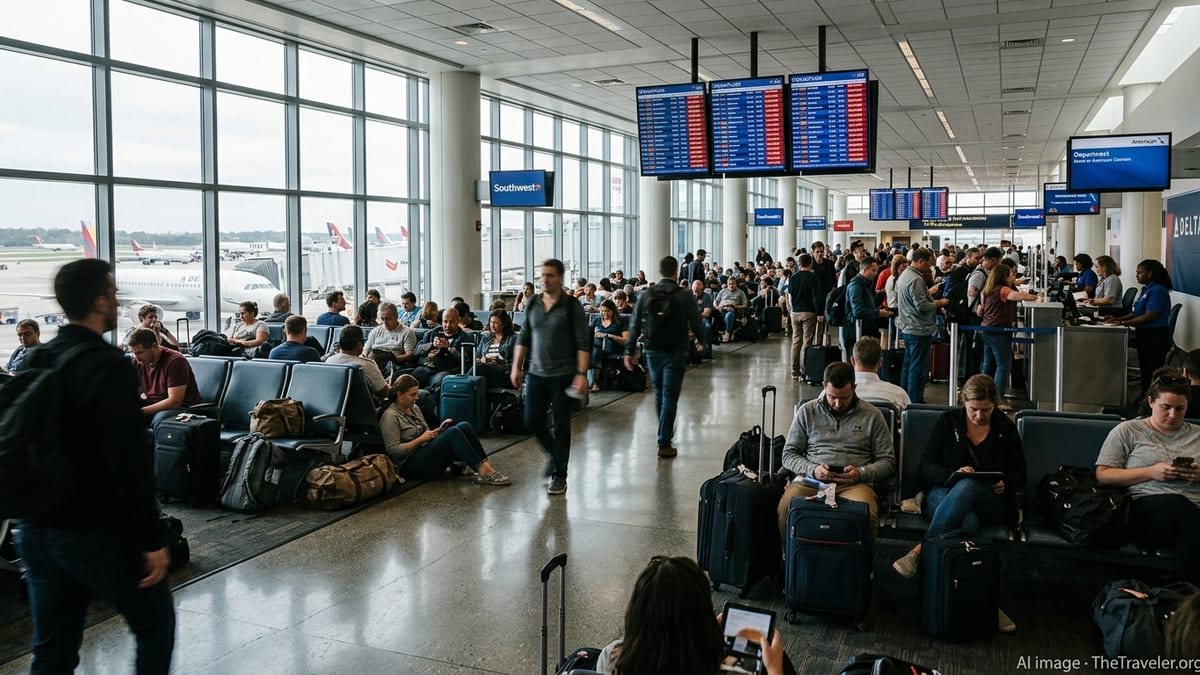
Hundreds of travelers were left waiting at Baltimore/Washington International Thurgood Marshall Airport on March 18 as widespread delays and a cluster of cancellations disrupted operations for major U.S. carriers and rippled across the wider Washington DC air travel network.
Get the latest news straight to your inbox!
Delays Mount as Baltimore Hub Struggles
Publicly available flight-tracking data on March 18 indicated at least 87 departing and arriving flights at Baltimore/Washington International Thurgood Marshall Airport were delayed, with eight services canceled, leaving passengers facing hours-long waits in concourses and at gate areas. The disruption affected a cross-section of domestic routes, from Florida and the Southeast to Midwest and Northeast destinations, underscoring the airport’s role as a key low-cost and legacy-carrier hub for the Mid-Atlantic region.
Southwest Airlines, historically the dominant carrier at the airport, appeared among the most affected operators as its dense schedule made it vulnerable to knock-on delays when early services slipped behind. American Airlines, Delta Air Lines and several other domestic carriers also showed delayed or canceled services in publicly accessible schedule boards and tracking platforms, creating congestion on both arrival and departure banks.
While exact passenger counts for the affected flights were not immediately available, typical aircraft operating from Baltimore/Washington International Airport seat well over 100 people, meaning that the accumulated impact of nearly 100 disrupted operations likely left several hundred travelers either stranded or significantly delayed in reaching their destinations.
The irregular operations at the airport came at a time of already heightened sensitivity around reliability in the Washington DC airspace, where recent weather systems and air traffic management issues have periodically pushed on-time performance below seasonal norms.
Ripple Effects Across the Washington DC Air Travel System
The delays and cancellations at Baltimore/Washington International Airport did not occur in isolation. The airport is part of a tightly interconnected Washington DC aviation system that also includes Ronald Reagan Washington National Airport and Washington Dulles International Airport, all of which share airspace overseen by the Potomac Terminal Radar Approach Control facility in Virginia. Recent days have seen reports of equipment outages and operational constraints in that airspace, amplifying the effect of any localized disruption.
According to published coverage and publicly accessible advisories in mid-March, a ground stop affecting multiple Washington-area airports late in the previous week led to extended delays, with some departures held on the ground for several hours. Although that specific ground stop was later lifted, residual congestion and displaced aircraft and crew contributed to a fragile operating environment in which even modest new disruptions could cascade into broader schedule issues.
Travel waiver information published by at least one major airline in response to recent East Coast thunderstorms also highlighted Baltimore and the wider Washington region as areas of concern through the March 16 to March 17 period. While the weather on March 18 was more manageable, the combination of earlier weather-related reroutes, airspace management challenges and routine operational issues likely played a role in the day’s irregular operations.
As a result, travelers across the DC-area airports experienced not just isolated delays, but a web of interconnected disruptions as missed connections, crew time limits and repositioning challenges forced airlines to rework schedules throughout the day.
Airlines Struggle to Rebalance Schedules
Airlines operating through Baltimore/Washington International Airport spent much of the day attempting to rebalance aircraft and crew in the wake of rolling delays. Publicly viewable schedules showed instances where early-morning tardiness on a single aircraft led to staggered delays on subsequent segments, particularly on short-haul routes that typically cycle through multiple cities in a single day.
For carriers such as Southwest, whose point-to-point network relies on high aircraft utilization, a delay affecting one or two key aircraft can quickly spread through the network, shifting projected departure times across several cities. Legacy carriers like American and Delta, which operate a mix of hub-and-spoke and point-to-point services in the region, also appeared to face challenges aligning connections and maintaining bank structures at their primary hubs when Baltimore-originating or Baltimore-bound flights failed to operate on time.
Publicly available aviation data and recent federal reporting underline how such disruptions can become self-reinforcing. Once daily on-time performance falls below a certain threshold, opportunities to recover lost minutes diminish, especially in busy airspace such as the Mid-Atlantic corridor. Late-arriving aircraft then push evening departures into the night, increasing the risk that crews reach duty time limits and that late flights are either significantly delayed or canceled outright.
The pattern was visible at Baltimore/Washington International Airport by late afternoon, when a growing cluster of delayed departures and a small but meaningful number of cancellations began to appear on flight boards, particularly for routes with tight turnarounds or multiple daily frequencies.
Impact on Passengers and Ground Operations
For travelers, the numbers translated into hours spent in terminals, rebooking lines and customer service queues. Passenger reports shared on social platforms over the preceding days from Baltimore and the broader Washington region described extended waits, confusion over changing departure times and uncertainty about rebooking options, especially when connecting flights at downline hubs were already heavily booked.
Inside the airport, ground handling, baggage and concessions operations came under pressure as delayed flights kept people in the terminal longer than planned. Airport security wait times, which are generally manageable at Baltimore/Washington International Airport according to recent traveler accounts, appeared to remain within typical ranges, but congestion in gate areas and seating zones grew as multiple delayed departures overlapped.
Ground transportation links, including the shuttle connecting the airport to nearby rail services, offered important alternative options for some passengers, particularly those opting to abandon disrupted flights and travel by train to Washington or other regional cities. However, capacity constraints and preexisting ticket commitments meant that rail could only absorb a portion of the stranded travelers.
Families traveling with children, business travelers on tight schedules and international passengers with onward connections were among those most exposed to the day’s irregular operations, with some forced to find last-minute hotel accommodation or rearrange key appointments and events.
What Travelers Can Do in the Current Environment
The latest disruption at Baltimore/Washington International Airport highlights the importance for travelers of building flexibility into their plans when flying through the Washington DC region, particularly during periods of unsettled weather or airspace constraints. Published airline travel waivers, when available, can offer options to change itineraries without additional fees, and travelers monitoring airline apps and flight-tracking tools may be better positioned to act quickly when delays begin to accumulate.
Consumer guidance from transportation authorities emphasizes that, while federal rules in the United States do not mandate cash compensation for most delays, carriers often provide meal vouchers, hotel accommodations or rebooking assistance during significant disruptions, especially when operational decisions within the airline’s control are involved. However, such support can be limited by availability and may vary by carrier and circumstance, making early communication and proactive rebooking an important strategy.
For those planning future trips through Baltimore/Washington International Airport or neighboring DC-area airports, keeping an eye on weather forecasts, monitoring regional airspace advisories and allowing extra connection time can help reduce the risk of misconnecting or becoming stranded. Selecting earlier flights in the day, when possible, may also improve the odds of reaching a destination on time, as morning departures are generally less exposed to accumulated system delays.
As operations gradually normalize following the March 18 disruptions, attention is likely to remain on how airlines and regional air traffic managers adjust procedures and contingency planning to bolster resilience in a busy and operationally complex corner of the U.S. air travel system.