

More news on this day
Portland International Airport is facing fresh turbulence as Icelandair and SkyWest scale back service, suspending two routes that have linked Portland with Keflavík and several key domestic markets, creating new uncertainty for travelers across Medford, Boise, Atlanta and other western U.S. cities.
Get the latest news straight to your inbox!
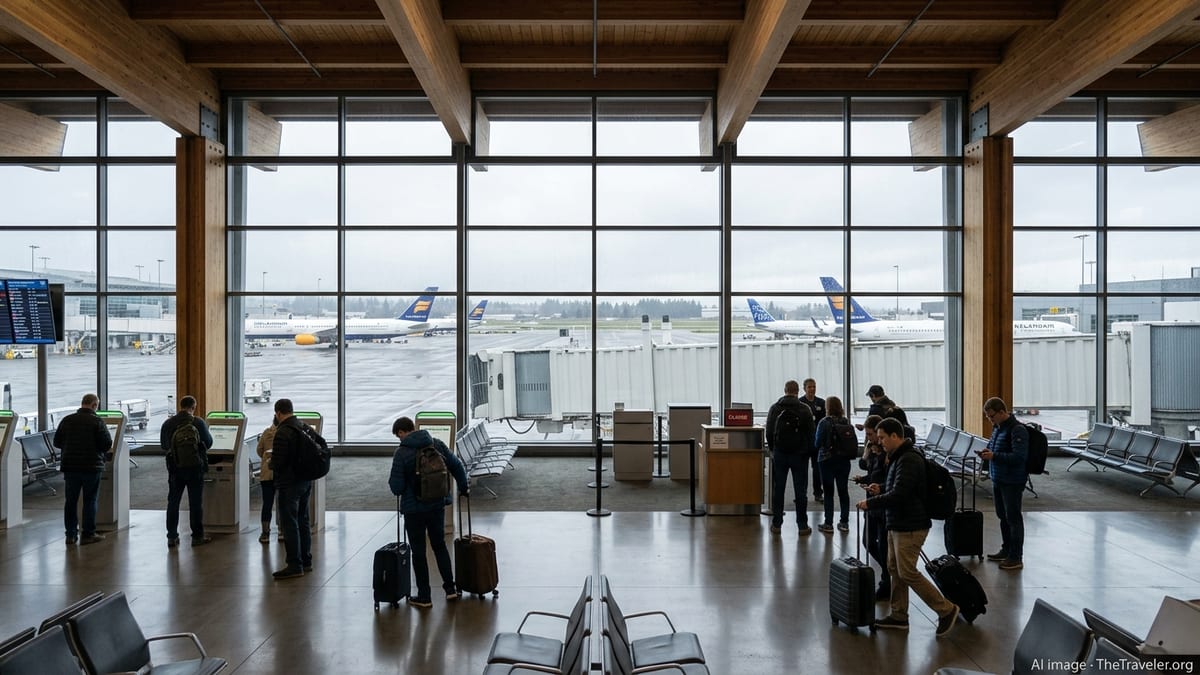
Transatlantic Link Between Portland and Iceland Pauses
Portland’s only nonstop connection to Iceland has been a symbolic and practical bridge between the Pacific Northwest and Europe, giving travelers a one-stop option to dozens of onward destinations. Recent schedule changes indicate that Icelandair’s seasonal Portland to Keflavík service will not operate for an upcoming period, effectively suspending what had become a marquee long-haul route for the airport. Publicly available flight listings and schedule tools show gaps in future operations on the Portland–Keflavík pairing, signaling at least a temporary halt.
The Portland to Keflavík service has historically run on a seasonal basis, ramping up in late spring and tapering off after the winter holidays. The latest scheduling adjustments suggest a deeper pullback than a typical low-season reduction, with no near-term return date posted in standard timetable feeds. For many travelers, the route functioned as a convenient alternative to connecting through larger hubs such as Seattle, Denver or Chicago to reach Europe.
Travel industry analysts following Portland’s international network note that the Keflavík link carried both leisure and business passengers and helped raise the airport’s profile as a secondary gateway to Europe. The suspension reduces Portland’s already modest portfolio of transatlantic flights and forces passengers to rely more heavily on connections through other U.S. airports or on limited remaining nonstop options.
For Iceland-bound visitors, the change removes one of the few direct links from the U.S. West Coast to the country. Travelers now face longer itineraries via hubs in the Midwest or East Coast, or must reposition to other West Coast airports that still have service to Keflavík. The added connection time and potential for misaligned schedules may deter some would-be visitors or push them toward alternative destinations.
SkyWest Cuts Tighten Domestic Connectivity Through Portland
While the loss of a transatlantic flight grabs headlines, the domestic impact of SkyWest’s latest adjustments is also significant. SkyWest operates flights for major U.S. carriers under regional brands, and schedule data show reductions affecting at least one Portland-centered route that has functioned as a feeder link to larger hubs such as Atlanta and key regional cities including Medford and Boise. The suspended flight removes a daily connective option that many passengers used to reach cross-country and international departures.
SkyWest’s role in the Pacific Northwest has centered on operating smaller regional jets that connect secondary cities into hub-and-spoke networks. The recent cut trims that web of connectivity, narrowing options especially for travelers originating in smaller Oregon and Idaho markets. Passengers in places like Medford and Boise who previously connected through Portland to reach the eastern United States may now need additional connections or must re-route through rival hubs.
According to published coverage on airline capacity trends, regional carriers have been rebalancing fleets in response to pilot shortages, changing demand patterns and contract negotiations with their mainline partners. The Portland reduction is consistent with a broader pattern of regional route consolidation, where thinner routes are blended into fewer daily frequencies or moved to alternative hubs deemed more efficient.
For the airport, every lost regional flight can have an outsized effect. These services typically feed higher-yield long-haul and transcontinental flights, helping sustain a robust schedule for larger aircraft. As SkyWest pulls back, airlines may see fewer connecting passengers flowing through Portland, which could in turn influence future decisions on where to place scarce aircraft and crews.
Medford, Boise and Atlanta Feel the Ripple Effect
The knock-on effects of the suspended Portland flights are being felt most acutely in smaller and mid-sized markets that relied on those links to access the national network. Medford and Boise, both important regional gateways in their own right, now face reduced options for reaching Portland-based connections. This complicates itineraries for travelers heading onward to major destinations such as Atlanta and other eastern U.S. hubs.
In practical terms, the loss of a single Portland-centered segment can force itinerary changes that add hours to travel days. Passengers who once booked a straightforward Medford to Portland to Atlanta journey might now need to connect through Seattle, Salt Lake City or Denver instead. Publicly available booking engines already show a shift in routings, with more itineraries steering traffic away from Portland and into competing hub airports.
For local tourism boards and business communities, fewer one-stop links to major population centers can dampen visitor growth and complicate corporate travel planning. Meeting planners evaluating sites in southern Oregon or the Boise metro area may perceive increased travel time and complexity as a disadvantage, especially for events drawing attendees from the East Coast or Europe who previously used Portland as a staging point.
Regional air service in the western United States has been in flux for several years, as airlines reassess which small markets can sustain multiple daily connections. The latest Portland-related changes underscore how a decision affecting only one or two flights can cascade across multiple cities, altering traveler behavior and reshaping which hubs serve as gateways for entire regions.
Portland’s Recovery Efforts Face New Headwinds
Portland International Airport has been working through an extended reconstruction and modernization program while also trying to rebuild its route network after the pandemic-era downturn. Terminal upgrades and a refreshed passenger experience have been promoted as assets that could attract and retain international and domestic routes. The pause in Icelandair’s service and the SkyWest reductions arrive just as the airport seeks to showcase its updated facilities and reassert itself as a competitive West Coast gateway.
Historical traffic reports show that Portland’s international passenger numbers have lagged behind domestic recovery, with growth focused primarily on North American routes. Losing a Europe-linked flight at this stage not only reduces seat capacity but also complicates the airport’s narrative as an emerging transatlantic player. Airlines evaluating future service to Portland will likely weigh these recent suspensions alongside demand projections and competitive pressures from nearby airports.
From a traveler perspective, Portland’s evolving route map means fewer true nonstops and more connections for long-haul trips. The combination of international and regional cuts narrows the range of itineraries that can be completed with just one connection, particularly for journeys between smaller Northwest cities and destinations in the southeastern United States or Europe.
At the same time, industry observers point out that route networks are increasingly dynamic. Seasonal suspensions sometimes precede future resumptions under different schedules or aircraft types, particularly when airlines are reconfiguring fleets. Portland’s long-term prospects may depend on whether carriers see sufficient demand, competitive costs and operational reliability to justify reinstating suspended routes or launching new ones that restore lost connectivity.
What Travelers Should Expect in the Coming Months
For travelers planning trips that once relied on the affected Portland routes, the immediate impact is the need to rebook or adjust itineraries. Booking platforms already reflect fewer nonstop and one-stop options that include Portland for journeys touching Iceland or cities like Medford, Boise and Atlanta. Many itineraries now route passengers through alternative hubs, which can introduce longer layovers, tighter connections or changes of terminal.
Travel experts recommend that passengers originating in smaller Northwest markets check multiple hub options rather than assuming Portland will be the default connection point. Depending on dates and times, routes via Seattle, San Francisco, Denver or Salt Lake City may now offer better schedules or prices. For those still hoping to travel to or through Iceland, departures from larger U.S. gateways may become the new norm until Portland-linked service is reestablished.
Airline capacity planning typically works on a seasonal and annual cycle, meaning that today’s suspensions are not necessarily permanent. However, there is rarely a guarantee that any individual route will return, and travelers who value Portland’s convenience as a connecting hub may need to adjust expectations. Monitoring airline announcements and schedule updates over the next booking seasons will be key for those hoping to see the Portland to Keflavík and related regional services return.
In the meantime, the changes illustrate how even a small number of flight suspensions can reshape travel patterns across a broad geographic area. From Medford and Boise to Atlanta and Keflavík, the loss of two Portland-linked services highlights the fragile nature of air connectivity for secondary cities and reinforces the importance of flexible planning for both airlines and travelers.