

More news on this day
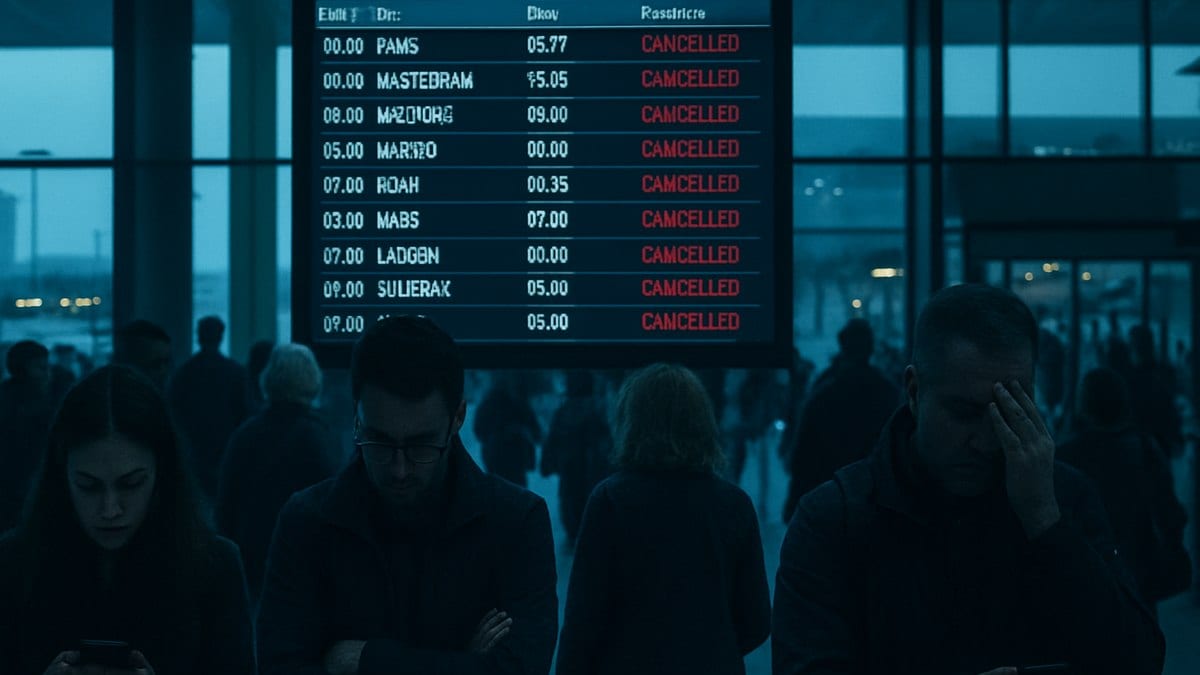
Escalating flight delays and cancellations are surfacing as a structural crisis for global aviation, with recent analyses indicating tens of billions of dollars in annual economic losses and mounting pressure on airlines, airports and regulators.
Get the latest news straight to your inbox!
A Multi Billion Dollar Drag on the Aviation Economy
Publicly available estimates from industry data providers and regulators indicate that disruption now represents a multibillion dollar drag on aviation each year. In the United States alone, one recent analysis of market and government data put the total economic impact of flight delays at more than 34 billion dollars in a single year when airline operating expenses and the value of passenger time are combined. Other studies suggest the direct cost to airlines worldwide runs even higher when fuel burn, crew repositioning, aircraft maintenance knock on effects and missed connections are fully accounted for.
Separate datasets cited by transport authorities and research groups show that the financial toll is still rising. One market report released in early 2026 calculated that delays cost airlines more than 50 billion dollars globally in 2023, reflecting a sharp increase in traffic as post pandemic demand returned while infrastructure and staffing lagged. These figures underline how far disruption has shifted from being an occasional operational issue to a central balance sheet risk that shapes network planning, pricing and investment.
For passengers, the economic hit is less visible but equally severe. Lost business, missed events and extended childcare or accommodation costs rarely appear in airline accounts but are captured in broader productivity assessments. When these indirect losses are added to the hard costs borne by carriers, the total economic impact of global flight disruption runs into many tens of billions of dollars each year, with North America and Europe bearing a significant share.
Staffing, Airspace Bottlenecks and Outdated Systems
The drivers of the disruption crisis are varied, but recent performance reports highlight several recurring pressure points. Performance reviews in Europe and North America point to persistent staffing gaps in air traffic control centers, ground handling operations and technical maintenance teams. Even as passenger volumes have climbed back toward or beyond 2019 levels, recruitment, training and retention have struggled to keep pace, leaving networks vulnerable during peak periods or adverse weather.
Airspace congestion has emerged as another critical factor. Eurocontrol data for 2023 and 2024 shows air traffic flow management delays in Europe running well above pre pandemic norms, with millions of minutes of delay attributed to sectors operating at or beyond capacity. Similar patterns are documented in Federal Aviation Administration statistics, where air traffic control issues account for a notable share of U.S. delays. Congested routes, military airspace constraints and limited capacity at key hubs combine to create choke points that ripple through global schedules.
Technology shortfalls compound these constraints. Several high profile incidents since 2022 have illustrated how reliant airlines and airports are on aging legacy systems for crew scheduling, aircraft assignment and passenger processing. When these systems fail or are hit by external IT outages, the resulting disruption can last days and cost individual carriers hundreds of millions of dollars in lost revenue and compensation. Analysts argue that underinvestment in resilient digital infrastructure has effectively shifted risk onto passengers and frontline staff.
Passengers Caught Between Compensation Rules and Operational Reality
Rising disruption has put renewed focus on passenger rights regimes and the distribution of costs between airlines and travelers. In Europe, Regulation 261 has for years entitled eligible passengers to set compensation amounts when long delays or cancellations occur, unless the airline can demonstrate extraordinary circumstances such as extreme weather or certain types of air traffic control restrictions. Consumer advocates point to this framework as a model, arguing that it has encouraged better operational performance and offered meaningful redress to affected travelers.
Airlines, however, highlight the growing size of compensation liabilities. Recent coverage of European disruption patterns has cited estimates suggesting potential payouts running into several billion euros a year, even though a large proportion of entitled passengers never file claims. Industry groups warn that expanding or tightening compensation regimes further, without addressing root causes such as airspace capacity and staffing, risks diverting resources from investments that could actually reduce delays.
In the United States, compensation frameworks are more limited and often focused on refunds, rebooking and customer service commitments rather than standardized cash payments. Federal estimates have previously put the direct cost of delays to airlines in the tens of billions of dollars annually, but much of the financial burden associated with lost time still falls on passengers and businesses. The resulting patchwork of rights and remedies leaves many travelers uncertain about what they can reasonably expect when severe delays occur.
Climate, Regulation and the Hidden Environmental Cost
The economic impact of flight disruption is also intertwined with environmental considerations. Extended taxi times, holding patterns and rerouted flights all burn more fuel than efficiently operating services, increasing emissions per passenger. Studies summarizing European and U.S. data indicate that reactionary delays and congestion add several minutes of extra flying or ground running time to millions of flights each year, multiplying the climate impact well beyond what standard schedules would imply.
Regulators face a complex balancing act. Measures aimed at reducing emissions, such as tighter airspace management or new noise restrictions around airports, can in some cases constrain capacity and contribute to short term delays if infrastructure and procedures are not upgraded in tandem. Conversely, investments in modern air traffic management systems and more direct routing promise both reduced fuel burn and greater punctuality, but require sustained funding and coordination across borders.
Industry analysts note that as environmental reporting obligations tighten, airlines are increasingly compelled to account for delay related emissions in their sustainability strategies. This creates an additional financial incentive to tackle operational inefficiencies, but it also exposes how closely the disruption crisis is tied to long term questions about the future shape of global aviation and its climate footprint.
Technology and Policy Responses Struggle to Keep Up
Airlines, airports and service providers are turning to technology to mitigate disruption, with particular emphasis on predictive analytics and artificial intelligence. Schedule planners are using real time data on weather, airspace constraints and aircraft performance to redesign rotations and build more realistic buffers into timetables. Some carriers are experimenting with dynamic rebooking tools that can automatically reroute passengers when irregular operations occur, aiming to limit missed connections and stranded travelers.
Yet observers note that these initiatives remain uneven across the industry. Smaller carriers and regional airports often lack the resources to deploy advanced systems at scale, while legacy IT platforms can limit how quickly large airlines can adopt new tools. At the same time, infrastructure projects designed to expand capacity, such as new runways or terminal upgrades, face long approval timelines and community opposition in many markets. The result is a widening gap between the scale of the disruption problem and the pace of structural change.
Policy debates are intensifying as a result. In Europe, legislators are weighing potential revisions to passenger rights rules that could adjust compensation thresholds while encouraging investment in resilience. In North America and parts of Asia, regulators are under pressure from consumer groups to clarify and strengthen protections for delayed travelers. Across regions, there is growing recognition that without coordinated action on staffing, infrastructure and technology, the economic cost of flight delays and cancellations could rise far beyond the already staggering figures now being reported.